Beef tallow. It’s what’s for snacking.
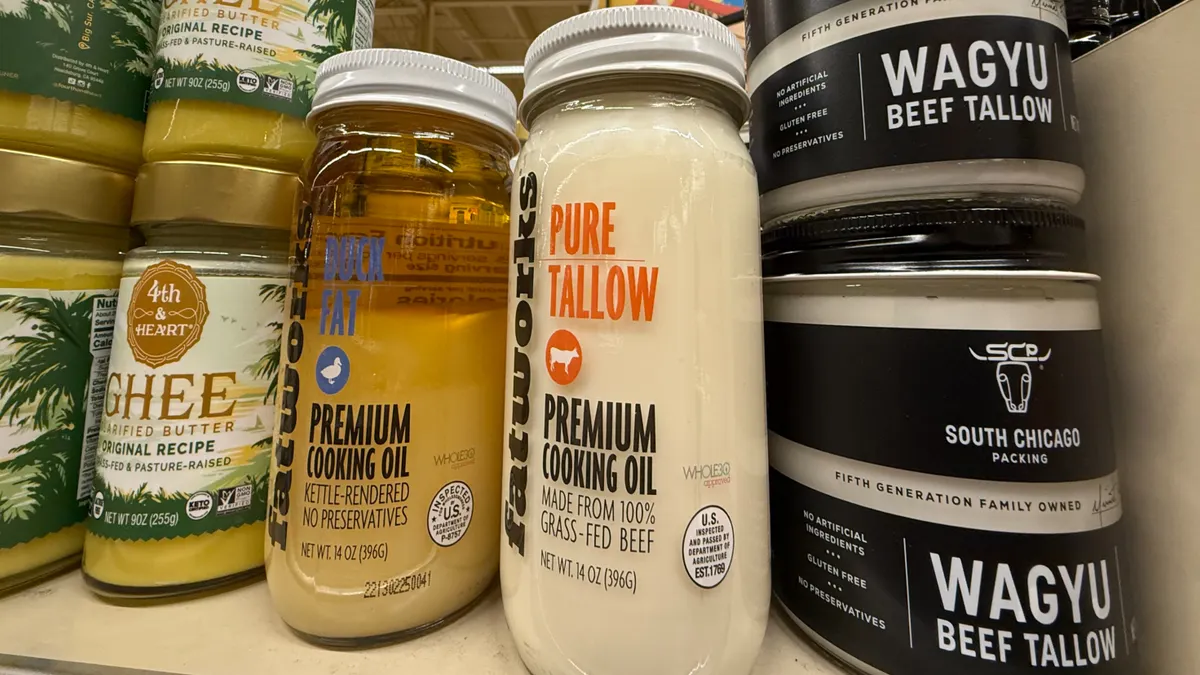
Potato chips and other food products made with the "Make America Healthy Again" approved ingredient are surging in popularity as some consumers move away from plant-based seed oils and others embrace nostalgia. Beef tallow is now entering the mainstream as major companies such as Utz and Conagra incorporate the rendered animal fat into a handful of their products.
“It's definitely making sort of a significant comeback right now in terms of its popularity,” said Whitney Linsenmeyer, an assistant professor in the department of nutrition and dietetics at Saint Louis University, who has noticed retailers devoting more coveted shelf space to products with beef tallow. “People are paying attention.”
Sales of food products with beef tallow as an ingredient surged to $1.1 billion for the 52 weeks ended March 22, up 275% from the same period three years ago, according to data firm Spins provided to Food Dive.
The rise of the once-niche ingredient has gotten a major boost from Health and Human Services Secretary Robert F. Kennedy Jr., who has promoted beef tallow over other cooking oils — even once deep frying a turkey in a vat of beef tallow to show how "we cook the MAHA way."
The ingredient was thrust into the spotlight again in January when the FDA updated the national dietary guidelines to highlight beef tallow, along with butter and olive oil, as healthy fats consumers should incorporate into the foods they eat.
Big interest by big food
Many smaller brands with better-for-you positioning have turned to beef tallow to differentiate themselves in the healthy foods space. But as the trend continues, larger snack companies have started embracing the ingredient.
Utz Brands, a manufacturer of potato chips, pretzels and puffs, launched a version of its Boulder Canyon Classic Sea Salt cooked in beef tallow earlier this year at select retailers.
CEO Howard Friedman said the salty snacks company has noticed “significant interest” in beef tallow within natural and organic channels as well as at restaurants, giving the company confidence to add the ingredient to a new product.
“It's something that we're interested in, and something that we think we can offer value to the shopper,” Friedman said. “And if it takes off and is a home run, that would be great. And if consumers, in a couple of years, decide that they have shifted their attention to something else, then our job will be to be responsive to that.”
Snack and frozen food company Conagra Brands used beef tallow to twice cook its Rebel Roots crispy fries, even going so far as to highlight the ingredient in big font on the front of the packaging.
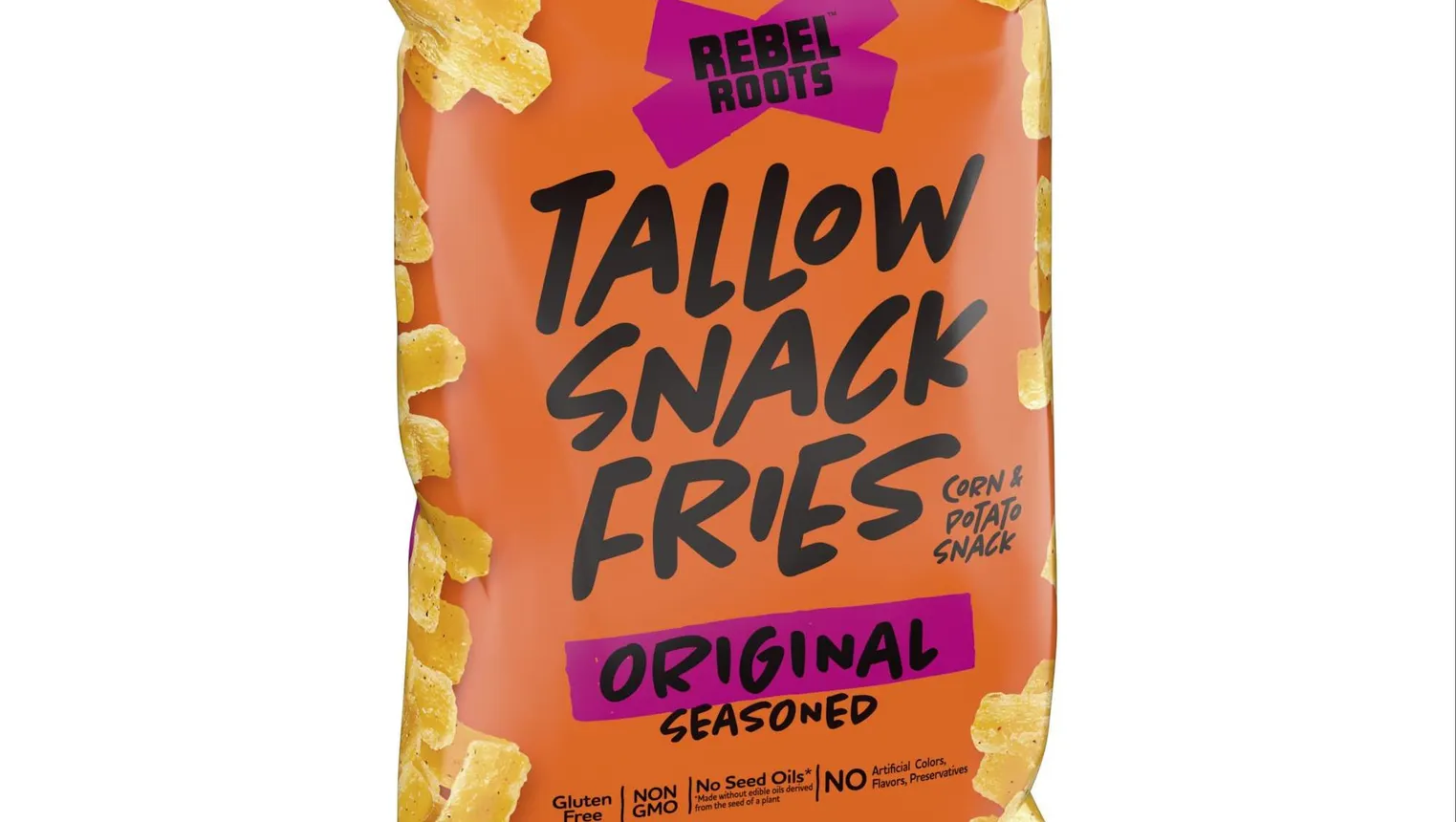
For Conagra, using beef tallow provides the upstart brand with a “provocative” product to stand out in the market, former CEO Sean Connolly told Food Dive in February. Connolly, who retired earlier this month, said it's also a way to connect with consumers who have heard about the ingredient and want to try it
“They're constantly on a treasure hunt with new and interesting stuff, but it requires a signature ingredient like tallow in order to get their attention because we're competing [with] 50 other new snacks,” Connolly said. “We have to outperform the other snacks to get the consumer to purchase.”
As more brands experiment, there are still questions over consumer acceptance.
Despite messaging from Kennedy around seed oils, the effect so far on consumers seems limited. Close to 70% of consumers say they have not changed their seed oil use, according to data from Innova Market Insights provided to Food Dive, while 15% said they've decreased consumption. Of those replacing seed oils, just 10% say they are switching to beef tallow, while 46% switched to olive oil.
Erin Lash, a senior director of consumer equity research at Morningstar, said beef tallow products are likely to remain a niche product. She said foods made with the fat would likely “fall flat” at major supermarkets and retailers such as Walmart because consumers might not know much about beef tallow or understand why they are being asked to pay a premium for the offering.
“This might turn off that more traditional type of consumer,“ she said.
But at specialty and health food retailers, the ingredient is shining. Whole Foods tabbed beef tallow as its top food trend prediction in 2026.
The retailer said the “old-school fat,” which has been used for centuries for frying and baking, is “having a moment on social media” and among consumers who value ancestral ingredients and seed oil alternatives. Other consumers also see beef tallow as a sustainable way to use part of an animal that might otherwise be discarded, Whole Foods noted.
Health advocates have expressed concern over the rise in beef tallow’s popularity. Its inclusion in the recent dietary guidelines drew a quick rebuke from the American Heart Association, which said the ingredient's high saturated fat content increases the risk of heart disease.
Linsenmeyer believes beef tallow’s sudden resurgence will wane, though that could depend on who is elected to the White House in 2028.
”We'll continue to see it being used widely, especially because we've sort of been given the green light by the leaders of our country,” she said. “Frankly, I hope it’s a fad.”
Correction: A previous version of this article misstated what fat Utz’s Grandma Utz Kettle-Style potato chips are cooked with. They are cooked in lard.