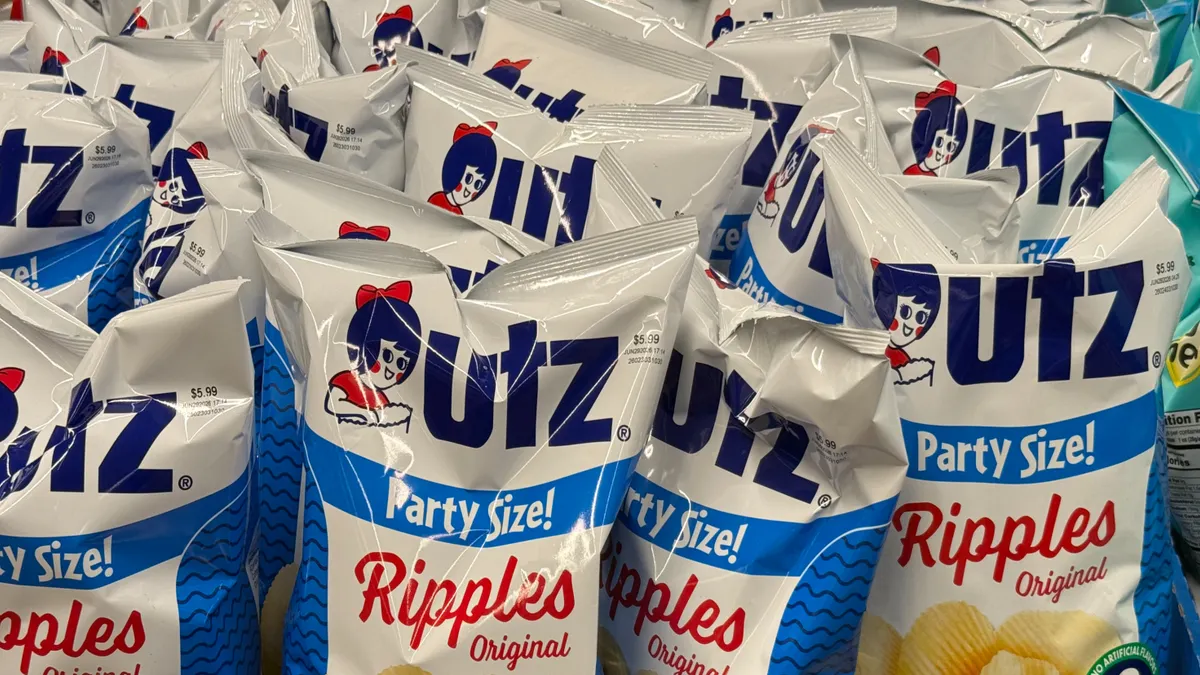
Howard Friedman's late-night study sessions and social gatherings at Dickinson College often had a familiar attendee: Utz Brands chips, cheese balls and pretzels.
The encounters proved to be more than just an opportunity to grab a snack. Unbeknownst to Friedman at the time, it was a chance to familiarize himself with a storied food company headquartered just 31 miles down the road that he would one day oversee as CEO.
So when Friedman got a call in 2022 asking if he was interested in running the 105-year-old Utz, it didn’t take long for those fond memories to come rushing back.
“I had a very warm affinity for the product,” Friedman, a former Kraft Heinz executive, recalled. When I met with the board, “all I kept hearing about was the potential of this company to grow and build and drive something more impactful in the marketplace.”
Once known only as a regional East Coast brand, Utz is now the largest pure-play salty snacks company in the country, with a portfolio that includes its namesake brand, On the Border, Boulder Canyon and Zapp's. Through steady expansion, Utz generates $1.4 billion in annual sales, slightly higher than Hershey's growing salty snacks business.
While Utz's sales pale in comparison to Frito-Lay owner PepsiCo's $8.3 billion in annual snack sales, Friedman said the company isn't trying to upend the category giant. Instead, the greatest opportunity in the $32 billion salty snacks market comes from Utz's ability to grab market share away from smaller, regional players that aren’t generating the level of growth or investment desired by retailers.
“I would never be presumptuous enough to think that we're going to be people who are challenging the market leader,” said Friedman, the first non-family member to oversee Utz. “We are going to play our role in the category, which is to drive innovation, communication and investing to drive greater consumer interest, which is everybody's role, regardless of size.”
From a family kitchen to retail shelves
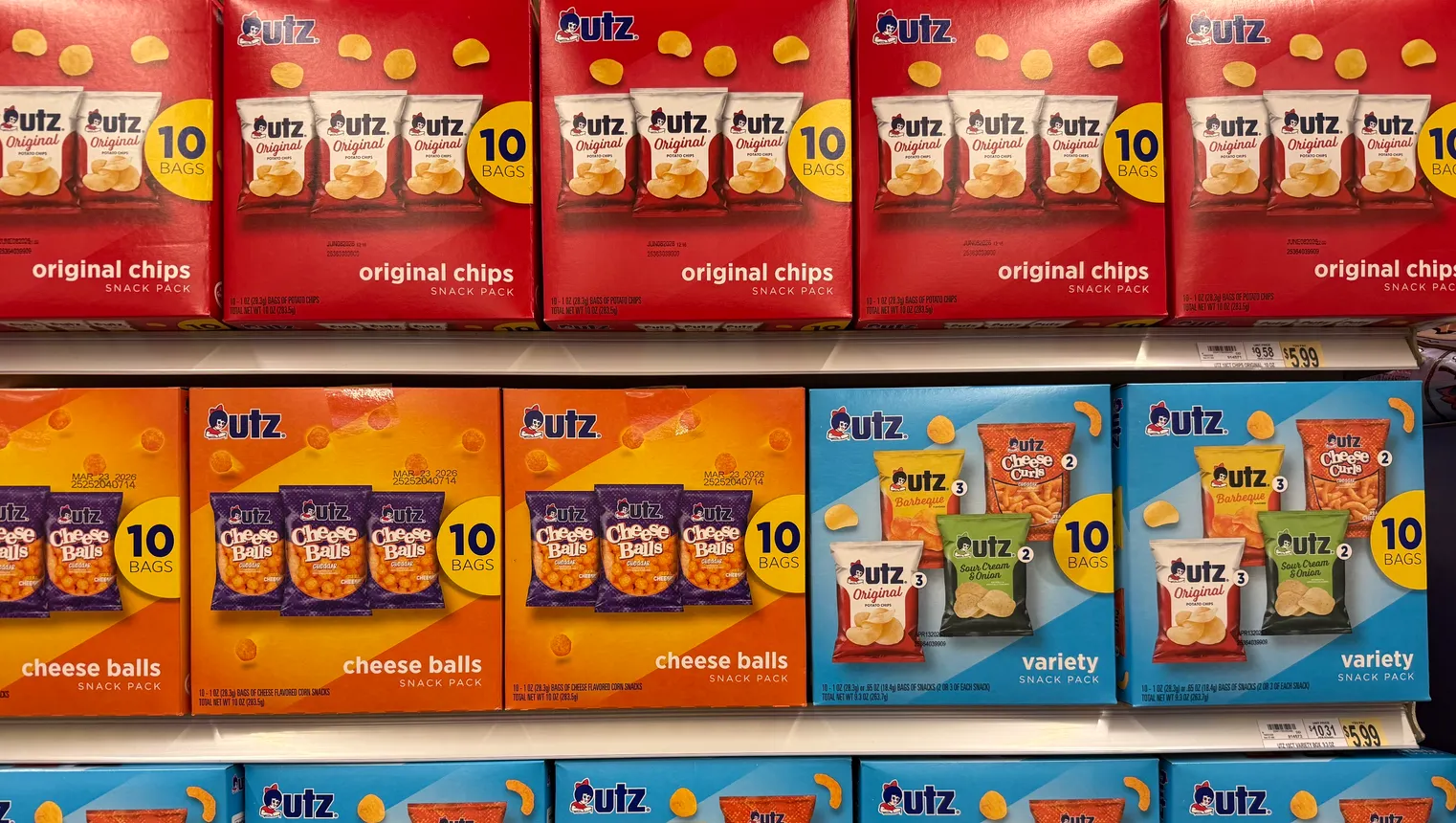
Utz traces its roots to a small kitchen in Hanover, Pennsylvania, in 1921, when William and Salie Utz began making potato chips in their kitchen. They cooked about 50 pounds an hour and sold those fresh chips to small local grocers and markets in the Baltimore area. Consumers reportedly couldn’t get enough.
Today, Utz remains in Hanover, but it now has seven primary factories across the country, churning out more than 3 million pounds of popcorn, cheese balls, pretzels and potato chips each week. It’s less dependent on chips now, which are responsible for just under half of its yearly sales.
The snack maker is heavily concentrated in the Northeast, Mid-Atlantic and Gulf, the company’s core regions that are responsible for just over half of its annual sales. Even in its most important markets of New York City, Boston, and the state of Ohio, Utz’s volume share of salty snacks tops out at 8.2%. Its share is smaller in expansion geographies, averaging only 4.2%.
Friedman said Utz has a handful of advantages that separate it from other snacking companies. Its smaller size and exclusive focus on salty snacks allows it to move faster and be nimble in chasing opportunities. This is particularly beneficial after the broader salty snacks sector posted its first decline in 2024 in more than a decade, with inflation-weary consumers watching their spending more closely than ever before.
As with any company, and certainly ours, we are an unfinished painting. There's a lot more growth to go get.

Howard Friedman
CEO, Utz Brands
A more modernized supply chain network has allowed Utz to do multi-packs for the first time and offer a wider range of bag sizes better suited to different consumption occasions and shoppers' budgets. And just last year, it laid the groundwork for a deeper expansion into California, the country’s largest consumer of salty snacks, with the purchase of direct store delivery assets in the state.
John Baumgartner, senior equity research analyst at Mizuho, estimated 25% of the U.S. salty snacks market is comprised of “sleepy” regional brands that don’t have the scale or resources to compete with Utz when it comes to pricing, marketing and innovation. That's a “huge opportunity” for Utz to wrestle away share, he said.
“Utz is in this nice little in-between spot where they're small [enough] to grow, just from distribution growth alone, but they're large enough to actually have advantages over some of the small, regional mom and pops that are out there,” Baumgartner said.
‘Unique position to capitalize’
As Utz enters new markets, it focuses on concentrated population centers, large retailers it has previously partnered with and a close proximity to its supply chain. The company can show stores how the presence of its snacks drives sales, margin growth and profitability in the salty category.
After operating in Florida for several years, for example, Utz chose to partner with a key retailer in 2020 to build out a network that would enable it to directly deliver its snacks to more stores. Since then, sales have surged 140% in the Sunshine State to $118 million in 2025. It’s market share in Florida rose from 2.5% to 4.3%.
Utz hopes for a similar outcome as it moves westward, most notably in California, which executives are optimistic could one day blossom into a $200 million market for the company at retail — up from $82 million today.
Part of the reason Utz can grab shelf space in stores is that it provides retailers with an opportunity to consolidate their salty snacks business into one supplier, which is otherwise spread out across several different brands and companies.
Jim Salera, a research analyst at Stephens, said Utz offers a diverse portfolio of salty offerings that span both indulgent and healthier — often at a lower price point than Frito-Lay. The diversity of its portfolio also makes it easier for Utz to keep consumers within its brands, depending on the individual’s preferences and eating habits.
“It's rare that you have a brand that's been around for that long, that doesn't have higher awareness” in some markets, said Salera, who grew up with Utz in Pittsburgh. “That puts them in a unique position to capitalize on some of that brand equity by introducing itself to people and saying, ‘Hey, actually, we've been around for a long time. This is new to you but we have credibility, and we know what we're doing.’ ”
So far, Utz’s strategy is showing signs of paying off.
The company forecast organic sales growth of 2% to 3% in its fiscal 2026 year, compared to flat sales in the broader salty snacks space. Utz is even more optimistic about its future, projecting an increase in its long-term growth to between 3% and 4%, which would add $500 million in revenue over time.
Balancing growth versus maintaining legacy
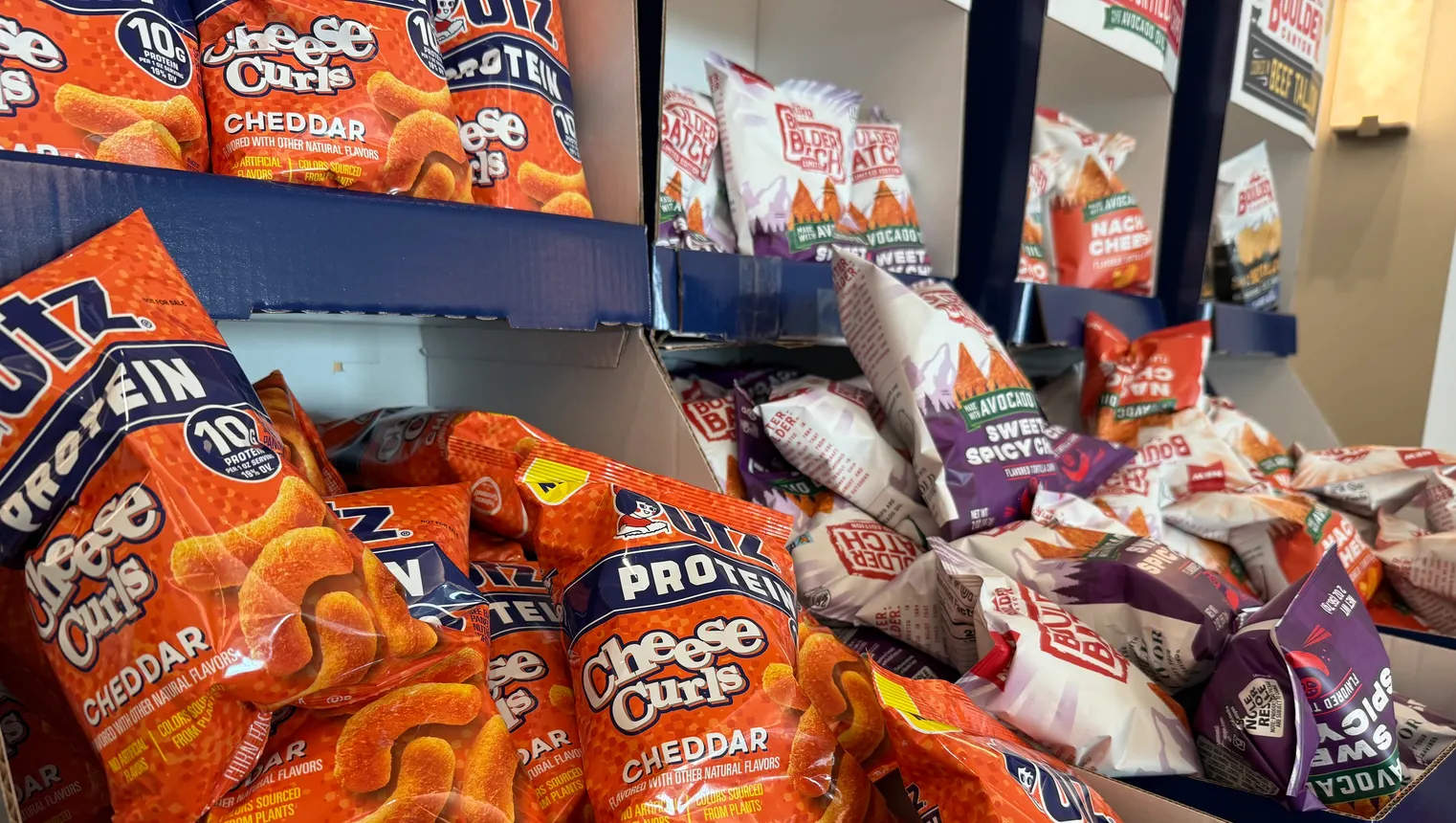
To lay the groundwork, Utz executives are doubling down on innovation to attract new shoppers and increase purchases among existing customers. Recently, its namesake Utz brand launched new on-trend flavors, limited-edition and seasonal items, as well as cheese curls and pretzels with extra protein.
It’s also eyeing further growth in its core markets behind Utz, which represents 38% of the company’s sales, and its three other power brands, Zapp’s, On the Border and Boulder Canyon.
Boulder Canyon, in particular, is thriving due to its better-for-you positioning.
The brand eschews genetically modified ingredients and seed oils in favor of avocado oil — placing it squarely alongside trends that are gaining momentum among today’s consumers. Executives are optimistic that sales of Boulder Canyon, which totaled nearly $200 million last year, could eventually top $500 million.
“As with any company, and certainly ours, we are an unfinished painting,” Friedman said. “There's a lot more growth to go get. There are still capabilities to build. There are investments to make, but we continue to have this unique aspect to our company.”
Utz is also actively scouring the market for M&A opportunities to further accelerate its growth.
Friedman told analysts earlier this year that the company has “an acquisition-savvy management team,” an experienced board and a manufacturing and distribution system capable of capturing synergies from dealmaking.
Even as the company operates from a position of strength, Baumgartner warned Utz could face headwinds that dampen its otherwise favorable outlook.
Utz is forecasting a higher price mix in 2026, but that could be difficult to muster as competitors like PepsiCo lower prices and consumers cut back on spending. The use of GLP-1 medications and uncertainty tied to the Trump administration’s “Make America Healthy Again” movement also could weigh on the future of salty snack consumption.
“They're a much stronger place today than they've been historically. There's still some uncertainty out there,” Baumgartner said. “But in terms of what is in their control, in terms of execution, overall, it's been very good.”
Friedman feels the pressure, and not necessarily from shareholders. More than anything, he doesn't want to tarnish the legacy of a company with a long, family-run history.
“You almost feel like you're taking something that is very important to the family and precious to them,” he said. “It's like a child, this awesome sense of responsibility of mak[ing] sure I can live up to the legacy of what the family was able to build, and then on top of it, be able to take that and build it and grow it and modernize and drive new capabilities in a way that feel familiar.”