LAS VEGAS — Barry Callebaut could offer a cocoa-free chocolate made from sunflower seeds in the U.S. as soon as this year, following “very strong” interest from food manufacturers, a top executive said.
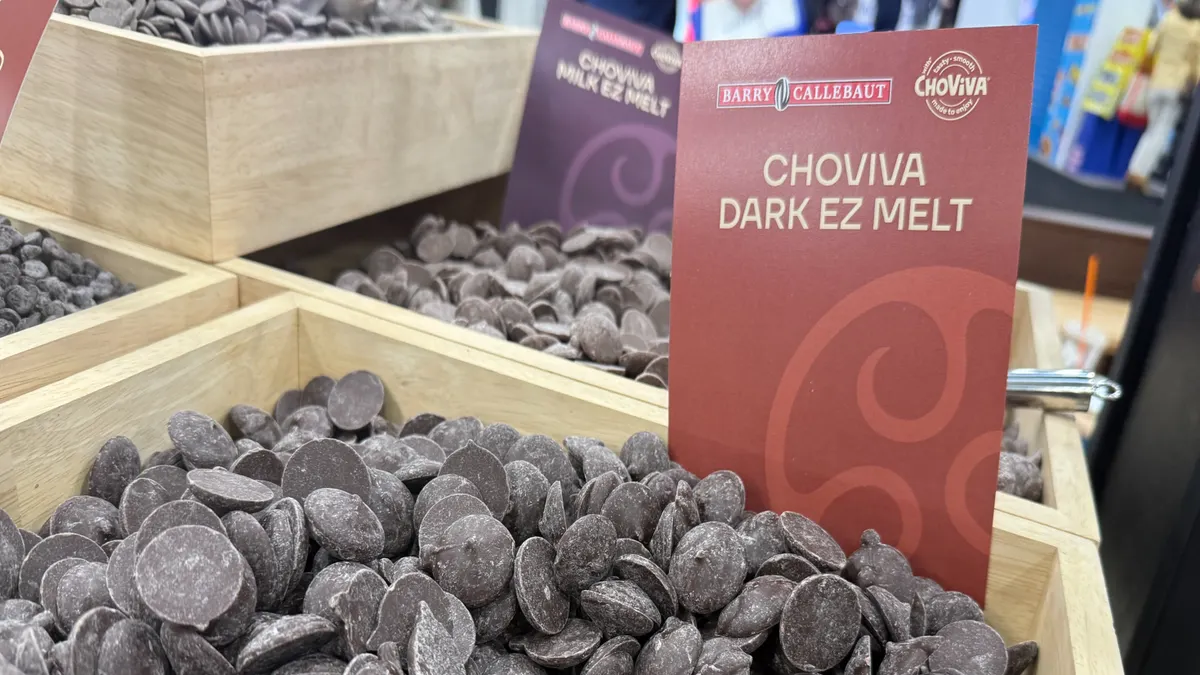
The world's largest chocolate supplier partnered last November with Planet A Foods to scale the five-year-old startup’s cocoa-free substitute ChoViva beyond Japan and Europe, where it is already incorporated into hundreds of products. ChoViva is made from sunflower seed powder and plant-based fats, along with other ingredients found in chocolate, such as sugar and lecithin.
“I would love to see a product on the shelf in our fiscal year, which is pretty aggressive, that ends in September,” TJ Mulvihill, vice president of marketing for Americas at Barry Callebaut, said. “But I think inside of this calendar year, that would be certainly something we can scale and introduce. I think working with some really fast-moving brands, there will be a little bit of a race to be first.”
Mulvihill said ChoViva is attractive for companies and consumers because it creates a new eating experience, leads to better margins for businesses already facing volatile cocoa costs and ensures a more predictable supply.
ChoViva's reliance on sunflower powder, a byproduct leftover after the oil is extracted from the seed, helps companies improve their sustainability footprint. ChoViva can also be processed on equipment used to make normal chocolate, reducing the upfront financial and logistical headwinds for companies that want to incorporate it into new products.
“[Barry Callebaut] is not a consumer-facing brand,” Mulvihill said of the chocolate ingredient supplier. “We want to help keep our customers and their consumers close and engaged in the category and get this whole category really back into growth, which I think this type of innovation really helps."
While coca-free chocolate bars are “not out of the question,” Barry Callebaut is prioritizing ChoViva use in applications such as a coating on nuts, or as an ingredient in a protein bar, Mulvihill said.
The race to develop chocolate alternatives has accelerated in recent years amid supply challenges from climate change and record-high cocoa costs, which have prompted Hershey, Mondelēz International and other companies to raise prices. Cocoa supply chains have also faced criticism due to their impact on deforestation and human rights, with insufficient farmer wages and child labor being perpetual issues.
Cargill said in May it is partnering with Voyage Foods to bring a cocoa-free chocolate alternative to the U.S. that uses grapeseeds to mimic the chocolate taste consumers expect. And Mondelēz recently made a dozen milk chocolate bars using cocoa butter produced from cell-cultured technology developed by Celleste Bio.
Planet A Foods created ChoViva in 2021 after analyzing the cocoa bean and then combing through more than 200 ingredients to find the one that best replicated the taste and texture of cocoa, according to CEO and co-founder Maximilian Marquart. He said that to scale the product, it needed to partner with a larger, global company like Barry Callebaut.
Planet A Foods has already established a supply chain overseas, with customers such as Nestlé using ChoViva in Europe. This proven track record could help expedite the product’s adoption in the U.S., Marquart said.
“We’re not coming in empty-handed with an idea. I think that for sure has helped in the discussion,” Marquart said, before adding that Planet A Foods and Barry Callebaut “have some very promising leads” in the U.S.