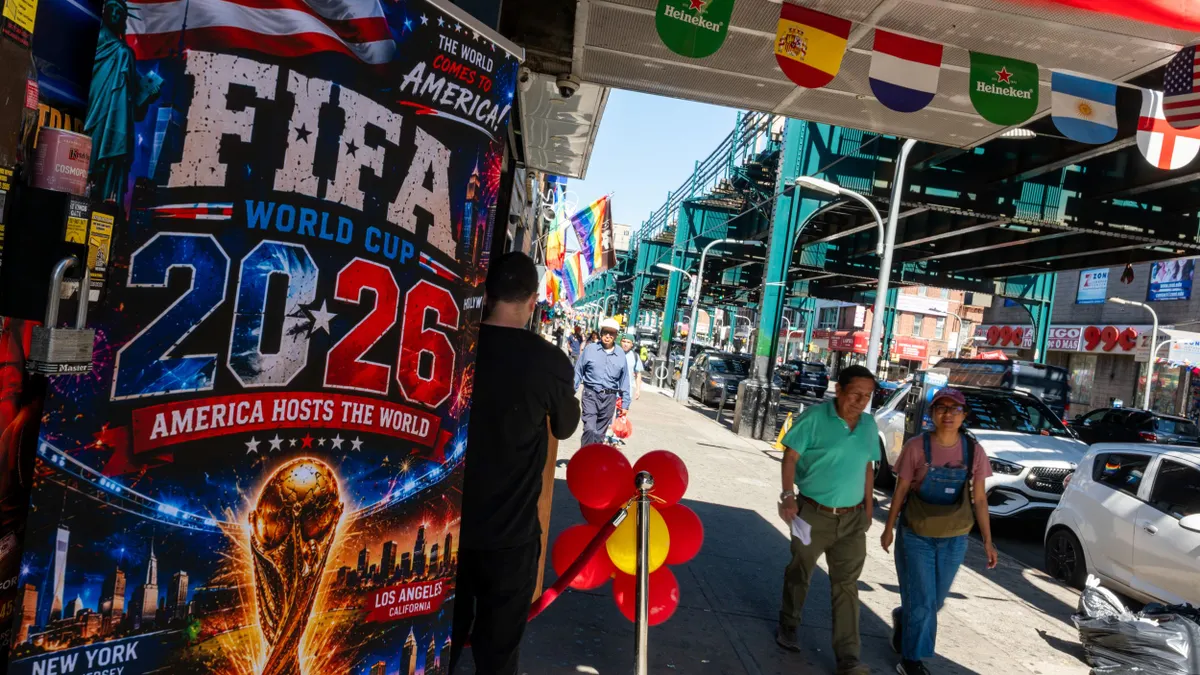
Nonalcoholic beverages and ready-to-drink cocktails are receiving the biggest sales boost from the World Cup, according to Circana data, with beer performance seeing lower increases despite heavy investment from alcohol giants.
Cases of premixed cocktails posted a 25.4% sales jump during the week ended June 28, the first full week of the tournament. Nonalcoholic beer case sales also beat out domestic beer case sales during the period, with the former growing 10.9%, compared to just a 2.2% jump for domestic beer cases.
Though the data in the report only factors into a portion of the World Cup, Circana expects the trends to continue for the remainder of the tournament, Sally Lyons Wyatt, global executive vice president and chief advisor for consumer goods and food service insights at Circana, said in an interview. The tournament is set to conclude on July 19.
The World Cup represents a massive marketing opportunity for alcohol companies. Beverages are tapping into the hype through sponsorships. Michelob Ultra is the beer sponsor of the tournament, and various other beverage companies, including Diageo’s Casamigos, have updated their packaging.
Beer companies in particular are making big bets on the World Cup. Molson Coors is undertaking its single largest media investment in years on the tournament to highlight brands across its portfolio. AB InBev also is making an effort to push its products in bars.
But the tournament is failing to provide the big boost many companies were hoping for, reflecting longer-term declines in alcohol consumption as more consumers prioritize their health. Circana’s data during the tournament mirrors overall trends in the beverage space, with nonalcoholic options and ready-to-drink cocktails dominating the market.
“It did amplify existing behaviors rather than actually creating new ones,” Wyatt said.
Unlike other sporting events, such as the Super Bowl, the World Cup offered dozens of viewing occasions over five weeks.
While beer companies are focusing their efforts on on-premise viewing, Circana’s data shows a bulk of survey respondents said prior to the tournament they planned to watch the matches at home or at a friend or family member’s place, compared to just 7% that planned to watch at a restaurant or bar.
This off-premise preference did lead to repeat shopping trips for beverages and snacks over the course of several weeks, according to Circana, which showcased how consumers are looking for a variety of choices in their alcoholic or nonalcoholic alternatives.
“We’re starting to see pockets of success with alcohol, and I think that goes back to the variety that’s available, from size, from alcohol content, from nonalcoholic varieties,” Wyatt said. “Those all are playing a role to helping keep the social occasion alive and well in the U.S.”
Other beverages are seeing a boost thanks to the tournament, including energy drinks, with sales up 10% for the period. Bottled water is also playing a role in World Cup buying habits. Wyatt said this reinforces the idea that consumers are seeking balance in their choices.
Circana also measured the impact on food items, including fresh produce trays, deli entrees, pretzels, ready-to-eat popcorn, chocolate and nonchocolate candy. They each have grown between 1% and 2%.
New customers to some of these segments may opt to stay in, but it will no longer be an everyday occasion post-World Cup.
“I think we will see some of these segments, especially in alcohol, that continue to gain a little bit of traction,” Wyatt said. “I can’t tell you how positive it is to look at this category and not see all red. We see a variety of positive pockets, and I think that’s going to continue. I don’t think it’s going to stop.”