Dive Brief:
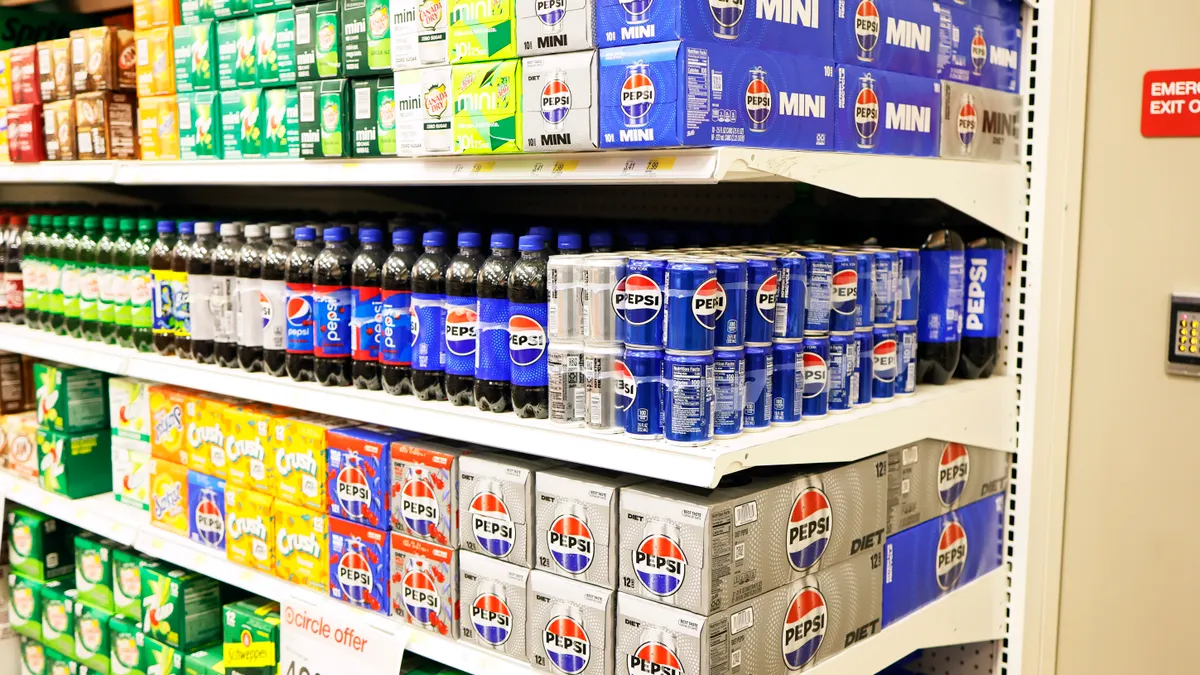
- Restrictions on soda under the Supplemental Nutrition Assistance Program led to an estimated 12% decline in sugary drink purchases for the first half of 2026, according to a new working paper from Stanford University, the Massachusetts Institute of Technology and the University of Chicago.
- The decline is equivalent to approximately 34 fewer 12-ounce cans of soda and other sugary drinks per person per year, according to the research. Notably, SNAP recipients did not switch to buying sugary drinks with their own dollars, the report found.
- At least 23 states have had waivers approved to ban purchases of sugary drinks using food assistance dollars. The report looked at the first 10 states to implement restrictions.
Dive Insight:
The report upends a commonly held economic theory that SNAP restrictions will not affect overall grocery purchases, with the belief that consumers would buy the same amount using more of their own dollars instead of federal assistance.
However, the report finds "no evidence of such substitution" in states that only ban soda and not fruit juices or energy drinks. Shoppers diverted up to 39% of consumption to other sugary drinks in states where they were still covered by federal assistance.
SNAP makes up about 12% of overall grocery spending, per the National Grocers Association. SNAP recipients also tend to spend 19% more on groceries per month than non-SNAP recipients, according to Numerator, giving them significant purchasing power.
Policymakers and nutrition scientists have looked to SNAP purchasing restrictions or sugar taxes as a public health measure to lower rates of diabetes and other chronic diseases. Banning all sugary drinks from SNAP would generate about $1.1 billion per year in benefits, with 70% attributed to reduced healthcare costs, according to the study from MIT, Stanford and the University of Chicago.
The study hones in on sugary drinks, which are restricted in some form across all states with SNAP waivers. In the candy industry, a Numerator study estimated a $300 million sales loss for the industry.
Hershey CEO Kirk Tanner said in July that the company has seen some impacts in states that adopted waivers early, but sales remain largely within expectations. Hershey is working closely with retailers to understand how the restrictions are playing out on shelves.
SNAP restrictions have faced legal challenges, making the future of these bans unclear. A court ruling overturned those restrictions in five states after SNAP recipients sued, opening the door to future lawsuits.