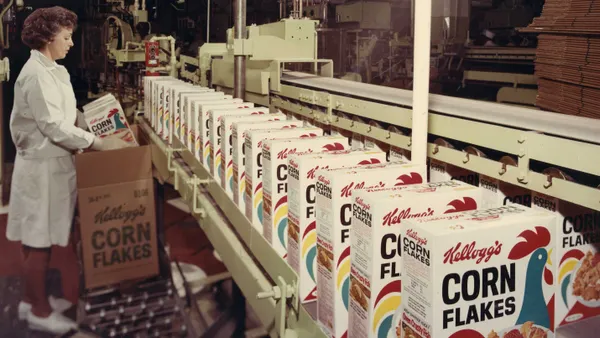
BATTLE CREEK, Michigan — For Battle Creek’s 52,000 residents, cereal is more than just breakfast, it’s a daily reminder of what put the central Michigan town on the map more than a century ago. Arguably no company has closer ties to the town, known as “Cereal City,” than WK Kellogg Co.
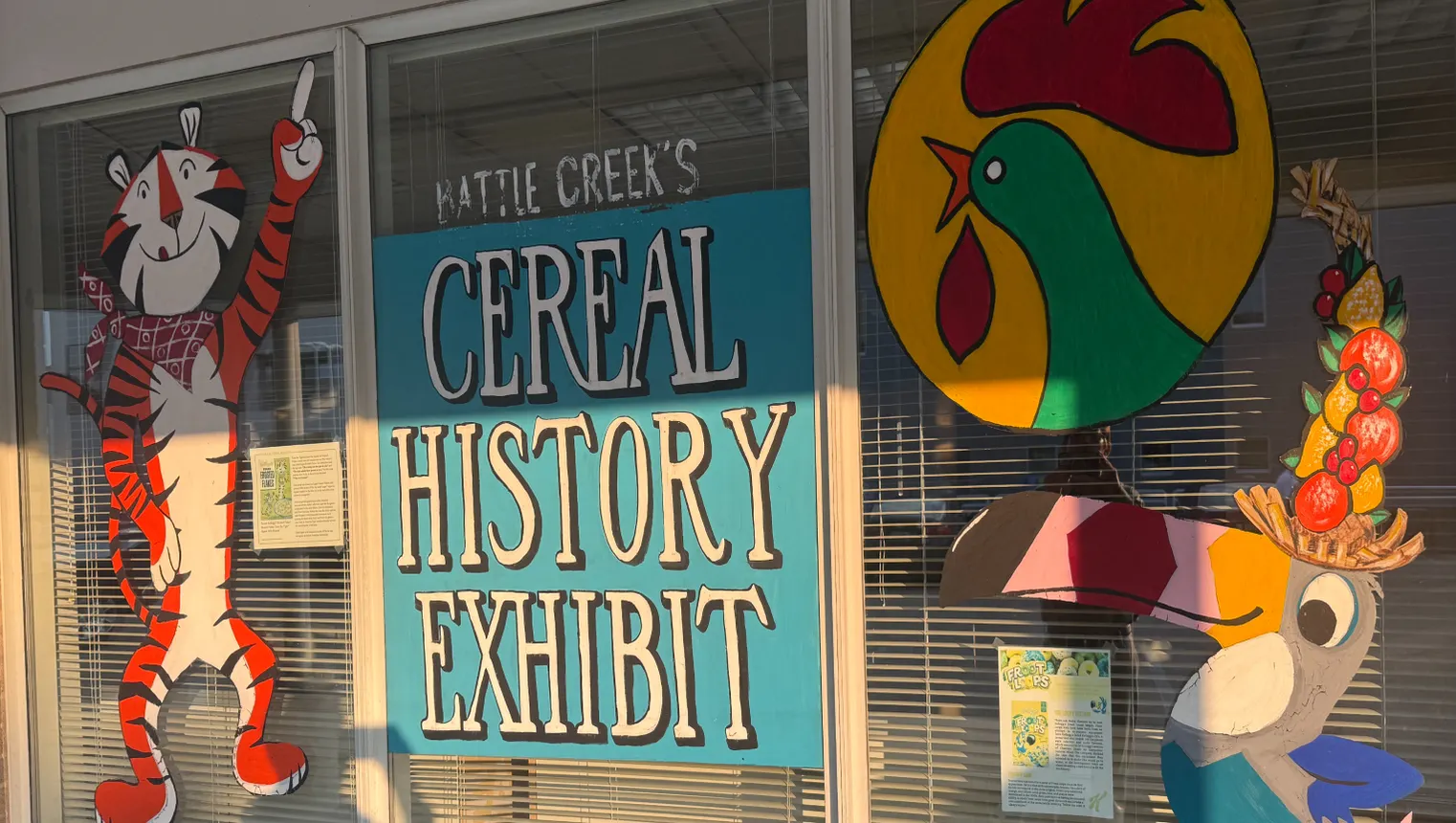
The company is a central figure in a yearly festival celebrating Battle Creek’s role as the birthplace of the ready-to-eat breakfast cereal industry. The town’s welcome center has an exhibit on the history of cereal that features many of WK Kellogg’s most popular products. Battle Creek is also home to the Kellogg Community College and the 2,000-seat WK Kellogg Auditorium.
Hundreds of people work in town for WK Kellogg and arch-rival Post, either in office roles or at the two nearby factories. And locals, many of whom grew up in Battle Creek, can identify which cereal is being produced at any given time depending on the smell in the air, especially after it rains.
But despite its nostalgic ties to cereal, the city has come to exemplify the challenges facing the industry.
Thousands of cereal-related jobs have disappeared over the years in Battle Creek, which at the beginning of the 20th century was home to more than 100 companies producing the breakfast staple.
The size of the annual cereal festival, which used to stretch across town each June, has shrunk considerably.
And cereal is no longer the biggest employer in Battle Creek, located 120 miles west of Detroit. The title now belongs to Denso, a Japanese auto parts supplier.
WK Kellogg nearly closed its Battle Creek cereal plant in 2023, proposing to move operations to Canada after years of struggling sales, labor strikes and supply issues following the COVID-19 pandemic. The cereal giant ultimately agreed to stay for another 15 years after receiving a $5 million grant from the state of Michigan.
Cereal is “not what it used to be in Battle Creek. It really isn’t,” said Mayor Mark Behnke, who grew up in the city and met his wife in high school. “You’ve got to be honest with yourself. You’ve got to be honest with the community.”
During the last decade, cereal consumption has fallen as shoppers view the product as highly processed, sugar-laden and lacking many of the daily nutrients they need. Hurried consumers also are turning to more on-the-go options, such as bars, or just skipping breakfast altogether instead of eating a bowl of cereal at home.
As consumption falls, executives at WK Kellogg’s Battle Creek headquarters have vowed to revive the category and improve cereal’s tarnished image — a notable goal for a company dependent on the sector for billions of dollars in revenue each year.
To achieve the company’s objective, WK Kellogg is spending millions of dollars more on marketing and innovation across its portfolio with the hopes of convincing more consumers to pour a bowl or grab a handful or two of cereal as a snack during the day.
Executives at the 120-year-old company acknowledge the comeback will take time, but recent sales data shows their strategy is paying off. They remain confident that the once-soggy cereal space is on the verge of being able to snap, crackle and pop once again.
“For years, [cereal companies] were kind of quiet. We didn’t talk about the category,” said Sarah Ludmer, WK Kellogg’s chief wellbeing and sustainable business officer. “It wasn’t a priority to help people really understand the true impact [cereal] can have in their lives, whether for joy or health. We stepped back and said: ‘No, we’re cereal. We belong and we’re going to talk about it.’ ”
Cereal’s ‘brave new world’
The U.S. breakfast cereal category is at a “critical juncture” as it faces headwinds from declining volumes, demographic shifts and changing consumer habits, according to a report from Innova Market Insights.
The firm noted that while the total market value of cereal is projected to top $13 billion in 2027, compared to $10.7 billion in 2019, overall volume sales continue to fall. Volume slipped 3% in 2025 from the prior year and has declined for five straight years following a COVID-induced spike in 2020, Innova data showed.
The numbers are a concerning sign that shoppers are paying more for cereal through price increases and premium offerings, but not necessarily eating additional cereal overall.
Part of the drop comes from millennials and other younger shoppers, who are turning to cereal more often as a snack rather than a morning option. While on the surface that appears to create more opportunities, it forces cereal to compete directly against other snacking options, such as chips, ice cream or candy.
“It’s a brave new world for cereal,” said Michele Scott, regional content director for Americas at Innova. “It’s not necessarily just a breakfast food anymore, and that is something that companies are going to have to be aware of in marketing and messaging and innovation when it comes to format and flavor. They are going to have to embrace it because it’s already happening.”
WK Kellogg received a significant boost in 2025 when Ferrero spent $3.1 billion to purchase the venerable cereal company, a move that added Froot Loops and Frosted Flakes to its portfolio of Nutella spreads, Keebler cookies and Halo Top ice creams.
Ferrero, headquartered in Luxembourg, committed to investing in and growing WK Kellogg’s iconic brands as part of a broader push into breakfast. A key component of that effort includes continuing WK Kellogg’s push to reposition cereal for today’s consumers by emphasizing health, convenience and nostalgia.
Fighting to fix cereal’s reputation
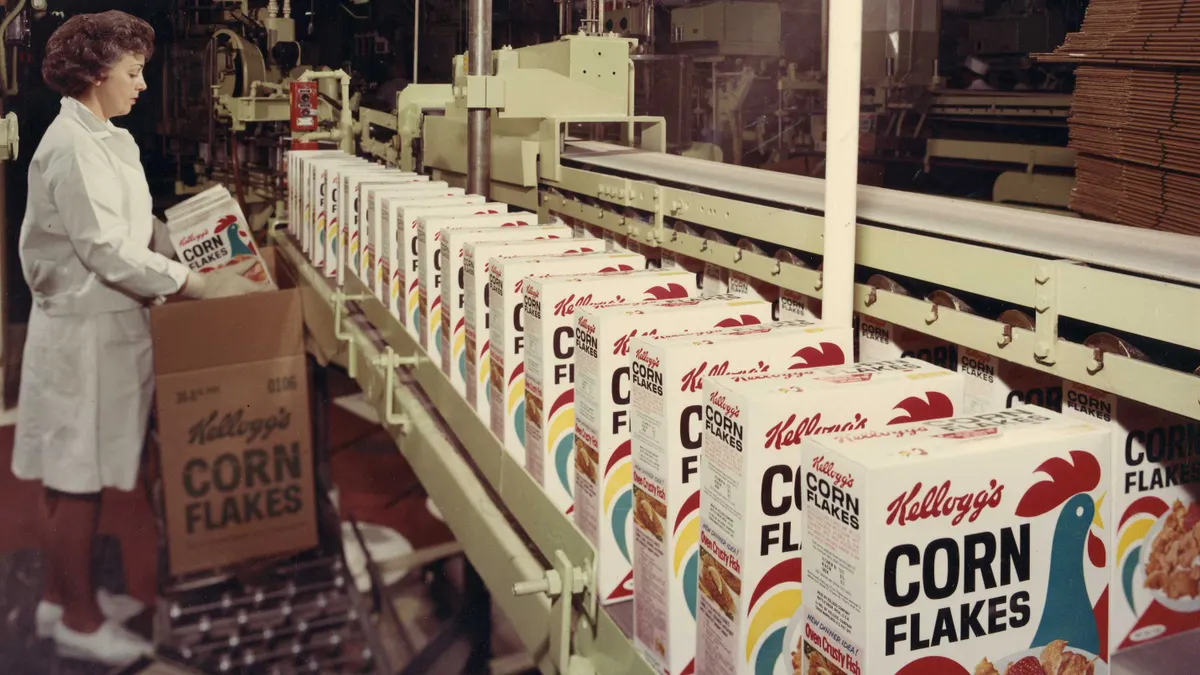
WK Kellogg’s roots date back to 1894, when founder Will Keith (W.K.) Kellogg and his brother, Dr. John Harvey Kellogg, were trying to make granola. They reportedly left a batch of wheat-berry dough behind one night, and rather than throwing it out the next morning, ran the dough through rollers. This led to the surprise creation of flakes.
W.K. experimented for a few years until he flaked corn and created the modern-day recipe for Corn Flakes in 1898.
The origins of the company were tied to the Kellogg brothers’ upbringing in the Seventh-day Adventist Church, which emphasized the importance of healthy living and a nutritious diet. The business, which began as the Battle Creek Toasted Corn Flake Company in 1906, later changed its name to the Kellogg Company.
The food maker eventually founded other iconic cereals, including All-Bran, Rice Krispies and Special K.
W. Kellogg’s historical impact on the category goes beyond just launching cereal. It was among the first to fortify cereals with vitamins, the first to add nutrition information to the packaging and the first to add recipes to boxes, according to the company.
History of WK Kellogg Co.
-
1898The corn flake is born after several experiments by the Kellogg brothers
-
1906Production of Kellogg’s Corn Flakes begins at W.K. Kellogg’s newly formed Battle Creek Toasted Corn Flakes Company
-
1922Battle Creek Toasted Corn Flakes Company renamed Kellogg Company
-
1928Rice Krispies appears on the market
-
1930Kellogg becomes the first company to print nutrition messages, recipes and product information on its packages
-
1933Snap! Crackle! Pop! appears in advertising for Rice Krispies
-
1942Kellogg’s Raisin Bran available in stores
-
1952Kellogg’s Frosted Flakes, along with Tony the Tiger, appears on store shelves
-
1963Froot Loops is introduced, along with its spokescharacter, Toucan Sam
-
2000Kellogg acquires Kashi Company, which produces all-natural foods
-
2023Kellogg splits into two companies, with WK Kellogg Co housing its cereal business and Kellanova housing its snack operations
-
2025Ferrero buys WK Kellogg for $3.1 billion
For Rice Krispies and Froot Loops manufacturer WK Kellogg, cereal is the lifeblood of its business. This provides it with an especially deep motivation to turn around the struggling category.
WK Kellogg’s challenges have been further complicated by the fact that the company has become the poster child for critics pressuring food makers to remove artificial colors from their portfolios.
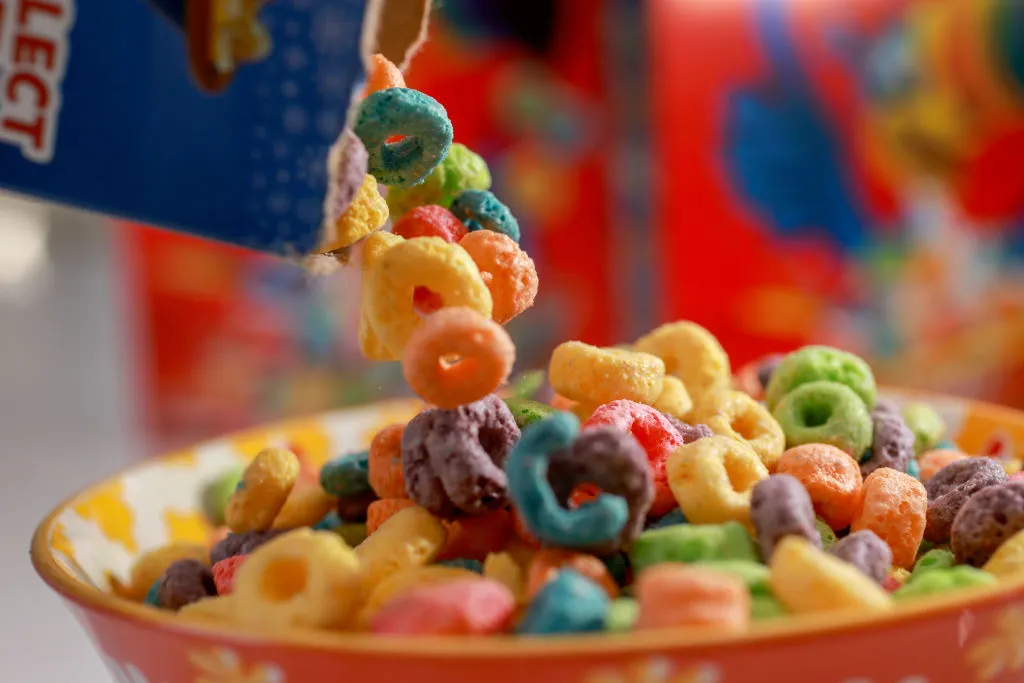
Hundreds of activists descended on WK Kellogg’s headquarters in 2024 to pressure the company to honor a prior pledge, and U.S. Health and Human Services Secretary Robert Kennedy Jr. has called out WK Kellogg’s Froot Loops for containing synthetic dyes and other chemicals not used in other countries.
WK Kellogg, the second-largest cereal maker behind Cheerios manufacturer General Mills, fully removed artificial colors from the remaining 15% of its cereal portfolio that still used them in August, achieving the goal a year ahead of schedule.
WK Kellogg has been quietly improving the nutritional quality of its cereals for a decade, Ludmer said, highlighted by a 10% reduction in its overall sugar content during the last decade and the addition of extra nutrients like protein and fiber to some products “to make sure we’re delivering against the public health needs of the day.”
Doug VanDeVelde, WK Kellogg’s chief growth officer, said recent health innovations have only served to strengthen cereal’s attempt to “get back on the right side of health.”
The cereal giant has made strides to broaden its portfolio with in-demand health trends, including Kashi Gut Health granola with fiber and prebiotics as well as Raisin Bran with added protein.
In some cases, the company has purposely avoided publicizing some of its nutritional changes. The reason: a consumer buying a cereal, such as Froot Loops, typically isn’t going to be concerned about fiber or changes in sugar content.
“Not only are the trends in our favor, but we’re making bolder moves, bigger impact moves to really get the message out there and change behavior,” VanDeVelde said. “The start of the change is happening, and we’re going to keep driving that.”
Munching on healthy trends
Even though much has been written about cereal’s demise, the food category remains incredibly popular with shoppers.
More than 120 million U.S. households, or 94%, have cereal in their pantries, according to data from intelligence and consulting firm Mintel, cited by WK Kellogg. Ready-to-eat cereal also has one of the highest repeat purchase rates of any center store sub-category at 90%, Circana found.
Still, as consumers flock to better-for-you foods, cereal has been swept up in an industry-wide upheaval that shows no sign of slowing down, leaving the industry with no choice but to respond.
Mintel found 36% of cereal consumers are interested in more cereal with functional health benefits, and 72% agree it's important that cereal brands clearly explain their health benefits on the package.”
WK Kellogg and other companies have gone to great lengths to increase the amount of protein, fiber and other nutrients in their cereals, while actively promoting their inclusion on the packaging.
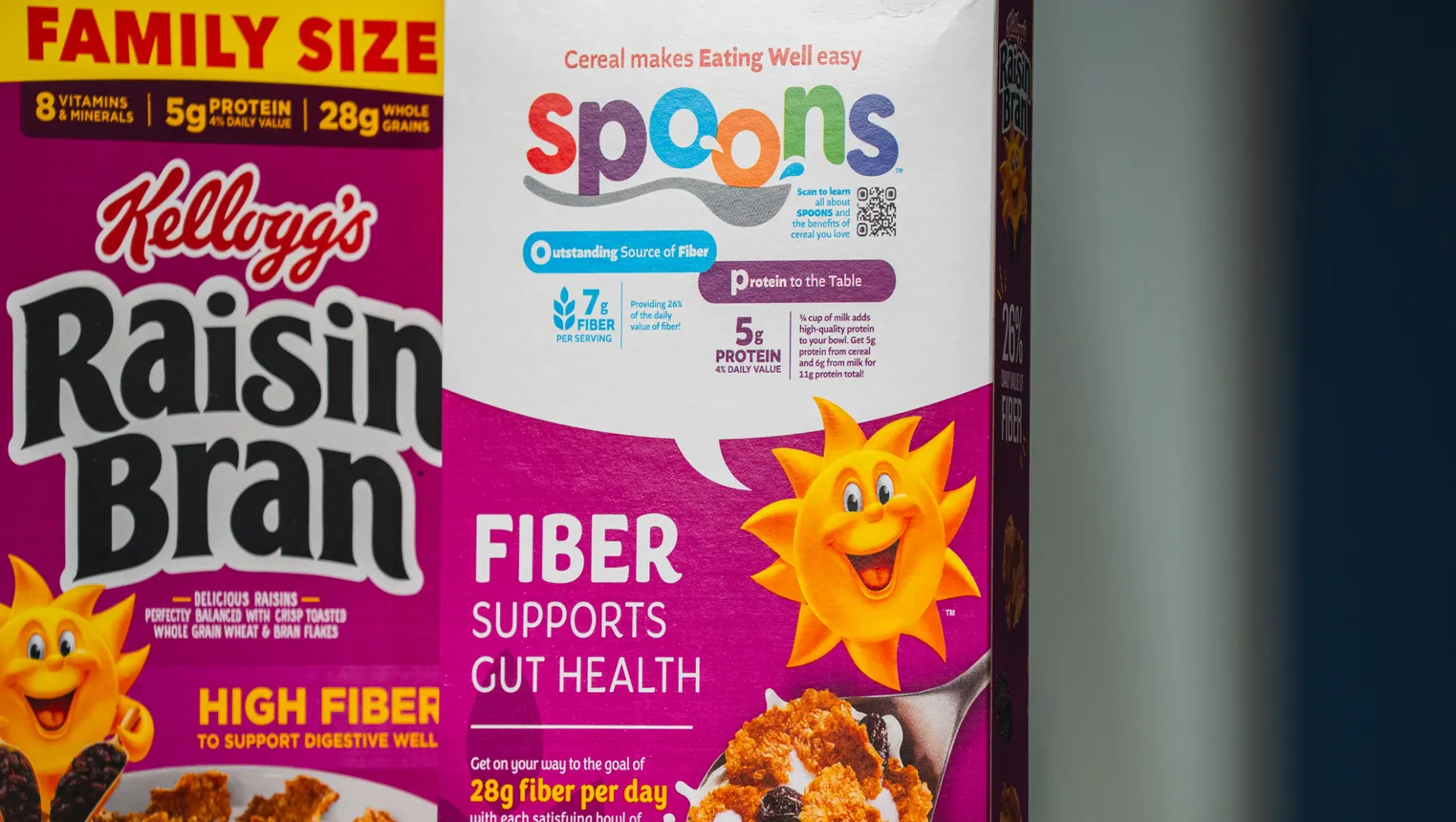
To better educate consumers about the nutritional benefits of its products, WK Kellogg launched its first Super Bowl ad in 15 years last February featuring Raisin Bran. The company also started rolling out a proprietary on-pack nutrition label known as SPOONS earlier this year.
The SPOONS initiative — which stands for simple ingredients (S), protein (P), outstanding fiber (O), other nutritious foods (O), nutrients you need (N), and single-digit sugars (S) — highlights key nutrition attributes on the back of each box for consumers who want to make quick, informed choices in a crowded cereal aisle.
“For years, [cereal companies] were kind of quiet. We didn’t talk about the category ...We stepped back and said: ‘No, we’re cereal. We belong and we’re going to talk about it.’ ”

Sarah Ludmer
WK Kellogg Co, chief wellbeing and sustainable business officer
WK Kellogg is also placing banners on the top of the front panel of each cereal to highlight health claims the company found to be most important to consumers purchasing each brand.
A box of Frosted Mini-Wheats, for example, touts whole grains, higher fiber and no artificial colors or flavors. Kashi Go cereals prominently highlight protein and fiber, while more indulgent brands, such as Froot Loop’s chocolate-flavored Cocoa Loops call out fiber content and the use of real cocoa.
Frosted Flakes shines a light on its slimmed-down ingredients list, the absence of artificial colors and flavors and the use of American-grown corn.
“This is helping people understand a category that is quite complex,” Ludmer said. “When people talk about the category, they talk about cereal like it’s all the same.”
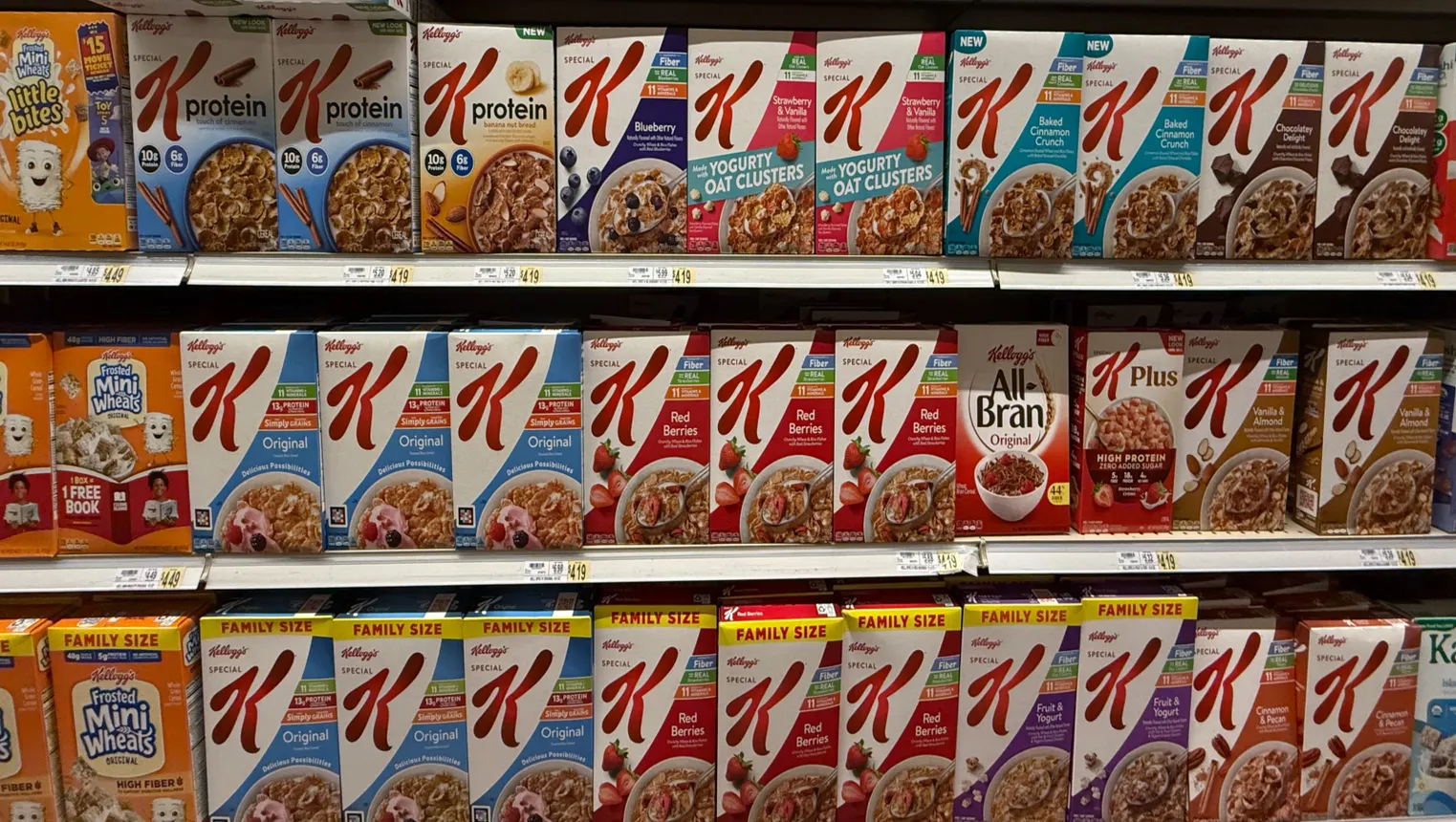
In reality, the cereal aisle, which can be as much as 80 feet long at some retailers, contains a diverse mix of products that Ludmer said provide options for different consumer age groups, nutritional requirements and personal preferences.
All this is further complicated by the fact that consumers’ preferred brands typically evolve as they age. Younger consumers prefer indulgent and more visually appealing options, such as Froot Loops for kids and Frosted Flakes in college.
But as they age and become more concerned about their health, shoppers often switch to brands such as Special K and Kashi. This means cereal manufacturers need to have choices for consumers, and lots of them.
“Our goal is to show consumers that there is a cereal for you,” Ludmer noted.
Richard Caines, senior food and drink analyst with Mintel, said health-focused innovations such as protein, fiber, whole grain, low sugar and clean label should create some pockets of growth for cereal in the near-term, but they are by no means a “silver bullet” to revive the category.
“Traditional cereal is not going to go away, but I think companies are increasingly treating it as a category that needs refreshing,” Caines said. “You can’t just rely on it being a nostalgic staple. There’s got to be more innovation.”
VanDeVelde said WK Kellogg’s investments are paying off, noting the company has observed improvements recently in both the broader cereal category and internally at its own business.
Cereal sales are still down, but are falling at a slower rate. Sales of cold cereal in the U.S. declined 0.5% in 2026 as of June 28 compared to the same period a year ago, according to Circana data provided by WK Kellogg. That’s an improvement over a 1.5% decline in 2025.
For Kellogg alone, fiber-led brands Raisin Bran and Frosted Mini-Wheats have seen sales turn positive recently after years of declines. Other brands have also rebounded compared to last year, including Kashi, which is up 26.8%; Froot Loops, up 6.2%; and Apple Jacks Original, rising 2.5%, according to Circana data for the 13 weeks ending June 28.
“We’re going to continue to see an upward trajectory” in cereal, a confident VanDeVelde predicted. “The start of the change is happening, and we’re going to keep driving that. People want to love cereal.”
Challenges remain
While the cereal category is stabilizing, its future is murky at best.
Mintel predicted that any further growth in cereal during the next five years will largely be the result of price increases, Caines said. Product volumes through 2031 are expected to remain flat.
Post CEO Nicolas Catoggio, who previously oversaw cereals such as Fruity Pebbles and Honey Bunches of Oats for the St. Louis company, told analysts in August that the category’s long-term outlook remains far from certain.
“Where the category is going to be, we don’t know,” Catoggio said, before adding, “The good news is it’s actually slowly improving quarter after quarter. It’s getting closer to what we see as the long-term sustainable trend in the category of, call it, minus 1%, minus 2%. We are not there yet, but we’re getting closer.”
Companies that win in cereal will have the best odds of success by expanding the category beyond breakfast, underscoring the food’s ability to be a complete meal option, providing in-demand functionality and making cereal more snackable, analysts said.
“The future for the category is going to depend less on the sort of traditional cereal for breakfast,” Caines said. “It’s going to be more about actually persuading people to pay more for the cereal, and I think there are a few different elements to that. You’ve got to have the things that really add value.”
This dynamic is a big reason why some of the most successful cereal brands in the past few years have been startups.
High-protein and high-fiber offerings, such as Magic Spoon and Purely Elizabeth, entered the space, citing an opportunity to reinvigorate a category with better-for-you cereals that tap into what more consumers are looking for in their food.
The portfolios of both brands’ cereals, oatmeals and granolas tout the inclusion of zero or little sugar, high protein content and the use of in-demand ingredients such as whole grains, nuts and seeds.
Big companies have taken notice of the success of these once-scrappy firms by introducing their own challenger brands.
Post introduced a cereal called Sweet Dreams, which is designed to encourage a healthy sleep routine and satisfy late-night hunger. WK Kellogg debuted its own better-for-you cereal called Eat Your Mouth Off in 2024, with each serving containing 22 grams of protein and zero grams of sugar.
But it may be difficult for cereal giants to fully replicate the success of independent brands that don't have the same history or reputation as WK Kellogg.
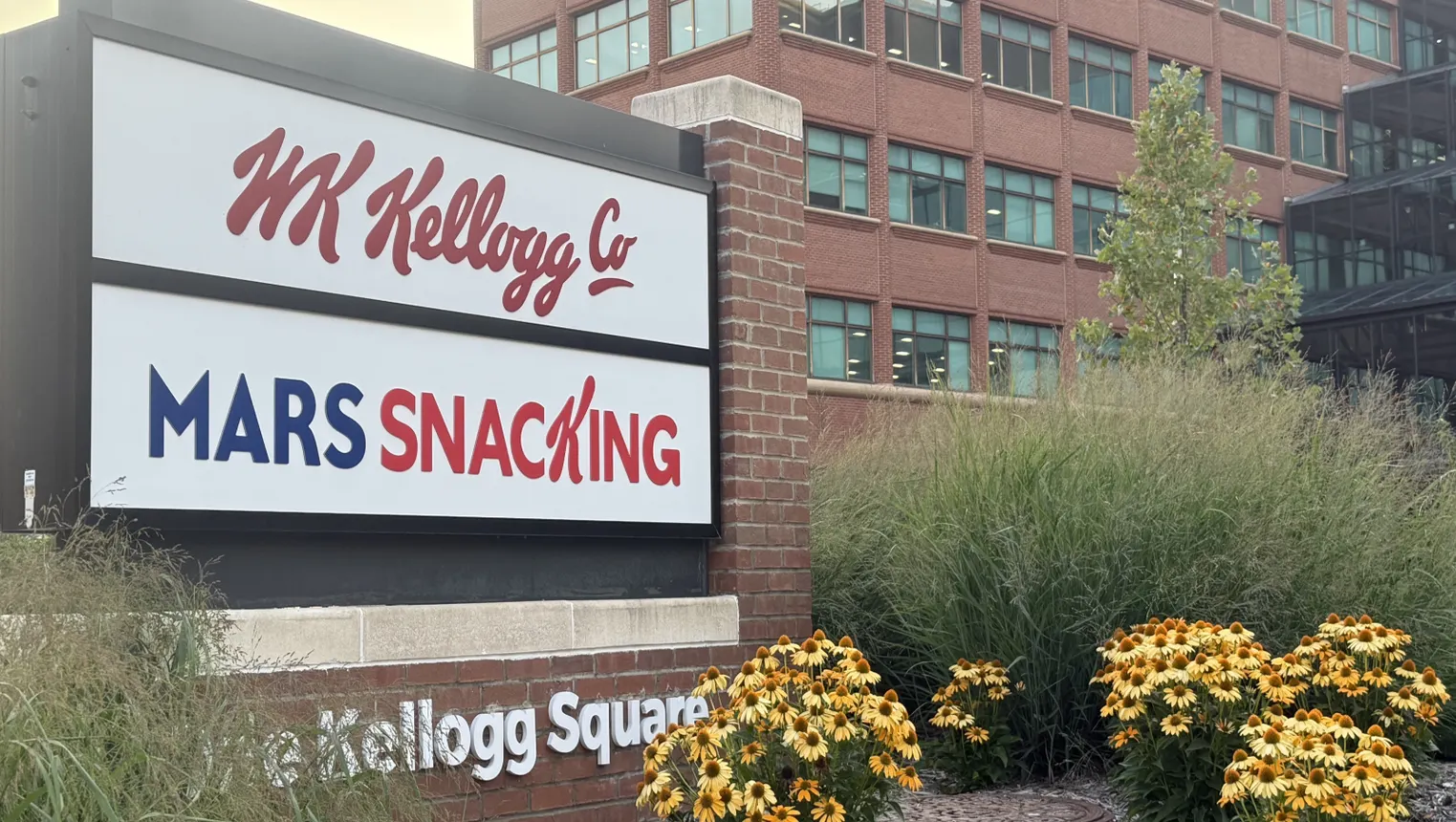
Ferrero, only 11 months after closing the WK Kellogg acquisition, purchased Purely Elizabeth for an undisclosed amount. Innova’s Scott said the purchase was an admission that it will be tough to shed cereal’s negative connotation despite the company’s best efforts.
“Consumers are savvy, and Purely Elizabeth has a lot of trust built into their brand name” as better for you, less processed and natural, Scott said. “When the average consumer associates big corporations with sugary cereal or something that is maybe more heavily processed, getting consumers to change their mind can be really hard, even if what you’re trying to convince them of is true.”
Back in Battle Creek, Behnke, the town’s mayor, said cereal will always be important to the city even if its glory 2days are likely behind it. He is even optimistic that as cereal companies close plants or shift operations in other parts of the U.S. that some of those jobs could make their way back to his hometown.
After spending much of his life immersed in cereal, Behnke sometimes finds himself a bit nostalgic, noting he has WK Kellogg memorabilia, including bowls, bobbleheads, postcards, golf balls and other trinkets.
He fondly recalls when his daughter wrote notes to WK Kellogg’s CEO when she was little, asking the company to add more marshmallows to her favorite Winnie the Pooh-themed cereal.
“My 18-year-old and 24-year-old [kids] don’t eat as much cereal as my wife and I probably did when we were growing up at their age,” said Behnke, who still enjoys cereal about three times a week. “But still, I do my best to buy as much cereal manufactured in Battle Creek as possible. Whether or not we finish it, it remains to be seen.”