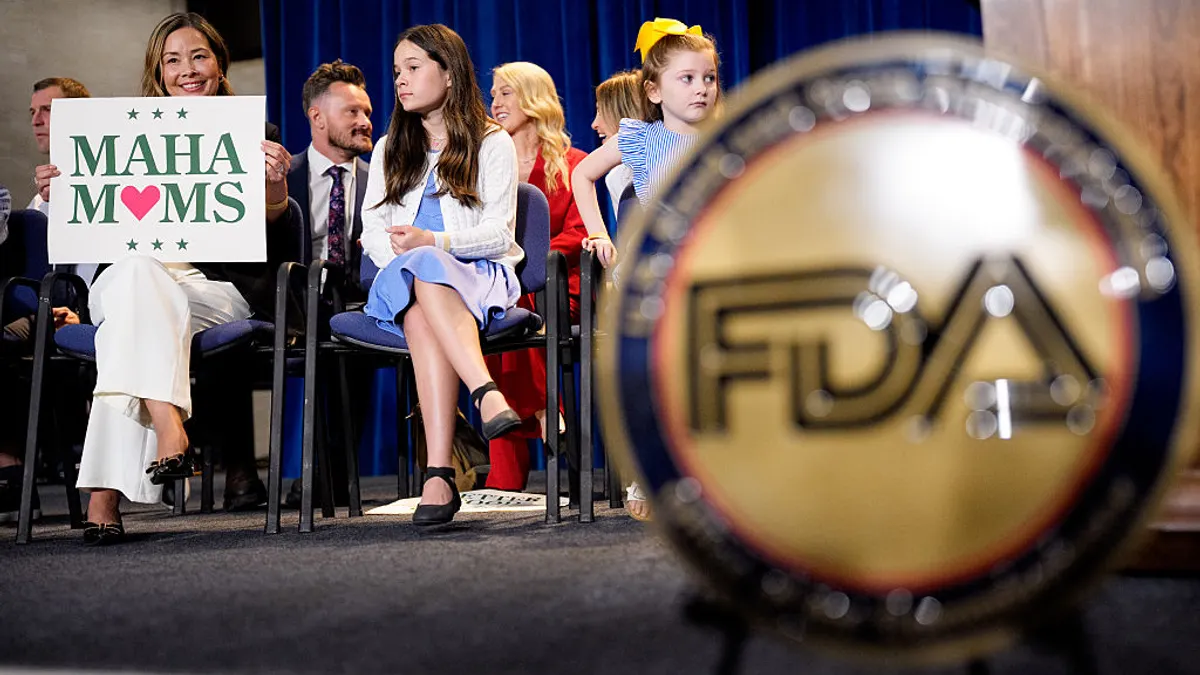
Food was at the forefront of the Trump administration's "Make America Healthy Again" movement this year, creating new regulatory headwinds for companies as they struggle against slowing consumption and sales.
Lawmakers on both sides of the political spectrum capitalized on consumer anxieties around artificial dyes or other ingredients associated with ultraprocessed foods. While the FDA has voluntarily requested companies phase out artificial dyes by the end of next year, several states — most notably Texas, California and West Virginia — have gone further with outright bans or labeling restrictions on foods containing certain ingredients.
With Congress unlikely to interfere with state legislation, food companies are largely on their own when it comes to navigating a patchwork of regulation. Some have already responded with MAHA-friendly formulations by removing artificial dyes or moving away from ingredients such as seed oils.
Other companies, however, are fighting back, saying that state regulations are misleading to consumers and also preempt federal law. Some of the biggest lobbying groups representing food and beverage companies like Kraft Heinz and Coca-Cola have sued states over their regulations, a trend that could continue in 2026 as these laws get closer to going into effect.
Food Dive compiled the biggest stories that shaped ingredient regulation this year, many of which will have implications for companies in 2026.