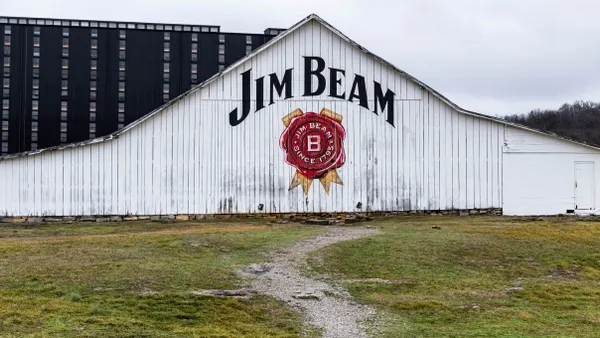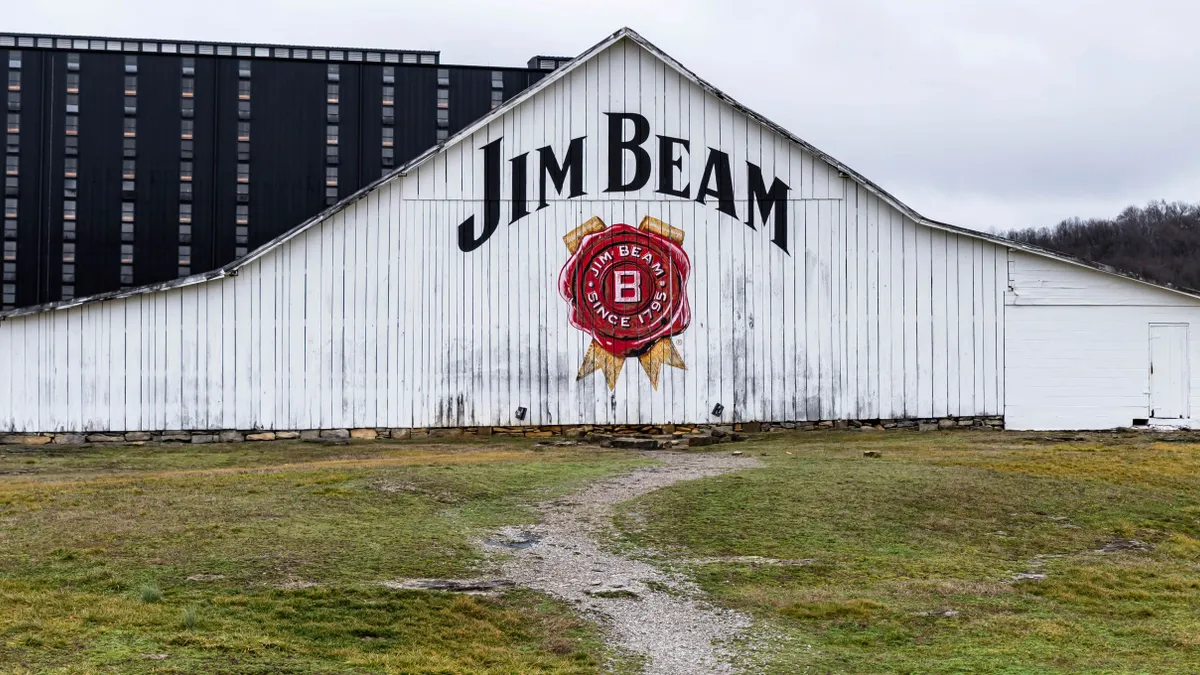
Jim Beam is continuing to pause production at its flagship Kentucky distillery indefinitely as whiskey demand remains low.
The Suntory Holdings-owned brand originally announced a one-year production pause at the Clermont, Kentucky, facility last December, with plans to resume distilling operations in 2027. A Jim Beam spokesperson on Monday declined to provide an updated timeline for a reopening, saying the company would “reassess production needs as our forecasts evolve.”
Jim Beam production has been shifted to the Booker Noe Distillery in Boston, Kentucky, which is the brand’s largest distillery with 45 million original proof gallons produced per year. The Clermont facility remains open to visitors for tastings, and it is still used foraging, warehousing, bottling and distilling craft brands including Knob Creek, Little Book and Booker’s.
“This approach allows us to maintain the quality and consistency consumers expect while making the best use of our Kentucky distilling network,” the spokesperson wrote in an email
During the pause, Jim Beam will work on infrastructure improvements “to support the site’s long-term quality, safety and operational reliability,” the spokesperson said.
No layoffs were associated with the production pause.
Last year, Jim Beam paused production at the Clermont facility as the whiskey industry struggles with falling consumer demand. Kentucky, a state known for its bourbon production, was also grappling with a record amount of aging bourbon in storage.
U.S. whiskey inventories remain three times above estimated annual demand, according to IWSR, a situation made more challenging by trade restrictions and boycotts of American alcohol over tariff policy.
Overall, total beverage alcohol volumes declined for the third successive year in 2025, with global spirits volume falling 3% during the time period. However, a 2026 report from IWSR noted that the global whiskey market saw volumes increase 2%, with premium price tiers growing.
The value tier in whiskey fell by 7% in volume in 2025, which IWSR said indicates that oversupply “is concentrated in the mainstream and entry-level segments, rather than at higher price points.”