Popcorn is in need of its own pop.
While popcorn remains one of the most popular snacks in the U.S., sales last year were flat at $3.2 billion, according to Spins data. It's a reflection of two competing trends within the sector: Sales in the fast-growing ready-to-eat popcorn segment are surging, while the larger, more mature microwave segment is declining.
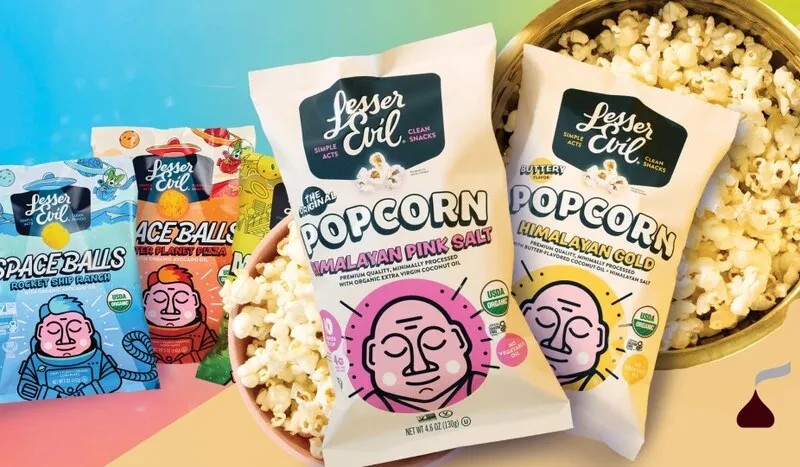
Bagged popcorn brands such as Lesser Evil, SkinnyPop and Smartfood have exploded in popularity during the past decade. Ready-to-eat popcorn is not only more convenient than microwavable options, but they are also more conducive to innovation, leading to a wide variety of flavors from classic butter to pickle or sriracha.
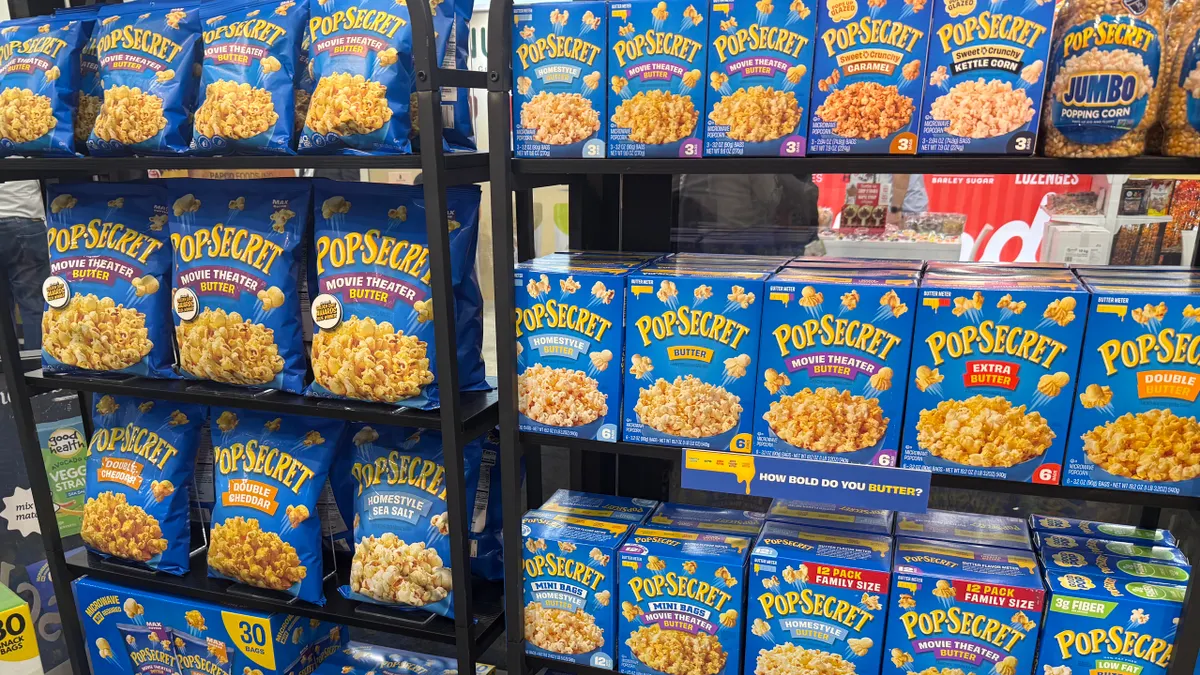
Microwave popcorn stalwarts, meanwhile, are trying to reverse a sales slump. Orville Redenbacher and Pop Secret are depending on unique flavors, trendy ingredients like protein, different packaging sizes and other innovations to sharpen their competitive edge.
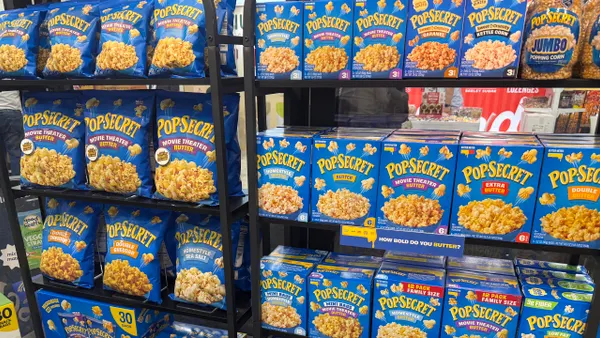
“There's a lot of sameness right now in the [microwave popcorn] category. There's butter, there's a lot of butter, there’s extra butter. There's at least 20 different types of butter,” said Johanna Ascencio, brand director of salty snacks at Conagra Brands. “At some point you're like, what's the difference?”
Ready-to-eat renaissance
Despite its recent headwinds, popcorn remains an attractive category for snacking companies due to its enduring reach and popularity around the world. In the U.S. alone, Americans consume 17.3 billion quarts of popped popcorn each year, with the average person eating about 68 quarts, according to the USDA.
Sales of ready-to-eat popcorn, once a niche category, have thrived because this snack is typically made with simple ingredients popular with today’s consumer, such as corn, oil and salt. They're also low-calorie, shareable and convenient.
Erin Reese, senior director of popcorn and puffs at Hershey, said consumers are increasingly seeking more from their popcorn.
“It is no longer enough to be low calorie or sugar free. Consumers increasingly want snacks with added health benefits, taste, convenience and variety,” the Hershey executive said.
The LesserEvil and SkinnyPop owner has built its ready-to-eat popcorn business to appeal to a diverse cross-section of consumers, whether they are looking for a guilt-free snack or a moment of indulgence.
Hershey’s and Reese’s branded popcorn prioritize indulgence similar to their namesake confections, while SkinnyPop and LesserEvil brands play in better-for-you snacking. LesserEvil, for example, touts its use of organic ingredients and premium oils that appeal to Gen Z, millennials and other label-conscious consumers.
“At the end of the day, we’re showing up for more consumers in more ways,” Reese said.
The opportunities in ready-to-eat popcorn have led to a wave of new entrants. But for smaller popcorn makers, their reach and finite resources mean they’re left to focus on excelling in one specific area at a time.
“There's a lot of sameness right now in the [microwave popcorn] category. There's butter, there's a lot of butter, there’s extra butter. There's at least 20 different types of butter. At some point you're like, what's the difference?”

Johanna Ascencio
Brand director of salty snacks, Conagra Brands
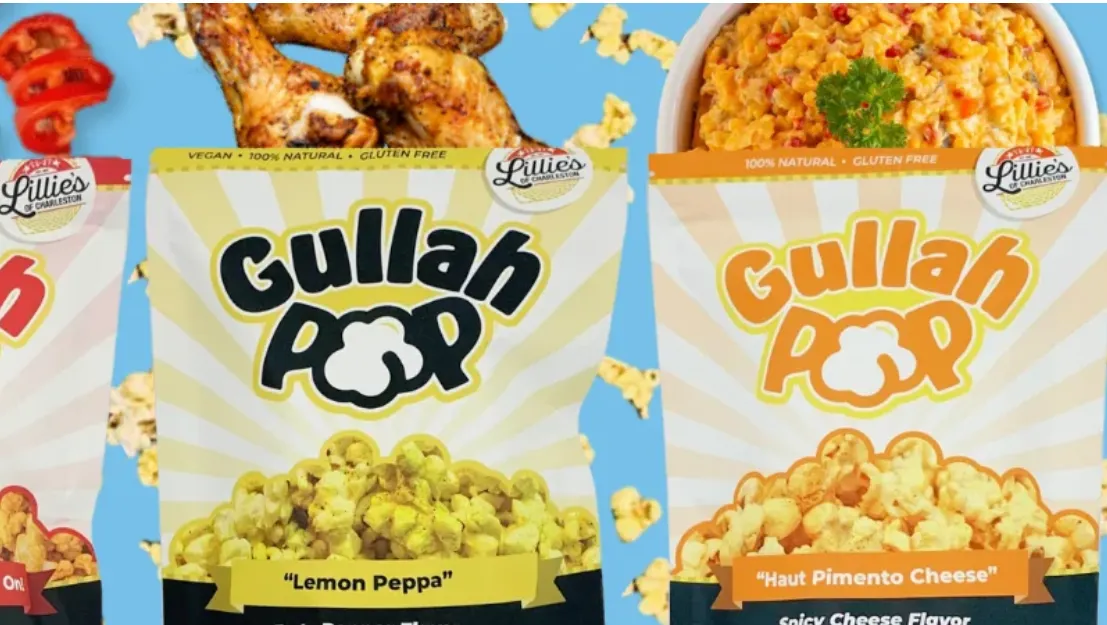
Lillie’s of Charleston, a family-owned spices and seasonings manufacturer, launched Gullah Pop two years ago with a focus on bold flavors. The company initially used popcorn as a vehicle for festival-goers to sample its seasonings, but consumers kept asking if the food maker sold its popcorn.
Today, the popcorn business depends on bold flavors such as Southern Pimento Cheese Spread and Southern Wing Spice Lemon Peppa. Missing from Gullah Pop’s offerings are popcorn staple flavors such as butter or sea salt.
“That’s by design,” said Kellye Wicker, Gullah Pop’s co-founder and chief growth officer. “I think it'd be too easy to blend in, to not really stand out. Why would somebody spend more money to get the same popcorn when you can have national brands that cost less? I don't think we would have been nearly as successful without our flavors.”
Other smaller popcorn brands have leaned into other flavor and ingredient trends, such as protein.
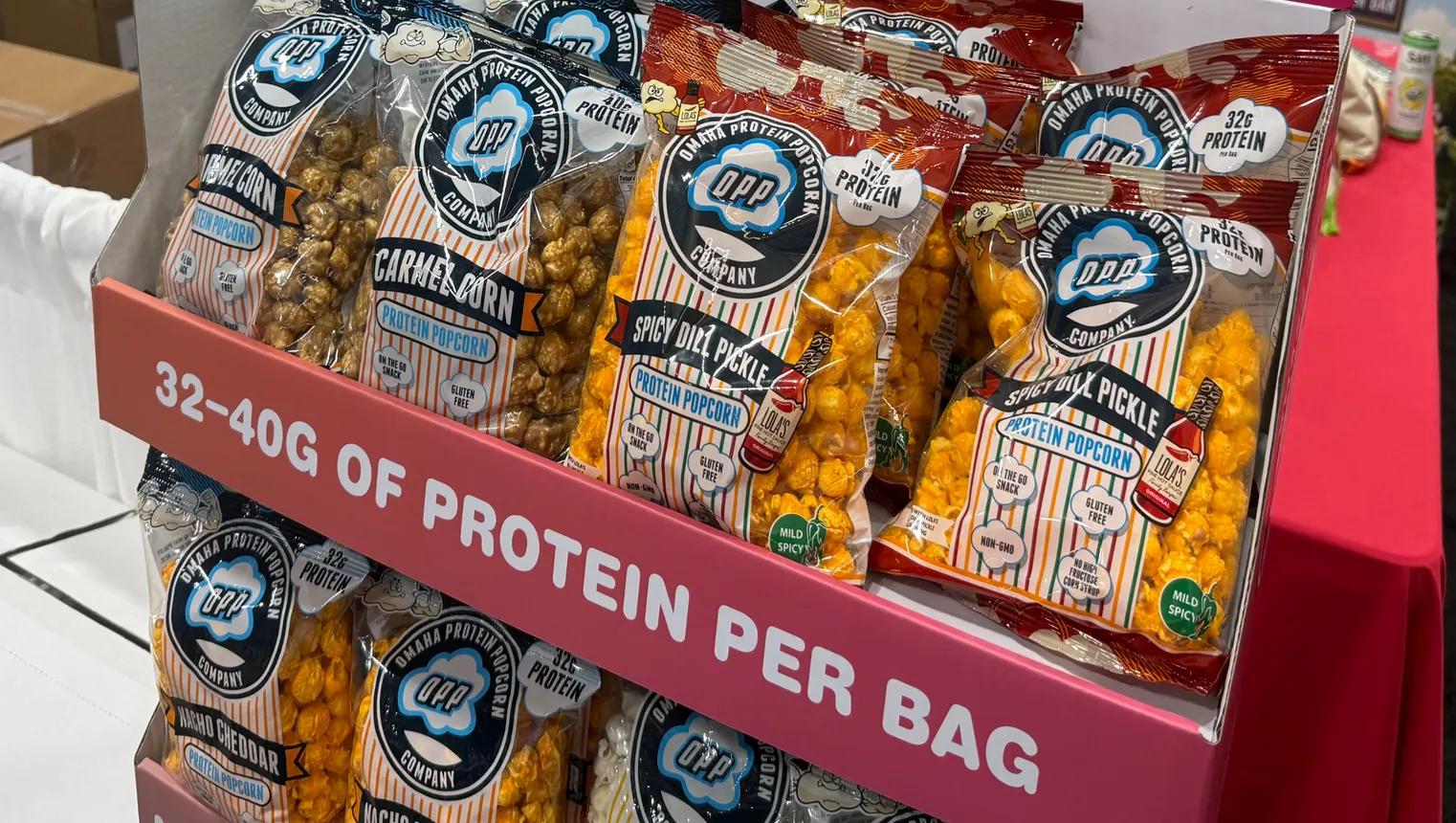
Omaha Protein Popcorn was developed eight years ago by Timothy Rexius for NFL athletes he was training who were cheating on their diets. But he saw a market that was much broader, especially with kids who were less likely to eat protein bars or shakes. Rexius identified popcorn as the perfect vehicle due to its widespread popularity.
Rexius turned to his biomechanical engineering degree and, after 600 batches, developed a popcorn with up to 40 grams of high-grade protein per bag without sacrificing taste.
The entrepreneur knew he was onto something when he tested the concoction on his six kids and nobody complained. In addition to protein, Omaha uses clear packaging, ties to the Nebraska city where the company is headquartered and the brand’s history to connect with consumers and stand out in a crowded category.
Omaha’s popcorn isn’t going to be the cheapest, but that’s not Rexius’ goal either.
So far, Omaha sales are booming. The company generated more sales in the first 60 days of 2026 than it did all of last year as consumers gravitated to its protein-loaded popcorn. Sales are forecast to be significantly higher this year than in 2025.
“We appeal to a much larger demographic than most," Rexius said. "The average person who goes to a gas station or a grocer that likes popcorn can easily make a lateral move to ours to add a little protein in their diet and not feel like they're sacrificing.”
Microwave giants play catch up
While microwave popcorn has more limitations when it comes to innovation, Conagra, which controls roughly half of the microwave popcorn market, is aiming to “inject some excitement” by launching new flavors and innovations, said Ascencio.
Orville Redenbacher’s, the top brand in the microwave category, has debuted the Orville Naturals line that is made with real ingredients and uses oil from avocado instead of oilseeds.
Conagra’s Act II value popcorn brand has launched ACT II Max Blast, an offering with sachets that consumers can open to add butter like they do at the movie theater. It’s also allowed the Chicago-based company to go beyond butter with more flavor innovations like Queso Jalapeño and Hot & Spicy.
Ready-to-eat has also been a big focus for Conagra as the food giant grapples with an influx of startups entering the category, many of whom are turning to unique ingredient profiles to help them stand out.
Conagra tapped into the popularity of pickles by launching a Vlasic popcorn. And Angie’s Boomchickapop, the No. 3 ready-to-eat brand popular with younger consumers, is doubling down on its own unique flavors with the rollout of Cinnamon Churro and Mango Habanero.
The snack maker also is positioning the brand as a permissible indulgence and switching to avocado oil in Angie’s sea salt version.
“We need to press the gas in terms of innovation, and that's exactly what we're doing,” Ascencio said.
Our Home, which acquired Pop Secret from The Campbell’s Company in 2024, has also turned up the heat on innovation. The food brand aggregator has modernized Pop Secret's packaging and added a butter meter to the side of its microwave popcorn to provide more clarity for consumers. It’s also prioritized selling package sizes that are portion-controlled or suited for budget-conscious consumers.
Our Home’s biggest move, arguably, was moving Pop Secret beyond the microwave with the launch of a ready-to-eat offering in April 2025.
Megan Osowski, vice president of marketing at Our Home, said Pop Secret is “being really surgical" about "meeting consumers where they are." She said the strength in Pop Secret’s ready-to-eat popcorn is an opportunity to carry that momentum and boost microwave sales through promotion and innovation.
Despite the headwinds battering the microwavable popcorn space, companies are optimistic the segment will continue to resonate with consumers. Executives said popcorn in the microwave can address consumer needs that ready-to-eat often cannot. It’s hot and is typically a better value, which in today’s inflationary environment can be enticing to cash-strapped consumers.
“We're seeing that as an opportunity to really bolster the whole brand and bring those occasions back into where the brand plays in all different popcorn formats,” Osowski said. “We have continued to invest in this brand ... even in a category where there have been some challenges in the last five years.”