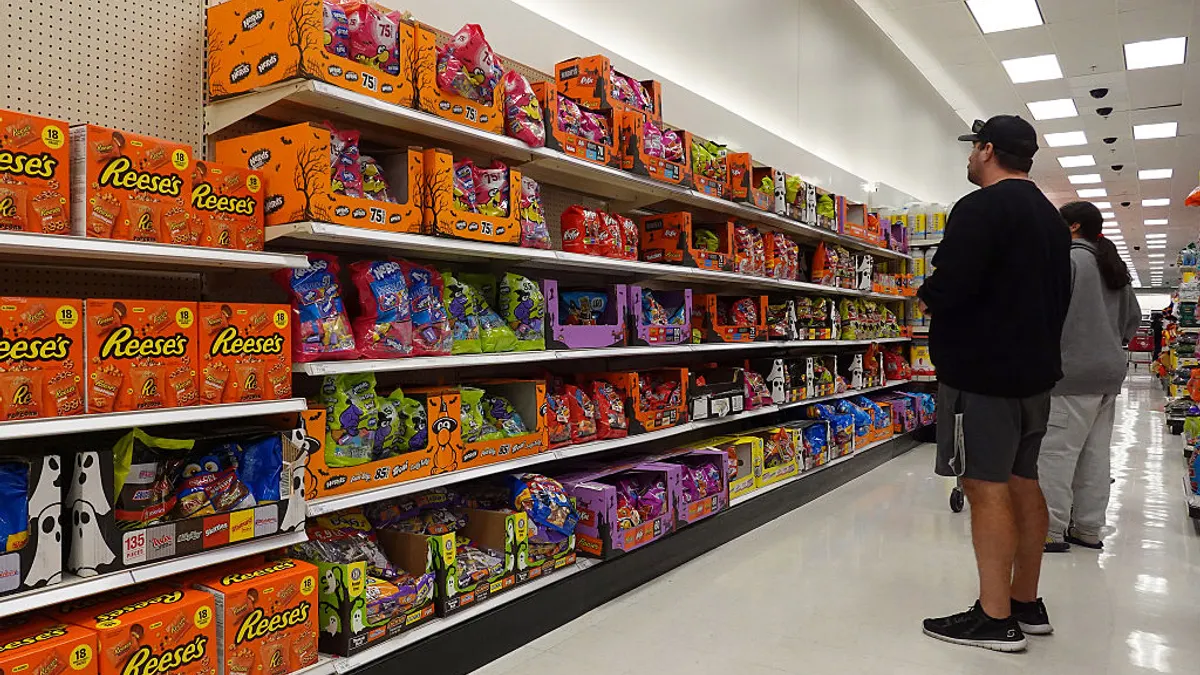
High cocoa and sugar prices are giving consumers a fright ahead of Halloween and prompting more food manufacturers to lean into salty snacks as an option for trick-or-treating.
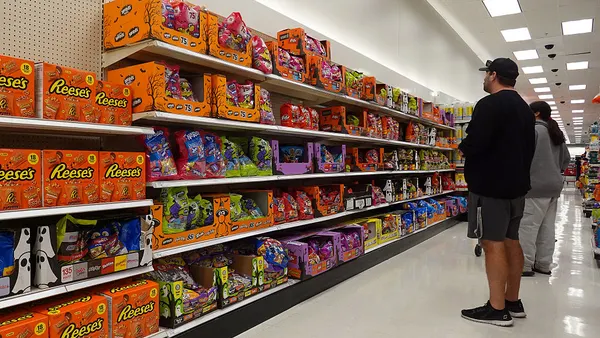
Halloween candy prices are up over 15% in 2026, according to an analysis from Groundwork Collaborative and the Century Foundation, or four times higher than overall inflation. Increased prices could prompt consumers to cut down on treats this year, with a LendingTree survey finding that 35% of consumers shopping for the holiday plan to skip out on candy.
Consumers are spending less on candy
Rising ingredient costs hit the confectionery industry hard, prompting many companies to raise prices at a time when consumers are already pulling back on spending due to widespread inflation. Approximately 65% of ingredient costs in the confectionery industry come from cocoa beans, sugar and corn syrup — all of which have faced supply shocks that have sent costs spiraling, according to the Bureau of Labor Statistics.
Extreme climate conditions in growing regions of West Africa created cacao shortages and prompted prices to reach record highs. Prices for U.S. products made from cacao increased about 144% from December 2019 to November 2024, according to the BLS.
A similar story has played out in sugar, where drought has led to lower supply out of Mexico, the largest source of raw and refined sugar imports for the U.S. Prices for sugar manufacturing increased nearly 44% from December 2019 to November 2024, the BLS said, while prices for corn sweeteners rose over 26% during the same period.
As companies grapple with the higher costs, many have moved to pass the price increases to consumers. Mondelēz sour gummy candy variety packs cost 39% more in 2026 than they did in 2025, according to Groundwork's analysis, while Hershey’s seasonal Reese's increased in price by over 23%.
Consumer candy prices rise as manufacturing costs mount
Beyond raising prices, companies have also changed formulations to rely less on expensive ingredients like cacao. Many manufacturers have leaned more on fillings and wafers to reduce the amount of chocolate in products and respond to consumer demand for multi-textural experiences.
But some manufacturers have gone further than ingredient changes by repositioning their non-candy portfolio as an option for consumers during the spooky season. Hershey, for the first time, added salty snacks to its Halloween lineup this year, releasing fun-sized packs of Pirates Booty and Skinny Pop.
PepsiCo's Frito-Lay took a similar approach, launching a Fright Night Mix of Doritos and Cheetos snacks to hand out to trick-or-treaters. The company also released fun-sized snacks under its NKD line that have no artificial dyes or flavors, giving parents a better-for-you option for the holiday.
Hershey CEO Kirk Tanner said at a Barclays conference in September that in an inflationary environment, smarter innovation and execution will win consumers over more than pricing alone.
"It's not about price discount and buy one, get one free," Tanner said. "You have to win consumers over with the best ideas and core brand relevance."