Cocoa prices have steeply dropped from record highs last year, but chocolate manufacturers such as Mondelēz International and Hershey are taking steps to ensure they're not exposed to further volatility.
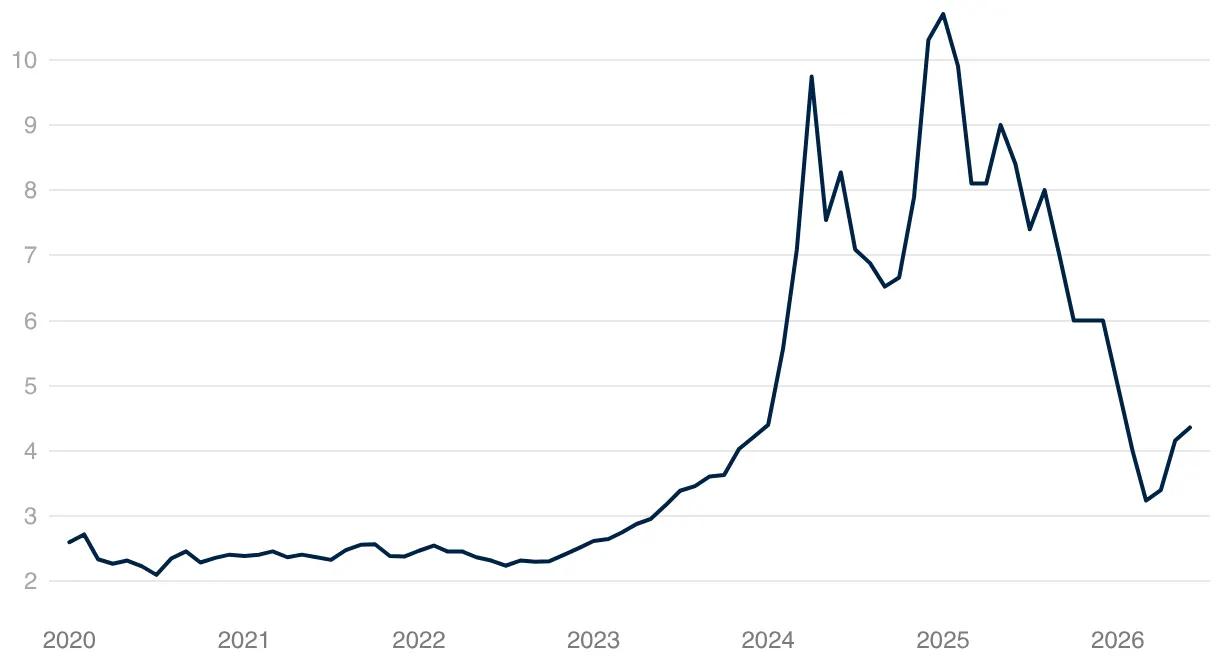
Prices hit a record high of $10.7 per kilogram, or $10,750 per metric ton, in January 2025 due to extreme climate conditions in major growing regions. They have since plummeted, bottoming out at $3.24 in March 2026 before inching upward to $4.36 in June, according to the World Bank.
Favorable weather in Côte d’Ivoire and Ghana, which together produce about 60% of the world’s cocoa, "has fueled a strong production rebound," the World Bank said. However, prices could potentially undergo fresh shocks from a stronger‑than‑expected El Niño.
Cocoa prices swing wildly
Food companies have responded by reorganizing their supply chains and aggressively cutting costs to preserve profits in the event of a price runup.
Toblerone maker Mondelēz is aiming to "become a less cocoa-reliant company," Chief Operating Officer Luca Zaramella said on a Wednesday earnings call. The company is "full steam into delivering elevated productivities, particularly in supply chain in places like Europe and the U.S.," he added.
In April, Mondelēz became the first major food company to make cell-cultured chocolate using technology from startup Celleste Bio. The company is also relying on innovation to create more bars filled with nougat, caramel, nuts and fruits — which require less chocolate than solid blocks or tablets.
Hershey said it is better able to handle potential price swings because of "some of the financial discipline that we put in place," Hershey CFO Steven Voskuil said at a Goldman Sachs forum in May. The company also diversified its supply chain to ensure that it's "much less reliant on one particular region for our cocoa."
The Reese's maker is increasing its visibility into cocoa supply, with Voskuil saying the company has more insight into "pollinization trends, weather trends, fertilizer use, pod counts than we ever had before."
"We're not trying to corner the cocoa market," he said. "We are trying to smooth the impacts over time [and] give us visibility. So if we do need to make pricing decisions, we have enough runway to be able to work that through our system and ultimately manage that volatility.”