Dive Brief:
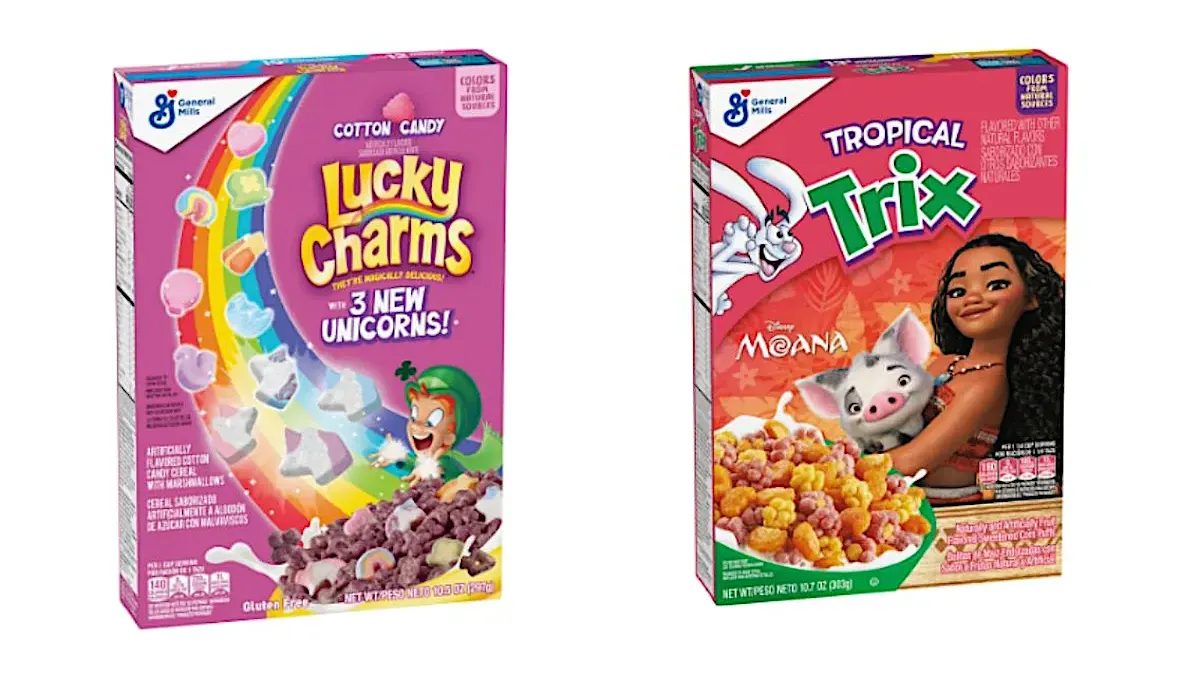
- General Mills is launching versions of Lucky Charms and Trix made with colors derived from natural sources, the cereal giant said.
- Lucky Charms Unicorn Cotton Candy cereal, with three new unicorn marshmallows, and Tropical Trix featuring a tie-in with Disney’s “Moana,” will debut later this summer.
- General Mills said it remains on track to remove synthetic dyes from its U.S. cereal portfolio by later this year and from its full U.S. retail portfolio by the end of 2027.
Dive Insight:
As regulatory and consumer pressure pushes food companies to replace artificial colors, new products provide a valuable platform for businesses to test and learn, often on a smaller scale.
In this case, General Mills is focusing on individual launches within two major brands and using the new products to showcase that it is following through on its commitment to remove certified dyes.
“These cereals showcase the kind of creativity fans love, while also reflecting the progress we’re making to remove certified colors from our cereal portfolio,” said Megan Brooks, business unit director of family favorites cereals at General Mills.
Since the product innovations are new, consumers may not have a preconceived notion for what the cereal pieces should look like and could be more likely to accept muted colors.
After the Minnesota company reformulated Trix cereal in 2016 with natural colors, sales declined after shoppers complained about the duller, less vibrant hues. General Mills brought back the classic cereal with artificial colors a year later.
General Mills said in March it removed certified colors from all K-12 school foods months ahead of a summer 2026 commitment.
Removing artificial colors has been in the works for years as consumers flock toward more natural foods, but companies began accelerating reformulation efforts after the FDA asked companies to voluntarily phase out artificial colors. Some states including West Virginia have also passed laws to eliminate the colors entirely or from foods served in schools.
Since then, major food companies, such as Nestlé USA and Kraft Heinz, have announced plans to remove synthetic dyes from their portfolios.
Some companies also have launched new products that tout the absence of artificial dyes without committing to larger-scale commitments across their portfolio. PepsiCo, for example, rolled out a Simply NKD line with salty snacks like Doritos and Cheetos that are colorless, but otherwise identical in taste to the traditional offerings.