Dive Brief:
- Tapatio hot sauce is being acquired by private equity firm Highlander Partners for an undisclosed amount, the companies said in a statement.
- The Saavedra family, which founded the brand in 1971, will retain a minority stake in Tapatio following the transaction.
- With Highlander's investment and partnership, Tapatio plans to enter new geographies, distribution channels and develop additional products. Tapatio's products have a large following in the Western U.S.
Dive Insight:
As younger consumers hunger for spicy flavors, food companies have looked for ways to deepen their presence in the space.
Some brands, including Kraft Heinz’s signature ketchup and Italian sauce brand Ragu, have launched spicy versions of their popular brands. PepsiCo established Flamin’ Hot as its own brand within its portfolio to make it easier for consumers to identify the products.
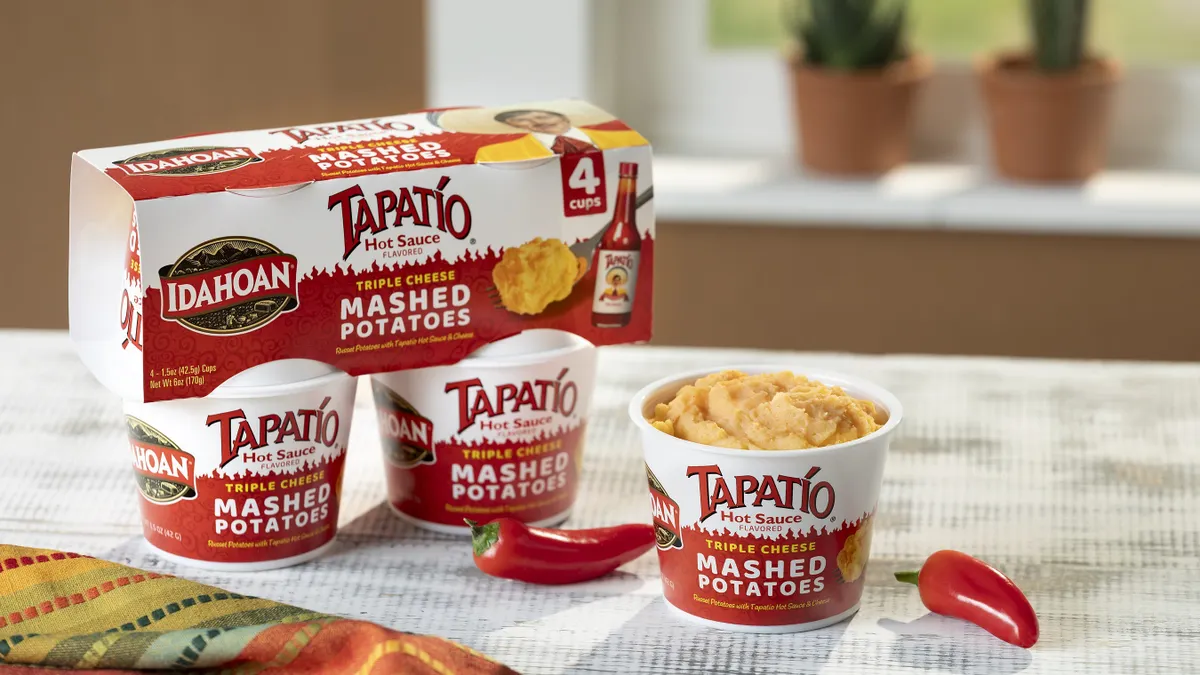
Tapatio has previously partnered with Doritos, Bud Light and Idahoan on product collaborations, according to its website.
Other firms have opted to diversify their spicy portfolio through M&A, including McCormick & Co., which purchased hot-sauce maker Cholula for $800 million in cash in 2020 and Frank’s RedHot three years earlier.
More than half of Generation Z consumers identify themselves as hot sauce connoisseurs, according to a 2024 survey published by NC Solutions. It also found that 62% of all consumers surveyed indicated they are more likely to buy a food or beverage item if it is advertised as spicy.
While Tapatio says it is the No. 5 hot sauce brand in the U.S., the offering is confident about the opportunities for expansion due to the fast-growing market, coupled with opportunities to stretch its reach into other parts of the country.
"We are excited to partner with Tapatio, a generational business that is distinguished by a strong, authentic brand in the fast growing hot sauce category,” Jeff L. Hull, president and CEO of Highlander Partners, said in a statement. “We believe that Tapatio is poised to benefit from several secular trends that are dramatically reshaping consumer food choices, and we look to take advantage of the brand's significant whitespace opportunity.”