PepsiCo is ready to continue riding the dirty soda wave after becoming one of the first mainstream soda giants to offer a ready-to-drink option.
Dirty soda, which usually combines soda with a personalized mix of creamers and fruit puree, was made popular on TikTok and the rise Utah-based chain Swig. In recent years, the indulgent drinks have landed on restaurant menus and soda companies including PepsiCo and Coca-Cola have leaned into the trend for foodservice operators.
However, the trend has been less prevalent in the grocery store, something PepsiCo hopes to change. The beverage giant is accelerating innovation with one PepsiCo executive saying the market has not yet reached “peak dirty soda.”
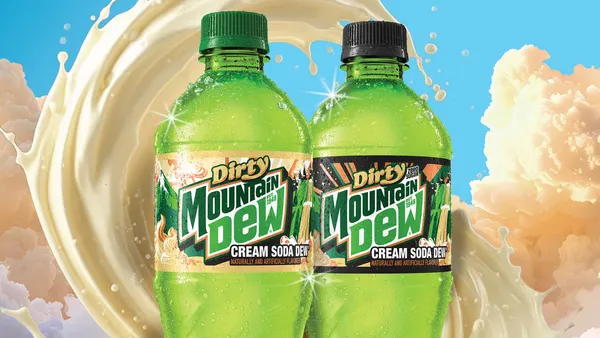
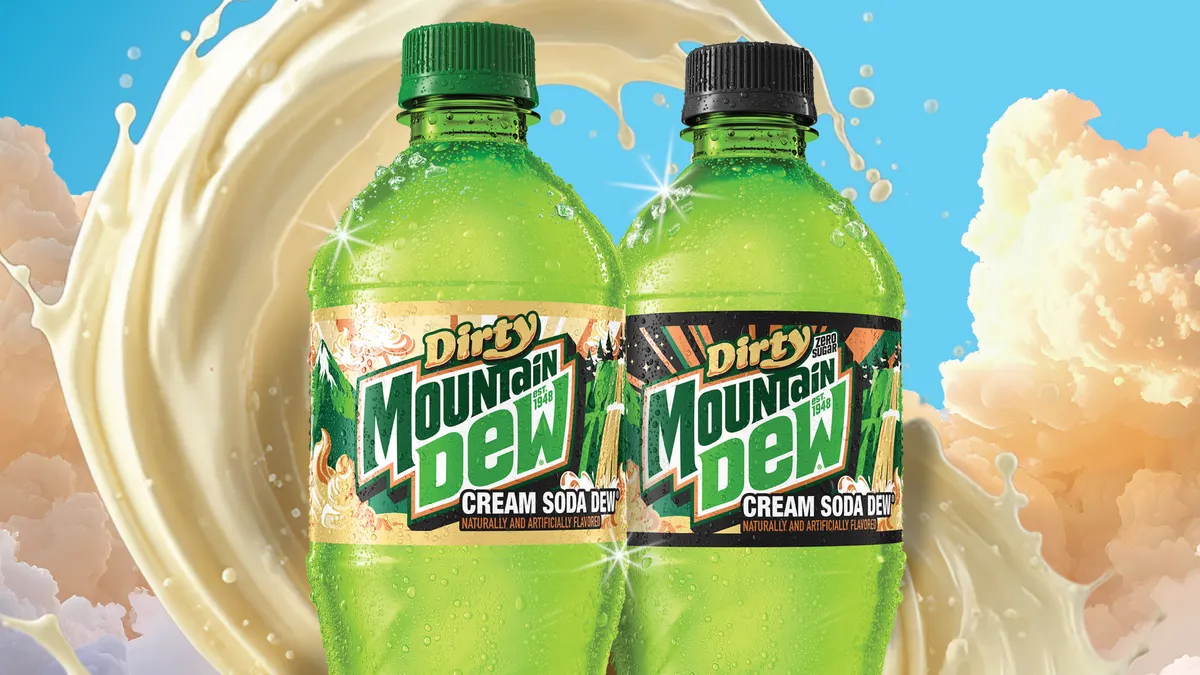
Earlier this year, PepsiCo launched Dirty Mountain Dew, a dirty-soda inspired offering with a cream soda flavor. It then followed up with the launch of Mug Vanilla Howler, which tapped into vanilla ice cream flavors.
“We were seeing dirty soda just pop up consistently in the marketplace,” said Michael Smith, vice president of marketing for PepsiCo's flavored sparkling portfolio. “Once we felt like the trend was real and there was an opportunity to service it within our portfolio, then it just comes down to what is the right way to deliver that and how does that feel unique and relevant to each of the brands.”
Because consumers already have an expectation of what a dirty soda tastes like from restaurants and chains like Swig, creating a ready-to-drink offering poses more challenges than a traditional new flavor launch. The proliferation of DIY dirty soda recipes online have also set the stage for consumers having a level of personal customization within the category, which ready-to-drink options inherently lack.
Because of these expectations, PepsiCo needed to be disciplined in meeting the moment before bringing a product to market, according to Smith.
Consumers expect a creamy finish to a dirty soda and certain mouthfeel, while still maintaining the taste of the base soda. PepsiCo focused on delivering that as well as meeting the moment of “little treat” culture, or consumers seeking small indulgences throughout their day.
While this poses a formulation challenge, it also presents the opportunity for a big payoff. Smith said the consumer reaction to the dirty soda offerings were higher than for a traditional flavor launch.
Leaning into the “dirty” moniker was right for the Mountain Dew brand, and adding a creamy taste to a citrus soda also presented an interesting innovation opportunity to stand out in the market, Smith said.
Root beer brand Mug has a different flavor profile than Mountain Dew, so the approach to making a dirty soda offering for that brand had to also look different, Smith said. The dirty soda transformation was a little easier for Mug because customers already associate root beer with root beer floats, which PepsiCo tried to create with Mug Vanilla Howler.
PepsiCo will continue to lean into cream-based additives and customization in future innovations. The dirty soda trend has outlasted other social media trends and appears poised to continue to grow, if not “accelerate,” Smith said.
“The sense of customization within beverage overall, but dirty soda specifically, is not going to go away,” Smith said. “I think our ability to deliver more unique flavor and taste experiences through the idea of additives, specifically cream-based additives, to our traditional brand portfolio is going to be something that consumers continue to push for and that we continue to deliver to the marketplace.”
Dirty sodas in concept are at the opposite end of functional drinks, leaning into indulgence instead of healthier ingredients or better-for-you attributes like lower sugar. But Smith sees a world where the two trends can combine, especially given the rapid rise of sodas with protein, prebiotics or mood boosting ingredients.
“I generally think consumers can hold two ideas in their mind at the same time,” Smith said. “And I also think that they're always looking to solve multiple needs within an occasion. So if we can do that credibly, I don't see a barrier there.”
PepsiCo has already begun to capitalize on that potential convergence with a campaign encouraging consumers to mix protein shakes with Mug zero-sugar soda, playing to both dirty soda and functionality trends.
“I think it comes down to 'Can we deliver a credible product offering that delivers on both [trends],'” Smith said. “We should strive for that where we can and where it makes sense and where it also makes sense for the brand.”