Consumers have long been rethinking their relationship with alcohol, seeking moderation as they prioritize their health. Now, industry experts say caffeine could be next on the chopping block as more shoppers gravitate to decaf coffee or alternative energy drinks.
“People have been cutting back on alcohol for years now. I always figured caffeine would be next,” said Scott Dicker, senior director and head of market research for data company Spins. “Alcohol is the nighttime vice, and caffeine [is] the daytime one.”
Decaf coffee, once considered a small segment of the coffee sector, is becoming a more mainstream option among consumers. And functional beverages that offer different sources of caffeine, such as paraxanthine and L-theanine, provide even more options for consumers to get a boost without jitters.
Both phenomena play into the ongoing trend of “conscious consumption,” Dicker said, where consumers are looking at labels and are more aware of certain ingredients and what they do. The rise of wearable technology like smart watches and rings have also made people more cognizant of their sleep patterns, and how what they consume impacts it.
“If you ask someone how much caffeine they consume, you’ll often get a somewhat sheepish response,” Daniel Solomons, co-founder of better-for-you energy drink Update, wrote in an email. “People know they may be consuming more than they want to, or they’re actively trying to cut back, but they still need the utility that energy provides.”
Update differentiates itself from other energy drinks by using paraxanthine, a caffeine derivative that doesn’t have the crash associated with caffeine.
Like with alcohol, more people are shifting their caffeine intake without abandoning it entirely.
While both decaf and other alternatives are on the rise, it’s unlikely that the rise will overtake the mainstream market, Dicker said. However, the category's rapid growth could unlock new opportunities for beverage makers hoping to stand out in the more mature energy drink market dominated by giants such as Celsius and Monster.
Decaf coffee gets a jolt
Decaf is growing at a faster rate than coffee in most categories, according to Spins data. The segment could have an advantage compared to other alternatives because it’s well established.
Sales for decaf beans and grounds rose 5.3% over the past year, and ready-to-drink decaf coffee sales grew 25.7% during the same time period, according to Spins data. Unit sales have declined however, which Dicker said is due to pricing, with regular coffee seeing a similar slowdown.
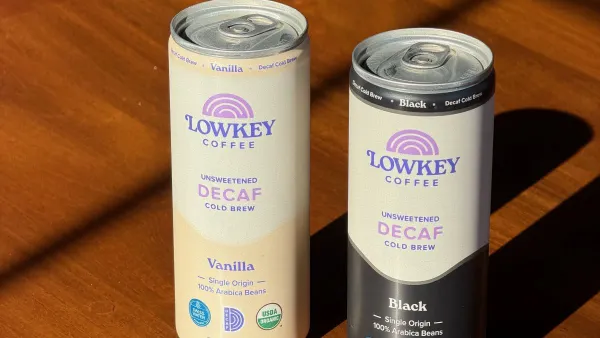
The consumers that are turning to decaf are those that still enjoy the taste and ritualistic nature of coffee. Adriana Gindlesperger, co-founder of Lowkey Coffee, noticed the shift toward decaf coffee sales, and created Lowkey earlier this year to meet the moment.
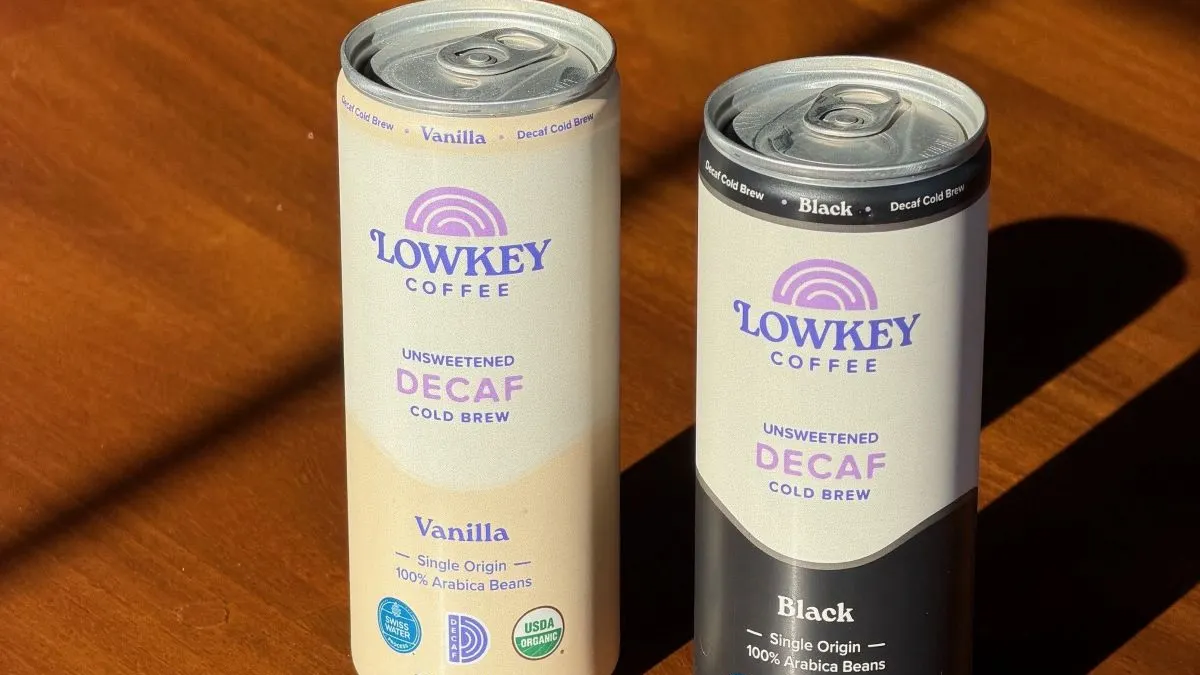
Lowkey offers decaffeinated ready-to-drink cold brews in black and vanilla flavors, both of which are unsweetened. Gindlesperger said Lowkey fills a gap in premium decaf options with a ready-to-drink format.
Decaf is often an “afterthought” in bigger coffee companies’ SKU lineup, Gindelsberger said, and there’s a lack of modern formats available for these brews.
“Decaf’s been, no pun intended, a sleepy corner of the category,” Gindelsberger said. “Now it’s really starting to stand up as its own growth category and opportunity. It’s a lot less niche than it's historically been viewed.”
Lowkey wants to make a name for itself as an entirely decaf- focused company, standing apart from other coffee makers that have secondary decaf options. It additionally wants to differentiate itself from competitors with the method it uses to decaffeinate coffee beans, which is a chemical-free technique called the Swiss water process.
Decaf coffee could have wider appeal among coffee drinkers who want to have more coffee, but don’t want an extra cup of caffeine. Emphasizing this optionality is crucial to those trying to market decaf coffee, Dicker said.
“Within the energy market, both coffee and energy drinks, their beverage is so tied to people’s routines,” Dicker said. “Your day probably feels a little weird if you don’t have your morning cup of coffee, and so [in order] for decaf to fit in, or a lower caffeinated product to fit in, you have to find the day part.”
Nontraditional energy is on the rise
Despite wanting to cut back on caffeine, consumers still seek beverages that can help them feel productive, focused and energized, Solomons of Update said.
Solomons views Update as a cleaner version of a traditional caffeine product. The brand, which recently brought on Kim Kardashian as a cofounder, wants to position itself as a science-backed beverage that chooses ingredients based on how they react with the body.
Update initially launched in 2022 before relaunching again in 2026. While there are many new entrants in the market, other longer-established brands, such as Pure Leaf and Folgers Coffee, have added different ingredients such as L-theanine to their offerings to promote a different kind of energy boost.
L-theanine is an amino acid found in tea leaves, which promotes serotonin and dopamine and affects the brain’s neurotransmitters to regulate mood, stress and focus. Paraxanthine, however, is the natural metabolite of caffeine, and is reported to cause fewer jitters and leaves a consumer’s system faster than caffeine.
“The majority of energy drinks are fundamentally caffeine plus sweetener, with varying functional ingredients layered in,” Solomons said. “We make sure our functional ingredients are included at research-backed doses and work with leading ingredient and formulation experts.”
Solomons thinks there is opportunity for the industry to expand the definition of “energy.”
“The consumer we think about is the intentional do-er: someone who makes considered choices, optimizes for sustained performance rather than a quick hit, and expects the tools they use to match those standards,” he said.