Beef prices remain at historic highs, driven by the smallest U.S. herd in over 70 years. For meatpackers who sell their beef directly to consumers online, the dynamic is forcing them to rethink innovation to keep costs down.
“We are at least 18 months away from a material shift in the cost of beef based on herd size,” said Nate Rempe, president and CEO of Omaha Steaks. “People are talking about 2028, 2029.”
Now more than ever, direct-to-consumer meat packers must find ways to keep price-squeezed customers engaged — and loyal. Two companies taking very different approaches to that challenge are Omaha Steaks, a 109-year-old manufacturer and retailer, and ButcherBox, an online subscription service that launched into retail at Target and Costco in January.
Both brands are leaning on customer experience, including product innovation, education and loyalty programs, to shield consumers from sticker shock and maintain sales in a tough market.
Innovating on price
When raw material costs spike, retailers usually pass those costs on to consumers or innovate. Omaha Steaks chose the latter tactic.
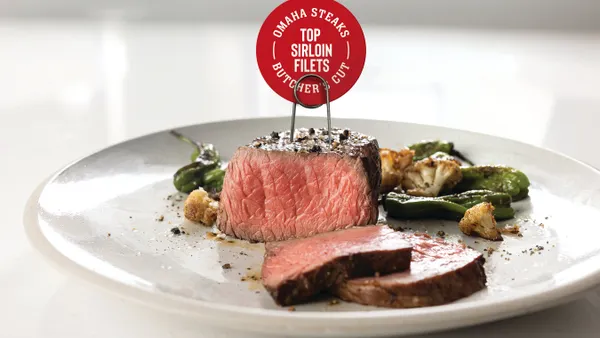
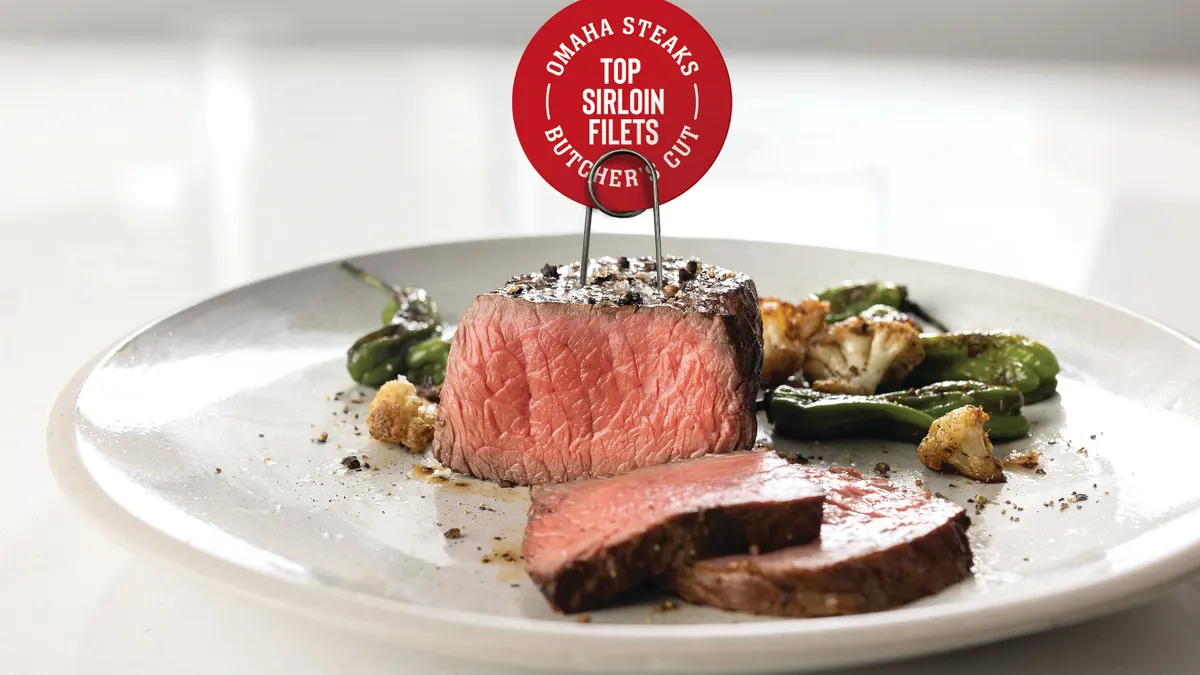
In April, the company launched the USDA-certified tender top sirloin filet, a top sirloin cut like a filet mignon and aged for at least 35 days that achieves comparable tenderness at a fraction of the price. A USDA lab uses shear slice force testing to verify the tenderness meets the agency’s specification.
“It eats like a filet mignon at the price of a top sirloin,” Rempe said. “This is the most tender top sirloin you can buy.”
The financial case is strong. Omaha Steaks now buys top butts — the subprimal cut used for sirloins — at the price it paid for tenderloins before the pandemic. By aging lower-cost sirloin and cutting it to resemble a filet, the company aims to deliver a premium experience at a mid-tier price point.
Omaha Steaks is also educating consumers on how to get more for their money. Rempe argues that 80/20 ground beef is dramatically more affordable than 93/7 for most recipes, such as tacos, chili or lasagna, because the fat difference becomes negligible once drained.
Protecting the customer from sticker shock
ButcherBox takes a different approach. Its subscription model charges a flat $179 per month for a custom box of six items, insulating members from weekly price fluctuations at the grocery store.
“People aren’t standing in the meat aisle and having that sticker shock week to week,” said Reba Hatcher, chief commercial officer at ButcherBox.
As a result, beef has been growing as a share of ButcherBox’s business — about half of all products shipped. But due to high beef and seafood costs, the company raised the base box price in February. The move helped offset a decline in add-on sales as customers feel squeezed.
To keep its offerings compelling, ButcherBox launches 18 to 25 new products annually. New products, such as ready-to-cook butter chicken and a Primal Burger Blend made with hearts, liver and kidney, address cost and convenience. By using the whole animal, ButcherBox keeps costs down.
The company also runs two to three sales events per week, with each product on promotion within about six weeks. A recent lightning sale, with hourly deals, drove a 5% year-over-year increase in participation.
“Eighty percent of people don’t know what they’re having for dinner,” Hatcher said. “So the more that we can help them with other problems that aren’t just the price, that’s where we really win,” Hatcher said.
Both Omaha Steaks and ButcherBox are focusing on what they can control to navigate high beef prices — an important lesson for just about any business operating in a difficult environment.
“Control your controllables,” Rempe said. “You have to look inside your business and find ways to deliver value to your customer. Use innovation, use technology, deliver value and trust that your customer will come back.”
For ButcherBox, that means leaning into variety and emotional connection. The company runs a chef’s table series, hosting in-person dinners for its most loyal customers in 10 cities each year.
“It’s really easy to look at a P&L and cut the program, but it’s the thing that keeps us rooted in the why of our work and ensures that we’re continuously building something that works for our customers,” Hatcher said. “We always want to double down on the things we do well, especially when things are hard.”