Dive Brief:
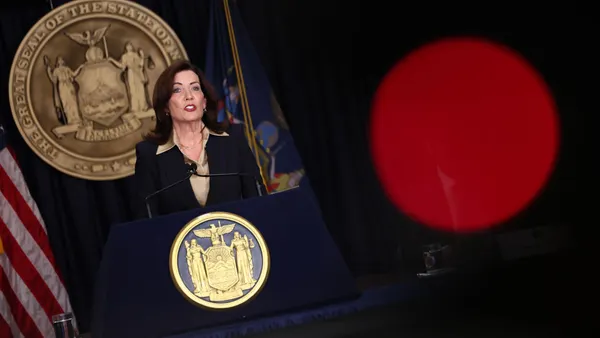
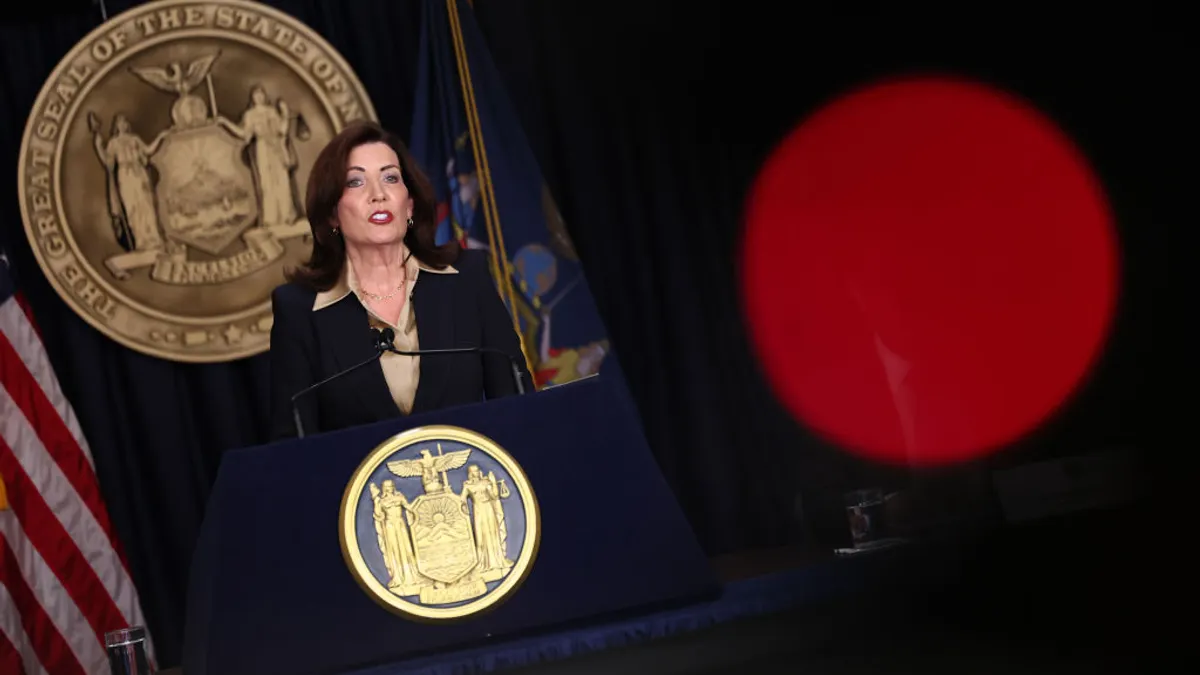
- New York Gov. Kathy Hochul vetoed a bill that would have required food manufacturers to disclose safety information for ingredients approved under a federal process that's become a frequent target of the Make America Healthy Again movement.
- The bill would have made New York the first state to require safety data when manufacturers self-affirm that ingredients are “Generally Recognized as Safe.”
- In addition to disclosure requirements, the bill would have banned the preservative propylparaben and potassium bromate, a common dough conditioner in pizza and bagels.
Dive Insight:
The veto is another blow to the MAHA agenda, which has looked to states to pick up the mantle as proposed policies for ultraprocessed foods and GRAS sputter on the national stage.
While other states such as Texas, West Virginia and California have coalesced efforts around bans on certain ingredients and additives, New York was the first to take aim at the GRAS approval process. The process has come under fire from Health and Human Services Secretary Robert F. Kennedy Jr. as a "loophole" that allows companies to avoid oversight.
GRAS allows food manufacturers to bypass premarket review on certain chemicals or additives if they are considered safe among qualified experts. While companies can petition the FDA to review an ingredient and grant it GRAS status, they also can “self-affirm” that their products are safe based on the conclusion of a scientific expert panel.
The FDA in August laid out a proposal to require more transparency from companies, but noted it would need action from Congress to fully implement the plan. A broad coalition of food and ingredient industry groups petitioned Hochul to reject the bill, urging a unified national standard.
In vetoing the bill, Hochul said that GRAS reform should be handled at the federal level and noted it's a priority for incoming leaders in Congress. She also sided with the baking industry arguing that a ban on bromated flour would put two of New York's most iconic foods at risk.
“When it comes to New York's famous pizza and bagels, the only thing that should rise is the dough, not the cost,” a spokesperson for the governor said in a statement to local media outlets.
Brian Ronholm, director of food policy for Consumer Reports, said the bill would have provided "essential transparency" for consumers.
"By rejecting this commonsense legislation, the state misses a crucial opportunity to protect public health and instead allows food manufacturers to continue self-approving additives without oversight," Ronholm said in a statement. "It also signals that corporate interests take precedence over public health, even when the evidence is overwhelming that change is needed.”