Ahead of Easter, Mondelēz International says its seasonal business is hopping as more consumers turn to Sour Patch Kids and Swedish Fish for their holiday celebrations.
While seasonal snacking is responsible for 20% of Mondelēz’s candy business, it was responsible for all of its growth in the confectionery category in 2025, according to NIQ data.
It wasn’t always that way. The Chicago-based company spent several years laying the groundwork to make Swedish Fish, Oreo and Sour Patch Kids into holiday brands that consumers could incorporate into traditions, such as trick-or-treating or placing in their Easter basket.
Mariama Boamah, director of seasonals with Mondelēz, said once a brand establishes a connection to a holiday, the company has more opportunities to add a little “razzle-dazzle” to its innovation lineup. Sour Patch Kids, Mondelēz's most popular holiday offering, is now appearing in new shapes, sizes and formats to match the seasons and, in some cases, test longer-term innovations.
Food Dive sat down with Boamah to talk about how Mondelēz approaches the seasonal business and why some brands are better suited for the holidays than others.
This interview has been edited for brevity and clarity.
FOOD DIVE: How does Mondelēz approach the seasonal business with its snacking portfolio?
MARIAMA BOAMAH: Our goal for Easter, and honestly, all of our key seasons, is really to make sure we're delivering a portfolio that satisfies consumer needs throughout the key moments. We bring back returning favorites every year. We bring our Sour Patch Kids Bunnies to the market every year. It's our number-one item.
In addition to having those returning favorites that people can kind of hold on to and look forward to, we always want to bring a little razzle-dazzle, a little new product news to the season. This year for Easter, we had three new Sour Patch Kids launches. The first was really around pack format. So we launched our Sour Patch Kids Bites, which are really just the heads in an on-the-go tube format.
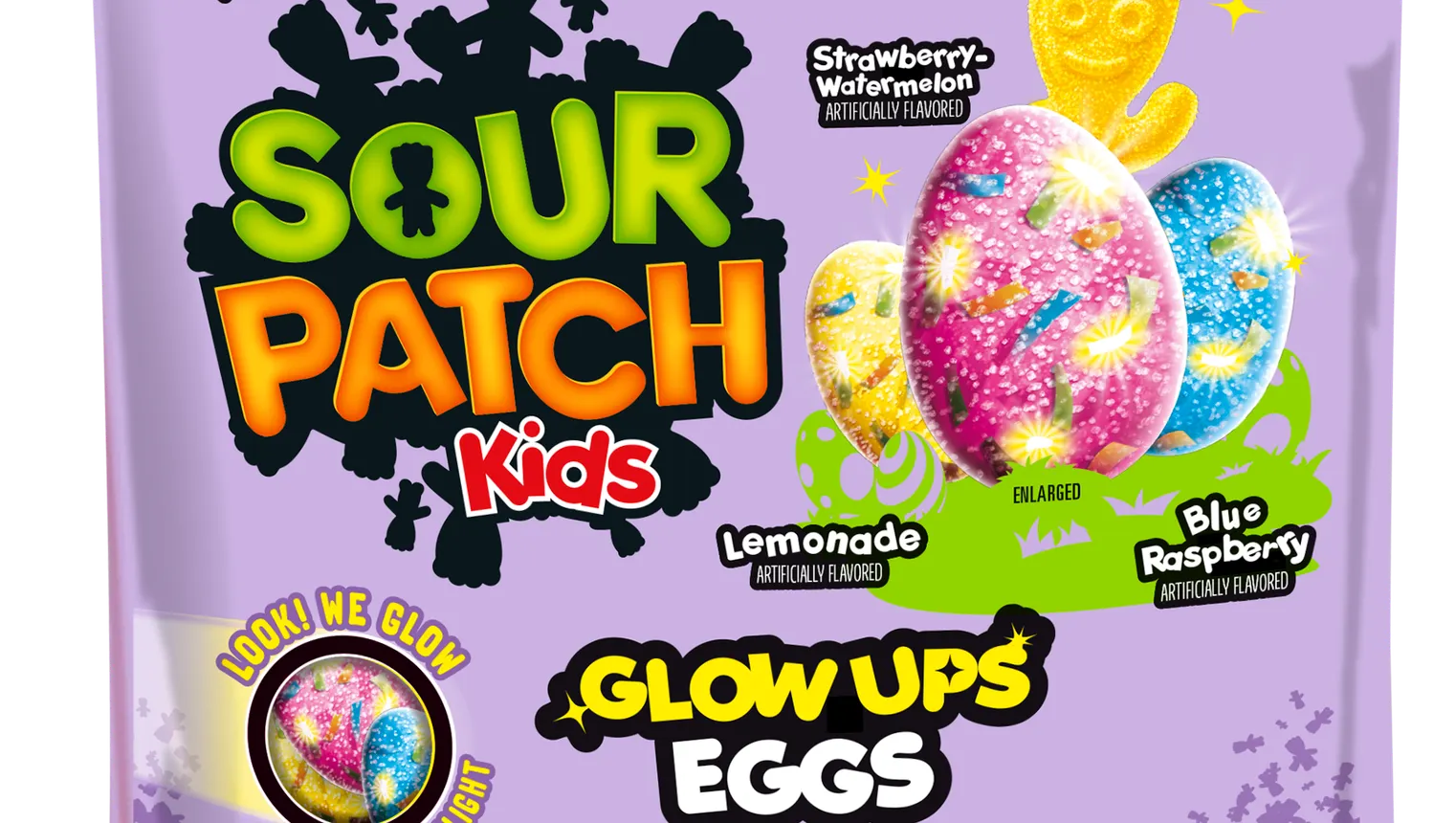
We also brought Sour Patch Kids Glow-Ups eggs to the aisle. Glow-Ups launched nationally last year. And then we brought the seasonal twist to the aisle for Valentine's Day where we had Glow-Up hearts. It’s a great way to extend everyday innovation into that seasonal aisle in a very fun and unique way. And then finally, our third launch was basically bringing Sour Patch Kids to the filled cane segment. So you just imagine those filled [plastic candy-cane-like tubes] with the little topper.
Which of your brands has the most flexibility or adaptability for the holiday season?
Boamah: Sour Patch Kids is really our marquee brand for the seasons. And it's because of the way consumers see that brand. When they're thinking about the season, they're often thinking chocolate and candy. The product format and the strength of the brand really just lends itself to the holiday seasons and something that consumers would naturally gravitate toward.
We do have a ton of other brands in our portfolio, so you will see other brands on-shelf. Swedish Fish also is another brand that we bring to shelf for the seasons. Again, we can play with seasonal shapes there, like hearts, different things like that. You'll see that we're bringing in Oreo a bit more to the seasonal aisle as well. And so while it's not a chocolate or a candy, just the strength of the Oreo brand is something that consumers can kind of gravitate toward as they're thinking about their seasonal celebrations.
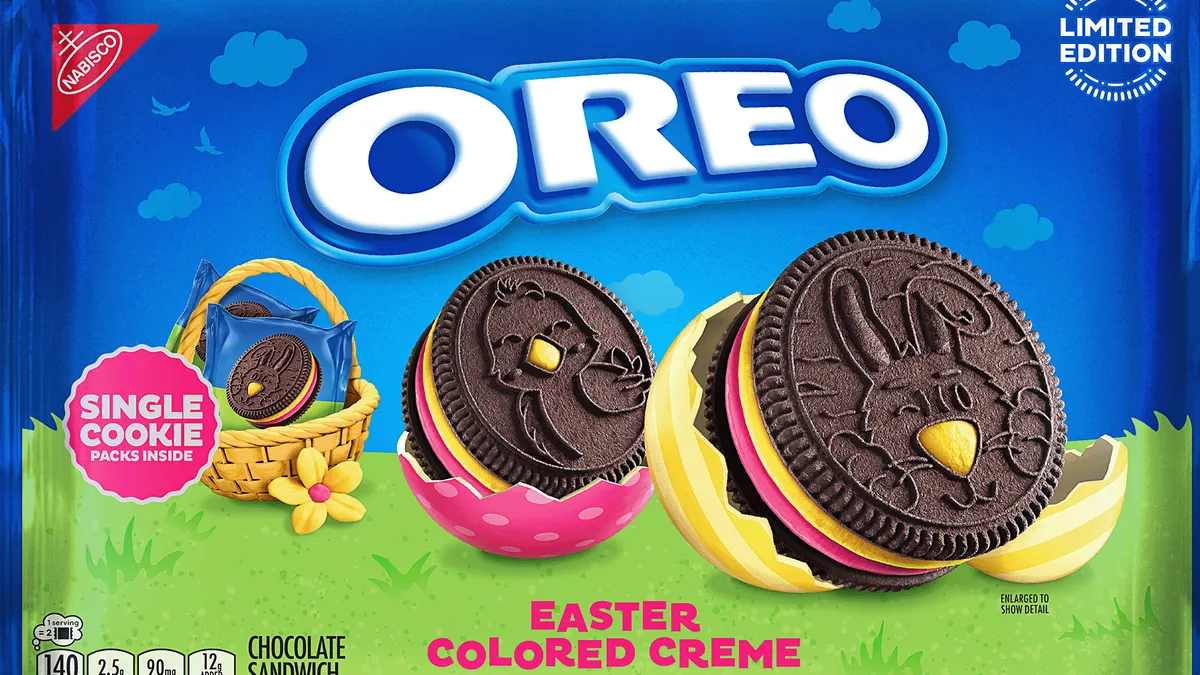
For Oreo, you are doing Easter Bunny embossed cookies with two layers of cream. It seems to be a much simpler seasonal innovation compared to what you are doing with Sour Path Kids.
Boamah: In the Oreo space, we're starting to develop that [seasonal] ritual with consumers, and so staying closer to the product really does make more sense. And the consumers just need that little bit of a seasonal kind of twist to say, ‘Okay, this is the Oreo I know and love.’
They don't necessarily need flavor news, whereas for Sour Patch Kids, we're a bit more developed in the seasonal aisle, and so we feel like there's a ton of runway to play with shapes, packaging, flavors. We have more space to play again because of the strength of the brand and because it's a candy, and that's what consumers are naturally gravitating toward for a season.
How far ahead do you plan for a season?
Boamah: We plan about a year to 18 months out. We're seeing what works in the market for this Easter, as an example. And just around the corner, we're going to be unveiling our Easter portfolio for 2027, so all the product work has been done, but we might make a few tweaks based on this year’s product performance. We do plan pretty far out.
How has Mondelēz's seasonal approach changed over the years?
Boamah: For a few years, we're just kind of building that base and really making sure we had an assortment of products for each season that hit upon all those different seasonal moments. And so I would say we are beyond that. Now, we do have a base. We do have a footing right in the seasonal aisle, and at the same time, consumers have favorites that they return to.
How do we think about leveling up in the aisle to meet consumer expectations? That's where that steady stream of innovation comes in. I would say we have less gaps to fill, and it's more about just driving further excitement and being part of that seasonal excitement.
Looking back, what did Mondelēz’s early presence in seasonal offerings look like?
Boamah: It was really identifying what are those key seasonal occasions that we want to play in, and making sure we have the pack format using our existing products to get into those occasions. So making sure we have treat-sized candy ready for trick-or-treating to hand out. It was really about taking our existing product and putting it into the right pack types for the season.
But as we progress, it's more about playing into some of those cues of the season, like shapes and colors and different pack formats that we never played in before, like the tube and topper that we just finally launched this year. But I would say yes, definitely elevating our presence, which is what our consumer expects.
The seasonal business changes very rapidly and it seems like Halloween, Christmas, Valentine's Day and Easter all have different consumer needs. How do you approach this?
Boamah: It was a very swift learning as I stepped into this desk. There's no room for error. We know that our customers have a certain reset date for each season, and you need to make sure your product is there and ready when the customer is ready to buy it. Otherwise, you miss the season.
It's usually an eight-week season [for any holiday,] give or take. There's a lot of coordination that needs to happen from a supply chain standpoint. So make sure you are delivering to each customer what they've asked for on time and in full. There's a lot of coordination between us and our customers, because otherwise you're sitting on waste, which you don't want to do either. So it's really about executing with precision and excellence.
Does innovation for a traditional product during a holiday season carry over throughout the rest of the year?
Boamah: Yes, absolutely. We do see a lot of flow back from the seasons into our everyday business. And so we know if we bring somebody new into the brand who's shopping that seasonal aisle, and they kind of see Sour Patch Kids in this tube and topper, it might trigger them to say, ‘Oh, I do like Sour Patch Kids, or my kid likes Sour Patch Kids,’ when it's not a season, let me go grab it. We definitely see the benefit, honestly, in both directions.