Just three months after combining its three business divisions into one, snacking giant Hershey is already reaping the benefits.
Hershey announced in March that it was merging its sweet, salty and protein brands under one umbrella to improve its relationship with consumers and retailers. The consolidation marks the first time Hershey has unified its brand power, category strategies and consumer insights under a single integrated structure.
It wasn’t all that long ago that such a move wouldn’t have been necessary.
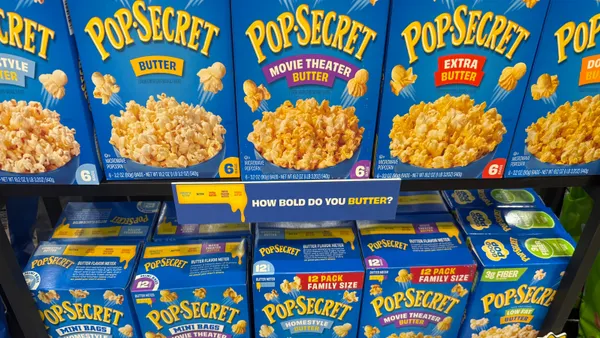
While Hershey is best known for sweet offerings such as Reese’s and Twizzlers, the Pennsylvania-based company has been building a snacking powerhouse through acquisitions. Its holdings now also include salty snacks such as SkinnyPop popcorn, Dot’s Homestyle Pretzels and LesserEvil, as well as protein bars with its One and Fulfill brands.
Food Dive sat down with Tiffany Menyhart, Hershey’s chief customer officer, at the Sweets & Snacks Expo in Las Vegas in May to talk about One Hershey, product reformulation and the company’s efforts to remove artificial colors from its offerings.
This interview has been edited for brevity and clarity.
FOOD DIVE: Tell us about One Hershey and why the decision was made to combine the units into one?
MENYHART: We have leaders who are now accountable for the whole portfolio. Our customers like that a lot. They really appreciate how we show up as one Hershey. We're getting a lot more done with them.
We've also launched and really upgraded our entire commercial engine so we can continue to ideate across our total portfolio and then bring that to life in the best way commercially, so across price points, pack types, right item, right channel, right price. We really amped that up.
Before, Hershey would have separate people handling retailer relationships for confections, salty and protein products. How has One Hershey changed this?
Yes, you essentially had three people calling on customers. What we find is the snacking landscapes are very complementary, and there might still be buying desks that are separate, but that all is rolling to a director or a VP at the same level and in the same department at a retailer. So it was not that convenient for them, especially when you do want to go from having an annual plan with them to a multi-year plan with them because you need to look across the total portfolio.
You rolled out One Hershey in March. Are there any tangible examples you can give on how it’s already benefiting the company?
One of the things is when you look at our tentpole events, we're able to sell salty and sweet together versus [consumers having to] go to different areas. Even our merchandising vehicles, they're either complementary or within the same vehicle.
I'll give an example with “Super Valentine's Day,” which is Valentine's Day and the Super Bowl [Super Val] on the same day next year. That's actually a stressful situation for our retailers, because they're very concerned about less trips to the store during that time frame, and then how to continue to grow these businesses. At the end of the day, the Super Bowl has a lot more categories that might even overpower Valentine’s Day.
So, how do we bring them together? What we're able to do is work with one point of contact at a retailer, sell in Super Val that contains football shapes and Reese's, it contains heart shapes of Reese's, and it contains Dot’s Pretzels, all within the same display. This reminds the consumer and the shopper, hey, this is coming together as one, but we have a solution for you for that. Now you can grab multiple options or multiple different items here, but they're all in one display, all in one location.
Does having salty and sweet together on one end cap at a retailer help sales?
Yeah, absolutely. We've done a lot of in-store testing, specifically with our beacon endcap, the real big one. It's more like a large format, and then the other one is our C-store. It's a smaller format.
When we test it with just confectionery, we still have a very good lift, it's like 20% to 25% lift [to sales], because it's usually drawing you down an aisle. When we put salty and sweet together, it's a 34% lift. We also see multiple units per basket during a lot of those transactions, versus if I have a whole end cap of confectionery only, often that's satisfying the same need state.
Going back to the tentpole events that we talked about, if you think about NCAA and fall football, those brands we position there are Dot’s and Reese's, and we've done that for a reason. If you think about Dot’s, you associate it with football, NCAA basketball. Because of that, those brands have become something the consumer almost expects to see together, and we've started cross-merchandising these even into late 2025.
Reese’s announced recently it was reverting back to the “classic” chocolate recipe for the 3% of Reese’s products that didn’t use it after drawing criticism from the grandson of the peanut butter cup’s inventor. Are there plans to reformulate other brands?
First and foremost, the quality of our products is our top priority, and second, we listen to what consumers tell us, of course. For Reese’s, it’s a very small sliver that’s going to be moved to the classic recipe. It's some seasonal shapes.
In addition to that, we're looking at products we have that have great formulas and original formulas, but we still feel they could be improved.
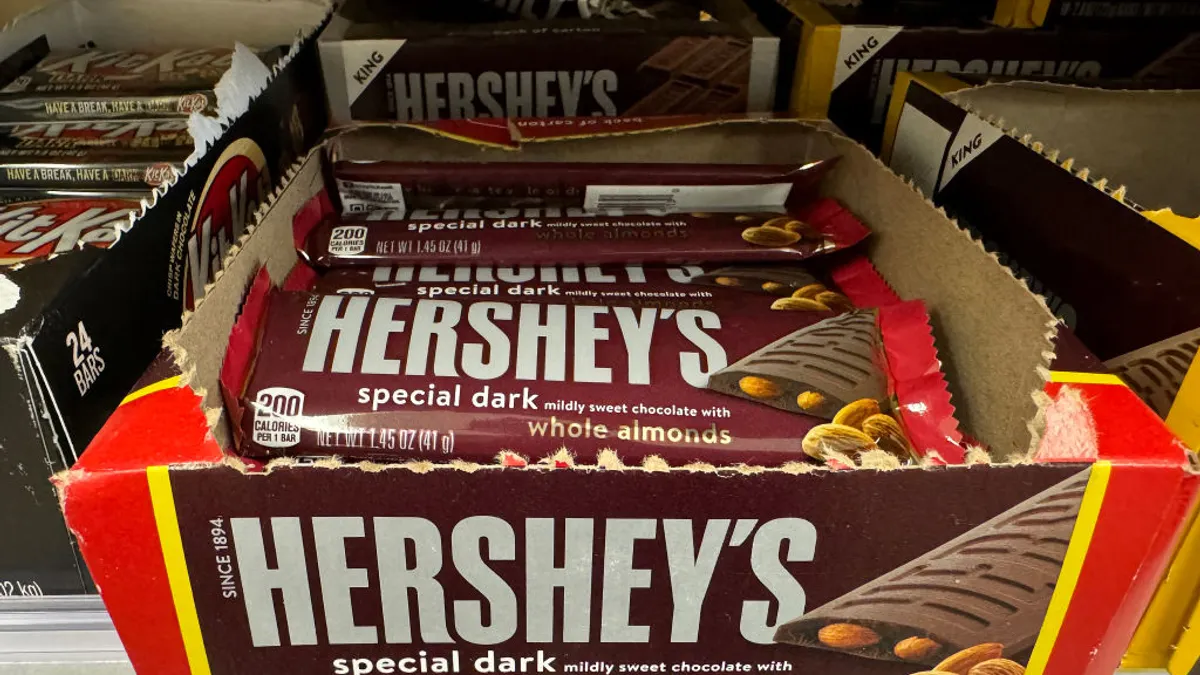
Kit Kat is a really good example of that. We're reformulating Kit Kat in 2027 to make it creamier, and I've tried the reformulated product; it's great. We're continuously looking at ways we can up our game in terms of quality based on consumer feedback. Those would be the two spaces that I would say we're making those bigger investments in.
I'll also say we listen to consumers. We also comply with all government regulations, and you know we've already invested in revising our portfolio to not contain artificial colors. We're well on the journey for that, and even some of our innovations coming out in early ‘27 in our sweets portfolio already use natural colors.
Hershey plans to remove artificial colors from its U.S. products by the end of 2027. How is the reformulation effort going, especially Jolly Rancher, which is so dependent on its vibrant colors?
Here's the good news. I know other companies have tried reformulating colorful products, even a decade ago, and it didn't work. The technology has improved significantly in terms of natural colors, and I've had the fortune to work closely with our R&D team on this initiative and see the different iterations of prototypes.
Some of the products out of the gate look amazing and perfect, you’d never know the difference. And then some of them, you're like, well, the consumer might notice it's not as bright of a blue or it's not as bright of a green. Then they come back with round two, and it's already improved. I'm actually very confident with all the most recent revisions that I've seen to our products that they will meet the consumer needs.