Dive Brief:
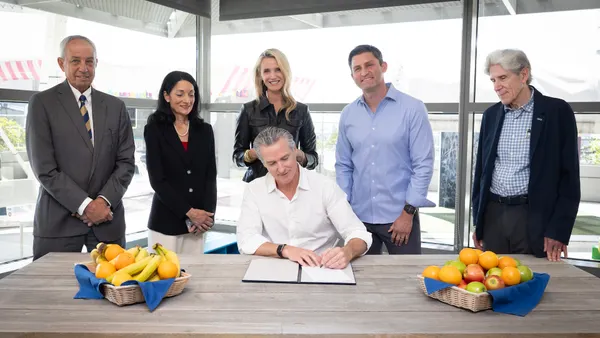
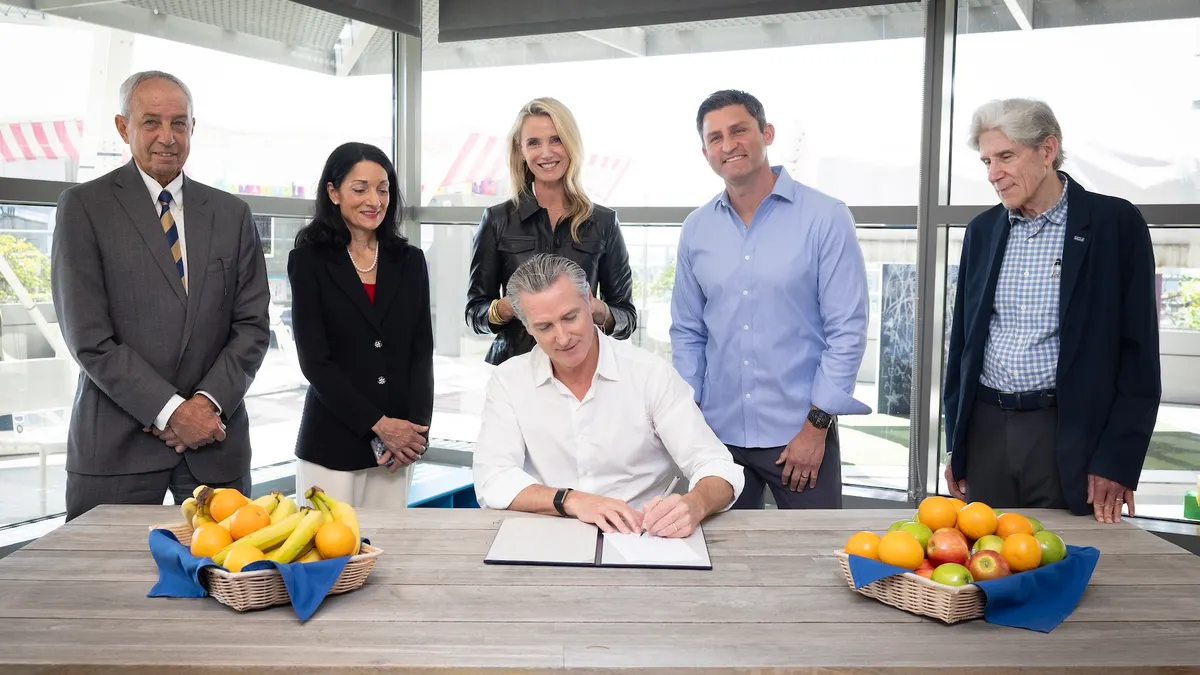
- California Gov. Gavin Newsom signed a law creating the first statewide non-ultraprocessed food label.
- The voluntary label can be used on products that do not fall under the state’s definition of ultraprocessed foods, established in 2025. Large grocery stores must prominently display items with the state label when they carry at least 25 certified products.
- California became the first state to define ultra-processed foods last September. The state's definition encompasses products containing at least one additive, or high amounts of saturated fat, sodium or added sugar.
Dive Insight:
Lawmakers behind California's non-ultraprocessed seal said the label is meant to be a transparent and simple way for consumers to identify healthier options. However, as other groups begin to introduce their own non-ultraprocessed food labels with different definitions, food industry groups worry it could cause more confusion.
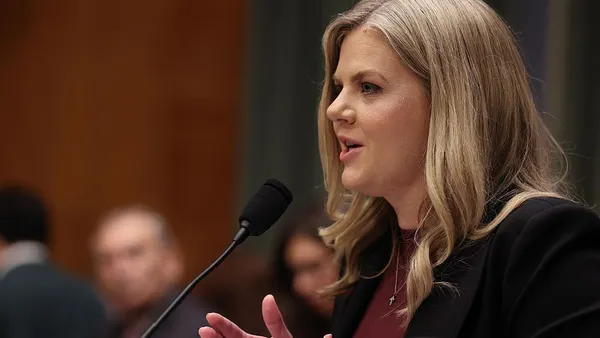
The Institute of Food Technologists, which represents the food science industry, said a consistent, science-based framework for ultraprocessed foods is needed as more states begin to enact their own policies.
If other states follow California's lead and adopt their own definition, manufacturers and consumers "could eventually face different interpretations of what qualifies as an ultra-processed food," Anna Rosales, IFT vice president of science and policy, said in a blog post.
"How ultra-processed foods are defined could ultimately influence school meals, nutrition assistance programs, product reformulation efforts, front-of-pack labeling initiatives, and future dietary guidance," Rosales added. "Given those potential implications for the food system, definitions should be rooted in sound science, aligned with broader nutrition policy objectives, and flexible enough to evolve as evidence emerges."
The California label would add to a growing list of non-ultraprocessed seals available for food manufacturers to position their products as healthier. Other options include the Non-UPF Verified Standard from the Non-GMO Project and the Non-UPF Certified seal from the nonprofit Non-UPF Program.
While other non-ultraprocessed labels focus at least in part on the degree of processing, California's approach centers on nutritional and ingredient composition. Food scientists and industry experts have noted that focusing only on processing could penalize foods like whole grain bread or yogurt that help consumers meet their nutrient needs.
"We should be about healthcare, not sick-care, recognizing that preventing illnesses is far preferable to finding — and affording — treatments," Newsom said in a statement. "It’s why California is focused on making whole, healthy foods as accessible as possible, why we’re making healthier choices easier."