After 110 years, Turtles candy is picking up the pace.
For much of its history, the caramel nut cluster brand was a stable performer in the $55 billion confectionery space.
But after years of changing hands — it’s counted Nestlé and a private equity firm among its owners — the brand found itself starved for meaningful innovation and marketing needed to help it stand out among consumers inundated with choice.
This dynamic is finally changing under the brand's latest owner, Pladis, whose parent company scooped up Turtles in 2013. The British snacking company, which also manages Godiva chocolate, is broadening Turtles’ appeal for a new generation by positioning it as an elevated alternative to the standard candy bar.
“Last year is when we said now it's time for Turtles to break out of its shell and become more visible,” said Ahad Afridi, chief marketing officer Americas at Pladis. "We think the brand can grow and it can appeal to more consumers, and that's what we're trying to do.”
Turtles has been "growing steadily" since it was acquired, Afridi said. Sales have accelerated during the last four years due to flavor innovation, increased buzz and growing interest among a handful of existing retailers.
In recent years, London-based Pladis launched seasonal Turtles flavors, such as raspberry, in addition to variations of the original, like dark chocolate and sea salt caramel. Pladis even joined with convenience store chain Circle K last winter on a Turtles hot chocolate that put the brand into new places and provided the company with insight on where Turtles could go outside of its traditional candy space.
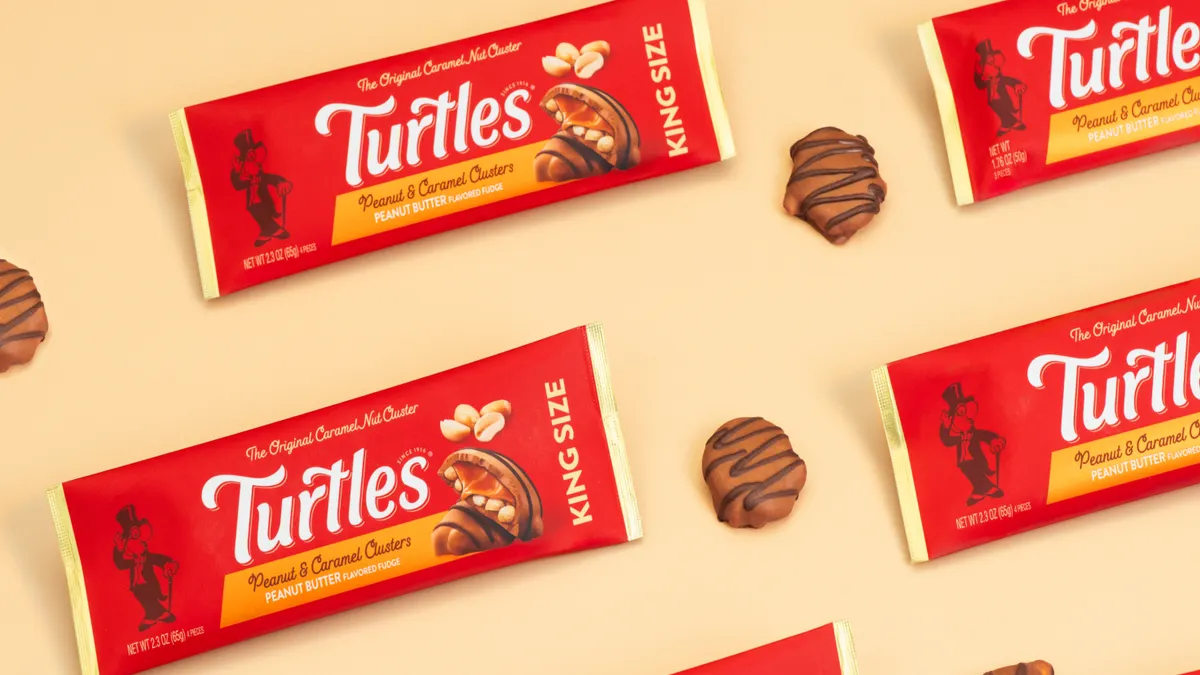
This year, Turtles is capitalizing on Americans' love for peanuts by introducing a Turtles Peanut and Caramel cluster that swaps out the signature pecans with peanuts and replaces the milk chocolate coating with a rich peanut butter-flavored fudge. Afridi said further innovation is planned for Turtles by playing around with the ingredients — potentially testing out variations with other nuts — while trying other textures and formats.
Turtles resonates with a core group of consumers, particularly nostalgic shoppers who grew up with the brand, as well as people in the southeastern U.S., due to the region's affinity for pecans, Pladis found.
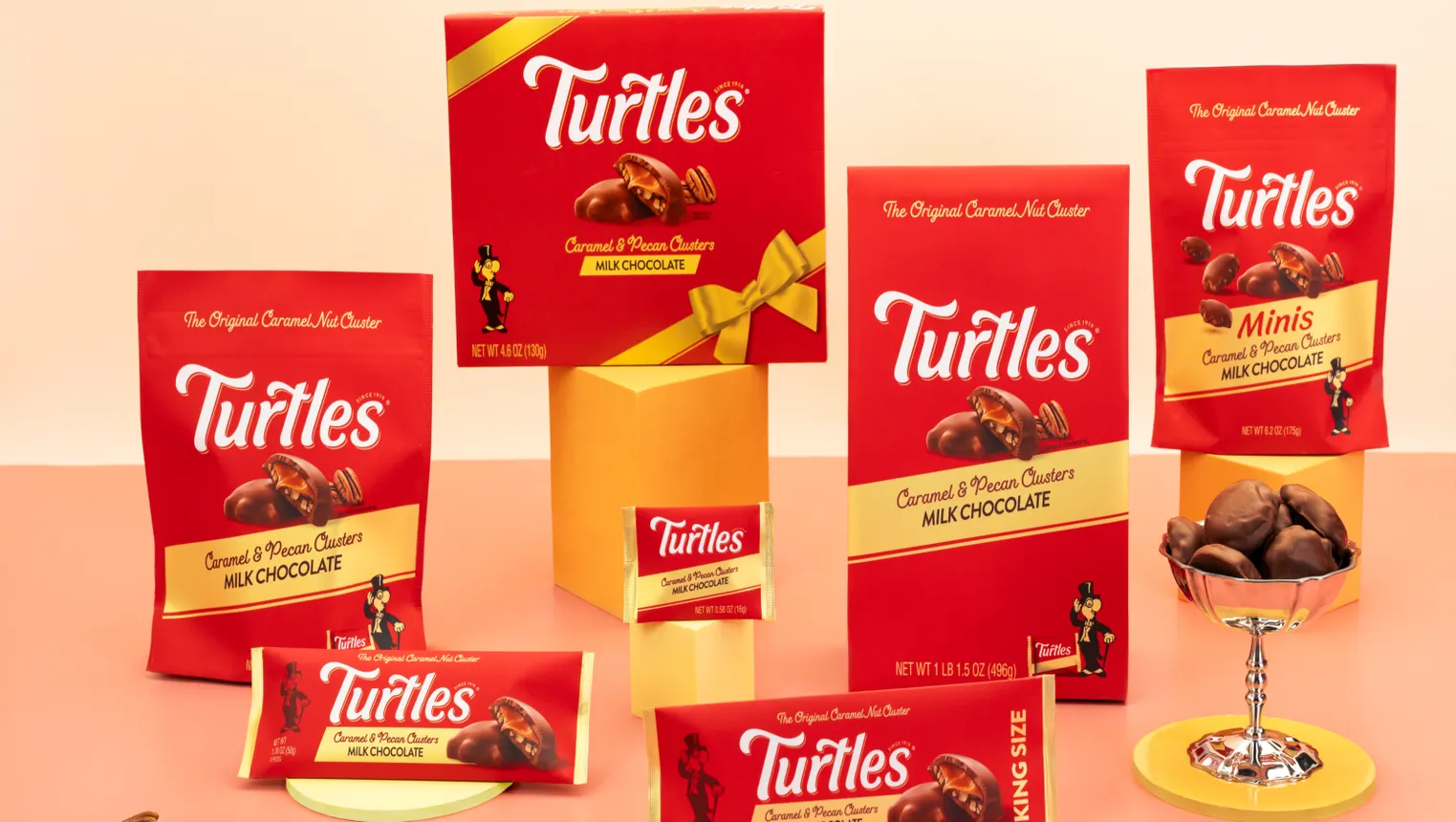
The confectionery manufacturer, however, wants to broaden Turtles' base to attract younger individuals and generate more buzz over the brand. It recently overhauled Turtles' packaging, highlighted by design tweaks to the logo to ensure it pops more on the label.
Pladis is also stepping up its presence on social media. Last year it partnered with sprinter Sha'Carri Richardson on a campaign called “It's Slow Good" to stress the premium aspect of Turtles and to encourage consumers to take the time to enjoy the confection’s slow, gooey, crunchy bite.
Afridi said within the highly competitive confections space, Turtles stands out because of its unique eating experience, recent innovations and position as an affordable indulgence.
"This is a brand that we felt was different. The product is unique," he said. "It's a 110-year-old brand that's been silent for 109 years, and so now it's the time for it to come out.”