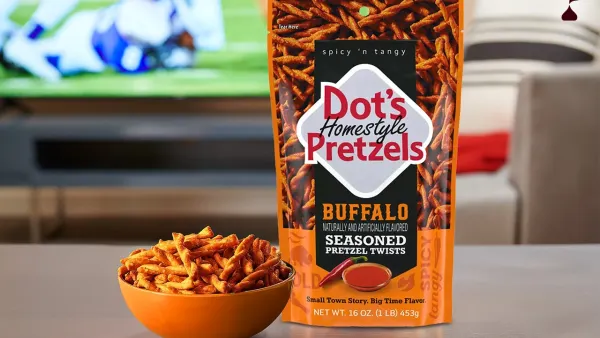

Most new food and beverage products don't make it. Nielsen has found that around 85% of new consumer packaged goods in the US fail within two years of launch — a figure widely cited across the food industry. It's tempting to blame the concept when a product underperforms. But a large share of failures have surprisingly little to do with the idea itself, and almost everything to do with how the product was developed, validated and brought to market.
It's rarely just a bad idea
Some products do fail on concept — the wrong flavor, the wrong price, a market that wasn't there. But plenty of genuinely good ideas die in execution: they reach the shelf too late, launch with errors that erode trust, or get tripped up by a compliance issue no one caught until the end. Those failures are avoidable, and they tend to share the same root causes.
The execution traps that sink launches
- Too slow to market. Launch windows close, competitors move first, and retailer listing slots get missed. When product development runs on manual hand-offs and disconnected tools, weeks disappear that the calendar didn't have to give.
- Product data chaos. The formula, specifications, claims and artwork live in different places — spreadsheets, email threads, separate systems. Every version mismatch becomes rework, and rework becomes delay.
- Compliance caught too late. An undeclared allergen, an unsupported claim, or a market-specific labeling rule discovered near launch forces relabeling — or pulls the product entirely.
- Supplier and ingredient surprises. A specification gap, a cost change, or an availability problem that wasn't validated up front can derail a launch after the concept is already locked.
- Teams working from different versions of the truth. When R&D, regulatory, procurement and marketing each hold their own copy of the product, small inconsistencies compound into big ones by the time it ships.
The common thread
Look across those traps and the pattern is clear: the failure usually isn't a shortage of good ideas. It's the absence of a single, reliable, shared view of the product as it moves from concept to shelf. When everyone can see the same current picture — formula, specs, claims, suppliers, labeling — products move faster and launch cleaner. When they can't, the gaps are where launches quietly die.
What “good” looks like
The manufacturers who beat the odds tend to develop products on connected infrastructure rather than a patchwork of documents. A single source of truth for formulation management means every specification, claim and label draws from the same master record, so a change made once flows everywhere it needs to. A product lifecycle management (PLM) platform extends that across the whole journey — connecting R&D, procurement, regulatory and marketing, surfacing regulatory compliance issues early instead of at launch, and keeping supplier data validated at source. The result isn't just fewer failures; it's faster, more confident launches.
A checklist before your next launch
A practical way to pressure-test your own process. Before your next product goes to market, can you answer “yes” to each of these?
- Single source of truth — Is there one current record of the product that every team draws from, rather than parallel copies?
- Compliance seen early — Can you flag allergen, claim and labeling issues in development, not days before launch?
- Supplier data validated up front — Are ingredient specs, costs and availability confirmed before the concept is locked?
- Teams aligned — Are R&D, regulatory, procurement and marketing working from the same data?
- Speed to window — Can you move from concept to launch fast enough to hit the retailer and seasonal windows you're aiming for?
Any “no” is a place where a promising product can quietly become a statistic.
The takeaway
New-product failure isn't only about taste, timing or luck. A large share of it is the avoidable kind — the product-data and process kind. The manufacturers who treat product development as connected infrastructure, not a relay race between disconnected tools, fail less often, waste less when they do, and get their best ideas to the shelf while the window is still open.
| Author: Erika Redaelli, Global Head — Solution Management, Regulatory and Scientific, Trace One
Trace One is a global provider of AI-native Product Lifecycle Management (PLM) and regulatory compliance software for the food & beverage, cosmetics & personal care, and specialty chemical industries. With more than 30 years of industry expertise, the company helps over 9,000 brands worldwide develop, launch, and manage remarkable products faster. Purpose-built for formula-based product development, its platform connects the entire product lifecycle from ideation to launch, with integrated regulatory intelligence spanning 170+ countries. |
 |