
For more than a century, umami—the fifth basic taste alongside sweet, salty, sour, and bitter—has helped shape how people experience savory foods. Often described as a deep, rounded taste, umami is naturally present in everyday ingredients like tomatoes, mushrooms, cheeses, and fermented foods.
Today, as global cuisines become more accessible and social platforms make restaurant-style cooking feel more within reach, umami is stepping into the spotlight as one of the defining tastes influencing how Americans cook and eat.
In that shift, MSG (monosodium glutamate) is re-emerging as a simple, science-backed ingredient that helps deliver the savory depth now fueling 2026’s biggest taste trend.
“Umami as a concept has been around for generations,” said Dr. Tia Rains, Vice President of Science, Innovation & Corporate Affairs at Ajinomoto Health & Nutrition North America. “But the groundswell of consumer interest is relatively new. As people embrace umami-rich foods, they’re also embracing the ingredients that help bring that taste forward.”
Why umami is having a moment
The rise of umami isn’t happening by accident. TikTok recipe creators, global restaurant influences, and digital food communities have all contributed to the popularity of dishes naturally rich in glutamate, the amino acid responsible for umami taste. Consumer palates are expanding—and quickly.
“Ramen is a perfect example,” Rains said. “We’re seeing double-digit growth in ramen across the U.S., and it's being enjoyed by all ages. Fermented foods like kimchi are also gaining traction. These foods are grounded in umami, and consumers are excited to explore that flavor space.”
As umami becomes more familiar, interest is extending beyond cuisine itself and into the ingredients that help create it—especially those that make building savory depth at home more achievable.
Where MSG fits in
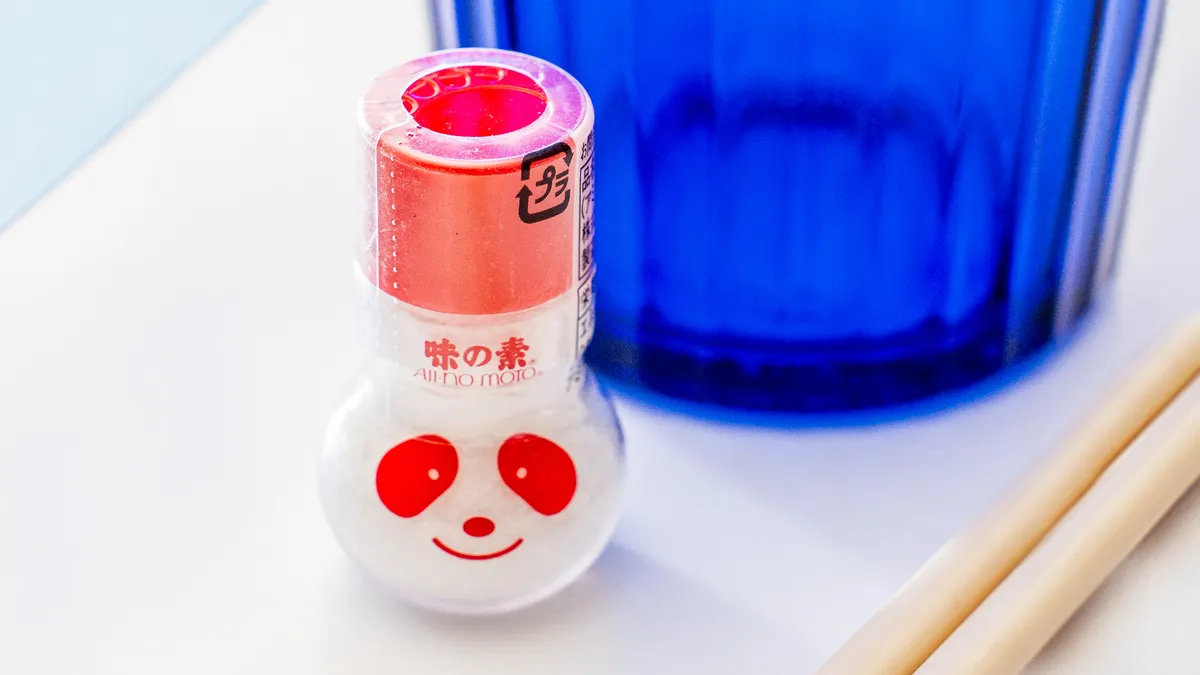
At its simplest, Rains describes MSG as “umami seasoning.” Glutamate, whether naturally occurring or added through MSG, binds to taste receptors that cue savory taste. In practice, MSG functions as a pure umami seasoning—much like table salt delivers salty taste and sugar delivers sweetness.
“MSG is the purest form of umami,” she explained. “It adds complexity and richness to foods without compromising their original flavor profile.”
MSG also offers a meaningful sodium advantage: it contains two-thirds less sodium than table salt. Research consistently shows that replacing some salt with MSG can reduce overall sodium while maintaining—or even enhancing—savory taste. This makes it a valuable asset for developers working across categories including sauces, ready meals, plant-based offerings, roasted vegetables, and familiar staples like ranch dressing, underscoring its versatility well beyond Asian cooking.
That everyday versatility was highlighted through Ajinomoto’s Ranch Roster campaign, which explored how MSG helps deliver balanced savory taste in custom ranch recipes inspired by flavors from across the country.
MSG’s flexibility extends even further, according to Rains. Chefs are experimenting with MSG in desserts like cookies, candies, and vanilla ice cream, where it adds a layered, salted-caramel-like dimension. Mixologists are using it creatively as well, incorporating MSG into martinis, spritzes, and cocktail rimmers for added complexity. “It’s similar to the appeal of salted caramel,” Rains noted. “That interplay between sweet and savory creates something really interesting.”
Changing perceptions—and what the data shows
Consumer understanding of MSG has shifted significantly. According to Mintel, positive global conversations about MSG have risen sharply over the past five years. Rains credits the evolution to a combination of cultural, culinary, and scientific voices working in tandem.
Chefs are now openly highlighting MSG on menus. Cookbook authors and food creators are using it proudly in recipes. And registered dietitians—often at the center of conversations around sodium reduction—are recommending MSG as a helpful tool for maintaining taste while lowering sodium intake.
Product trends reflect these changes. According to Innova Market Insights, products featuring a “No MSG” claim have decreased by 50% from 2018 to 2025, particularly across categories where that claim had been most common. Brands are increasingly moving away from messaging that distances them from MSG and are instead exploring its role in delivering balanced savory taste and meeting sodium-reduction targets.
At the same time, SPINS data shows growth in umami-forward product innovation, reinforcing the broader industry excitement around deeper savory profiles.
Health authorities have long supported this direction. Agencies such as the FDA, WHO, and the National Academies of Sciences, Engineering, and Medicine have reviewed MSG repeatedly and consistently affirmed its safety, adding essential clarity for consumers and product developers alike.
What retailers and manufacturers should know
As confidence in MSG grows and umami becomes more central to how people cook, the door opens wider for brands to rethink how they deliver savory taste. Rains sees significant opportunity ahead.
“Consumers want foods that taste great, feel balanced, and align with their values, including interest in global flavors and better-for-you options,” she said.
For manufacturers, MSG offers a path to fuller savory taste while supporting sodium reduction—a combination difficult to achieve through salt alone. For retailers, it’s a chance to position MSG as a modern pantry staple, one that reflects how today’s cooks prepare food at home.
“MSG is being proudly used again,” Rains said. “We’re seeing more chefs, more influencers, and more product developers talk about it openly because the science is solid and the benefits are real.”
Flavoring the future
With momentum building across the industry, Rains expects MSG to influence not only how foods are formulated today but how culinary trends evolve in the years ahead. From baked goods to beverages, frozen meals to fusion sauces, she sees it playing a growing role in shaping the next wave of product innovation.
“As we rethink old assumptions, we’ll find new ways to deliver delicious, satisfying foods that match what consumers want: taste, balance, authenticity, and an eye toward wellness,” she said.
To explore the science behind umami and see how MSG can support sodium-reduction and flavor-building goals across today’s globally-inspired food landscape, contact the expert team at Ajinomoto Health & Nutrition North America.