Dive Brief:
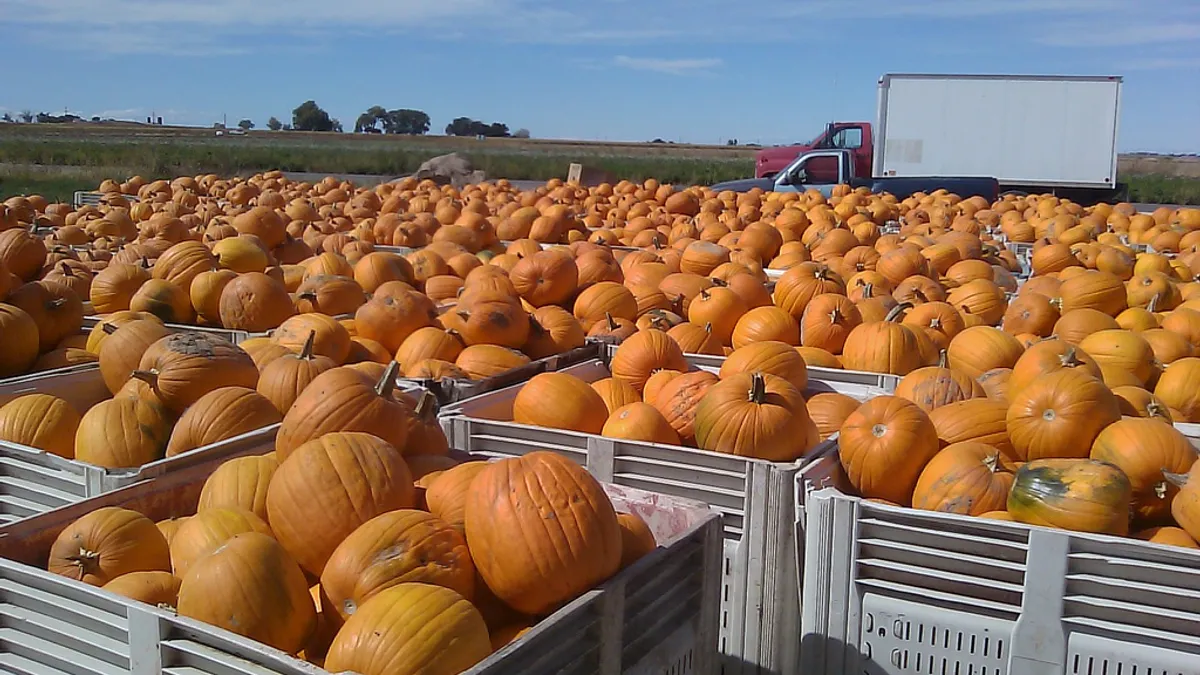
- Between 2011 and 2014, sales of fresh pumpkins declined by 8.6 million, according to Nielsen. In contrast, sales of pumpkin products since 2011 grew by 79%, reaching $361 million in 2014.
- In 2014 37% of U.S. consumers bought a pumpkin-flavored product. Pumpkin pie filling led the market with $134.7 million in sales. Pumpkin cream and pumpkin coffee were a distant second and third, with $47.9 million and $32.6 million in sales, respectively.
- Baking mixes ($25.7 million) and breads ($24.2 million) were also popular, and dog food made the fifth spot, with $12.9 million in sales. Pumpkin also shows up in yogurt, ice cream, fresh desserts and milk.
Dive Insight:
America is the only country that consumes pumpkin as a seasonal food and beverage. The increasing demand for pumpkin products over whole fresh pumpkins likely reflects the consumer desire for convenience. After all, cutting apart a pumpkin and preparing its contents for a pie is a hassle compared to opening a can of pumpkin pie filling.
A sense of nostalgia may be contributing to the overall demand for pumpkin flavor. Cindy Ott, author of "Pumpkin: The Curious History of an American Icon," told the AP, "[Pumpkin] represents a sense of goodness, natural abundance and old values that people think are good."
Both Starbucks and Panera have announced changes regarding their respective pumpkin spice lattes, with Starbucks using real pumpkin and Panera, already using this, taking out artificial colors, sweeteners, flavors and preservatives.