Tom Newmaster is founder of packaging design and brand agency FORCEpkg. Opinions are the author’s own.
Food and beverage brands are trying to buy attention in an increasingly expensive and inefficient media landscape. For the smartest brands, they’re reimagining packaging not as a cost to manage, but as a marketing platform built to earn attention.
This shift is often referred to “Mini Moments,” or leaning on cultural experiences with limited-time offerings that can capture consumers during the split seconds they reach for their phone. In this attention divided world, packaging is more important than ever to generate cultural relevance, social sharing, and earned media.
For marketers, that creates an opportunity traditional advertising often cannot. A successful Mini Moment turns packaging into content, extending a brand's reach beyond the shelf and into social feeds, news coverage, influencer conversations, and everyday consumer interactions. Rather than simply supporting a campaign, the package itself becomes a driver of awareness, engagement, and brand visibility.
This shift comes at a critical time. Paid media performance is under pressure, with increasing ad fatigue and declining engagement as consumers tune out repetitive formats.
When done right, packaging can function as a high-performing marketing platform, driving awareness, engagement, and purchase without relying solely on continuous media spend.
We’ve already seen this play out across categories.
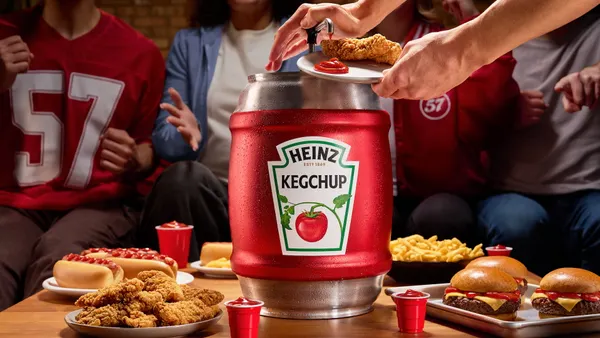
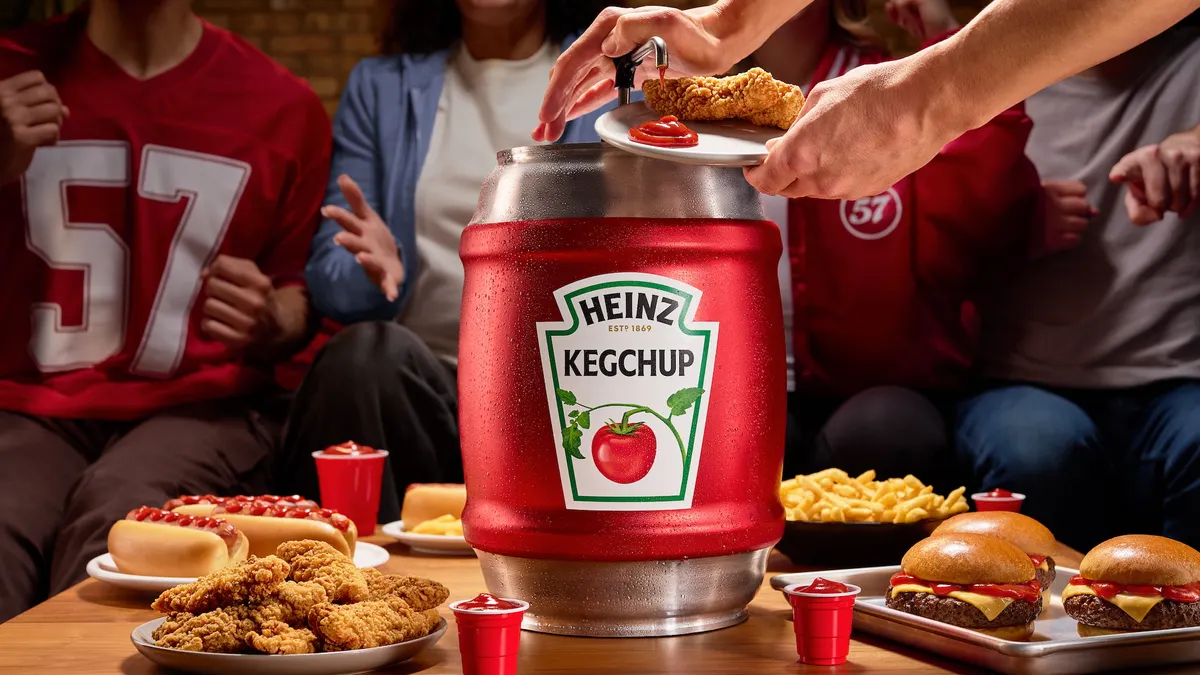
Heinz’s KegChup transformed scale into spectacle. Capri Sun’s oversized pouch uses scarcity and exaggeration to fuel rapid sell-through and social buzz. Liquid Death’s collaboration with Spotify turned packaging into a collectible cultural object designed almost entirely for earned media. Even functional concepts, like Velveeta’s Vel 2 Go, show how solving real usage needs can instantly increase shareability.
Earned and influencer-driven content consistently outperform traditional paid advertising in both trust and return. A little more than 90% of consumers trust earned media over ads, and influencer campaigns often generate more than $5 in return for every $1 spent, according to recent marketing and media research.
What makes Mini Moments powerful is their ability to create disproportionate impact relative to investment. Because they are intentionally short-run, they allow brands to move quickly, experiment boldly, and generate high-impact visibility without overcommitting to permanent packaging changes.
In short, Mini Moments give brands a faster, lower-risk way to generate conversation, test bold ideas, and create impact people actually remember.
But it also speaks to the importance of packaging, which remains one of the most powerful and underleveraged brand touchpoints. Over 72% of consumers say packaging directly influences purchase decisions, according to Ipsos.
By leveraging Mini Moments, packaging suppliers are not just execution partners, but become contributors to brand growth, influencing visibility, engagement, and measurable performance outcomes.
But execution is critical. Bold ideas alone aren’t enough. Brands need partners who can translate disruptive concepts into real, producible formats, rapidly prototype them, and bring them to market without losing intent. The gap between a “big idea” and a viable, scalable reality is where most ideas fall short.
The brands that win aren’t just designing packaging to look good on shelf. They’re designing for interaction, shareability, and cultural relevance. And packaging may be the most underutilized place to start.