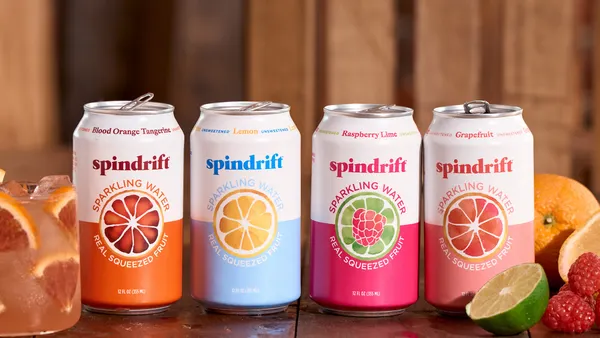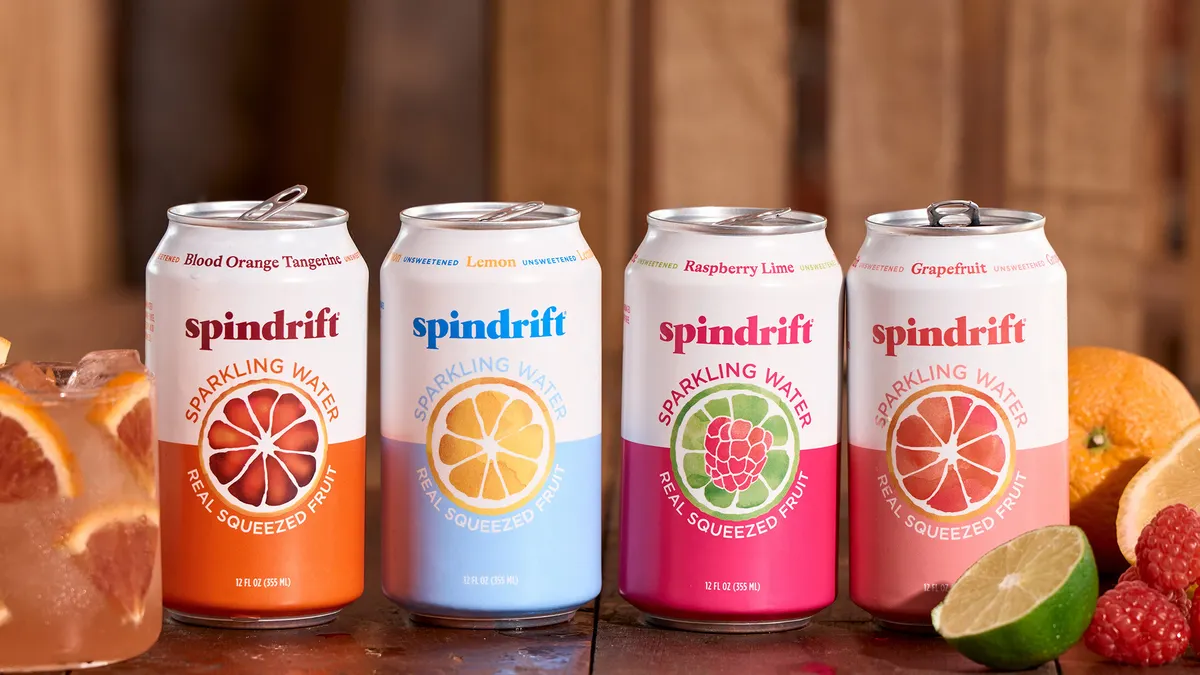
Sparkling water brand Spindrift and frozen food maker Amy's Kitchen are among the first food and beverage brands to receive certification that their products are not ultraprocessed under the Non-GMO Project's new verification program.
The Non-UPF Verified Standard is designed to help consumers easily identify products that avoid the core characteristics of ultraprocessing, according to a program description. Instead of focusing on certain ingredients, the standard looks at how foods are processed.
“Most current approaches to addressing ultraprocessed foods rely entirely on what you can see on a package label: nutrient thresholds and banned ingredient lists,” Megan Westgate, CEO and founder of the Non-GMO Project, said in a statement. “But research shows that processing itself is the missing variable.”
The certification, which is now open for enrollment following a six-month pilot, comes as consumers grow increasingly skeptical of ingredient lists and highly processed foods.
The “Make America Healthy Again” movement has also cast a brighter spotlight on the issue, with state and federal regulators weighing new regulations and comparing ultraprocessed foods to tobacco or alcohol.
Despite the growing attention around ultraprocessed foods, there still isn't a consensus on what the term means. The FDA is working to create a definition, though states have taken the lead with their own standards. A California law banning ultraprocessed foods in schools defines the term as products with at least one additive, or high amounts of saturated fat, sodium or added sugar.
In the absence of an agreed-upon definition, third-party verifiers have moved to provide their own standards. Nonprofit The Non-UPF Program, which debuted its own verification system last fall, uses the Nova Classification System for ultraprocessed foods, a framework that places foods into four categories based on their level of processing.
The Non-UPF Verified Standard, meanwhile, recognizes some processing, such as grinding, fermenting or freezing as making “real food safer." Instead of breaking up foods into categories, it looks at whether products are free from industrial processing that changes the chemical or structural properties of a product.
The standard also restricts ingredients characteristic of ultraprocessed formulations, prohibiting non-nutritive sweeteners and limiting refined added sugar.
“Currently, shoppers are left to guess at how to avoid ultraprocessing based on ingredient lists, health claims and nutrition panels, and even that can be really confusing,? Westgate said. “Non-UPF Verified evaluates what you can't see: the manufacturing methods, ingredient specifications, and formulation techniques that determine whether something is truly food or a processed edible substance.”
The Non-UPF Verified certification also has the backing of the nonprofit Non-GMO Project, whose butterfly mark has appeared on more than 63,000 products representing $47 billion in annual sales. The certifier said internal research showed 72% of shoppers now trust independent certifications more than company marketing, and nearly two thirds said a Non-UPF Verified label would increase their likelihood of purchasing a product.
Spindrift and Amy's Kitchen, which were both part of the Non-UPF Verified pilot program, said the certification fills a critical gap in consumer trust. Spindrift's entire portfolio was certified by the program, while Amy's Kitchen will announce which products were verified later this year.
“As consumer interest and concern around ultra-processed foods grow, this program offers a more grounded, evidence-based framework for understanding what people are actually eating,” Paul Schiefer, president of Amy's Kitchen, said in a statement.