Dive Brief:
- Kraft Heinz is halting plans to split its condiment and grocery staples businesses, with new CEO Steve Cahillane saying many of the food maker’s “challenges are fixable.”
- The CPG giant also plans to spend $600 million on marketing, sales, research and development, as well as on improving "product superiority" and potentially lowering prices.
- Cahillane said his top priority is returning the Heinz ketchup and Philadelphia cream cheese manufacturer to profitable growth.
Dive Insight:
Neil Sedaka once crooned in the 1960s that “breaking up is hard to do.” Just five months after announcing a split, Kraft Heinz has abruptly come to the same conclusion.
The Lunchables maker announced in September it planned to split into two businesses, reversing much of the $46 billion merger that formed one of the world’s largest food giants a decade ago.
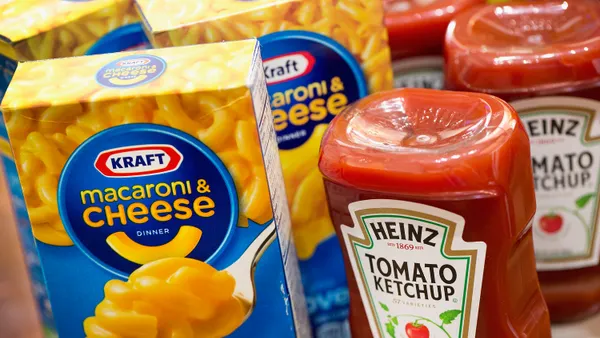
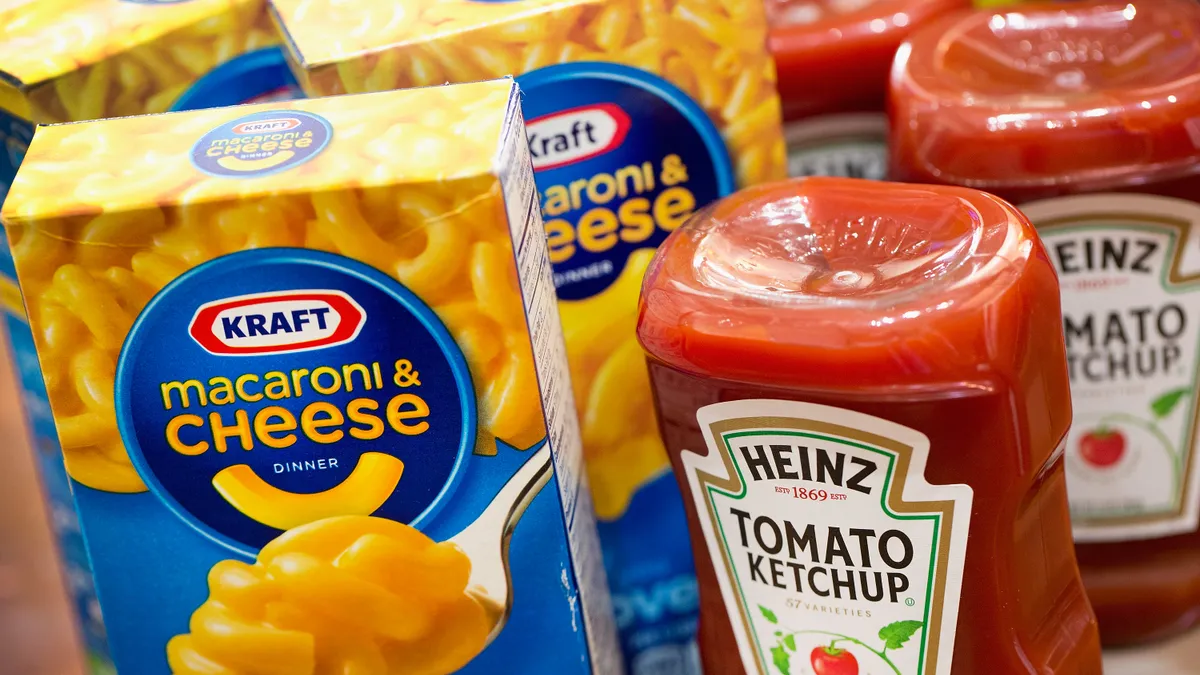
One business would have focused primarily on sauces, spreads, seasonings and shelf-stable meals, housing some of the company’s most iconic brands such as Heinz ketchup, Philadelphia cream cheese and Kraft Mac & Cheese. The second company would have owned slower-growing grocery staples such as Oscar Mayer, Kraft Singles and Lunchables.
The move quickly drew questions over whether a breakup would help reverse the underlying challenges facing Kraft Heinz. Even investor Warren Buffett expressed disappointment in the proposed separation.
The food manufacturer has faced declining sales as consumers gravitate away from processed foods in favor of healthier offerings. Inflation and the emergence of GLP-1 drugs for weight loss have caused shoppers to cut back on spending and consumption.
There's some irony of hitting pause on a breakup. Steve Cahillane, who took over as CEO of Kraft Heinz on Jan 1, was instrumental in splitting up Kellogg’s snacking and cereal operations. Both have since been sold for sizable premiums, with Ferrero buying cereal giant WK Kellogg and candy giant Mars Wrigley purchasing the snacks business Kellanova for $36 billion.
At least for now, Cahillane is confident he can turn Kraft Heinz's business around and is spending more than half a billion dollars to do it.
“Kraft Heinz is already seeing the benefit of Steve’s deep industry experience and proven track record of building brands and leading large-scale transformations,” John T. Cahill, Kraft Heinz’s chairman, said in a statement. “We are confident that our decision to pause the work related to the separation and fully focusing our resources in service of growth is the right move at this time.”
In a note to investors, TD Cowen analyst Robert Moskow said the decision not to proceed with a breakup would be perceived negatively by the market.
“It indicates that the businesses are not in strong enough condition to operate on a standalone basis, and it is uncertain when they will,” he said.
Kraft Heinz also reported another challenging quarter on Wednesday. The company said organic net sales during its fourth quarter slumped 4.2% to $6.3 billion. Net sales for its upcoming 2026 fiscal year were projected to drop between 1.5% and 3.5% from the prior year.