Dive Brief:
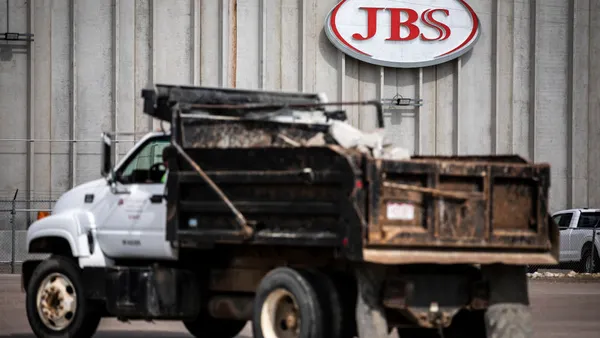
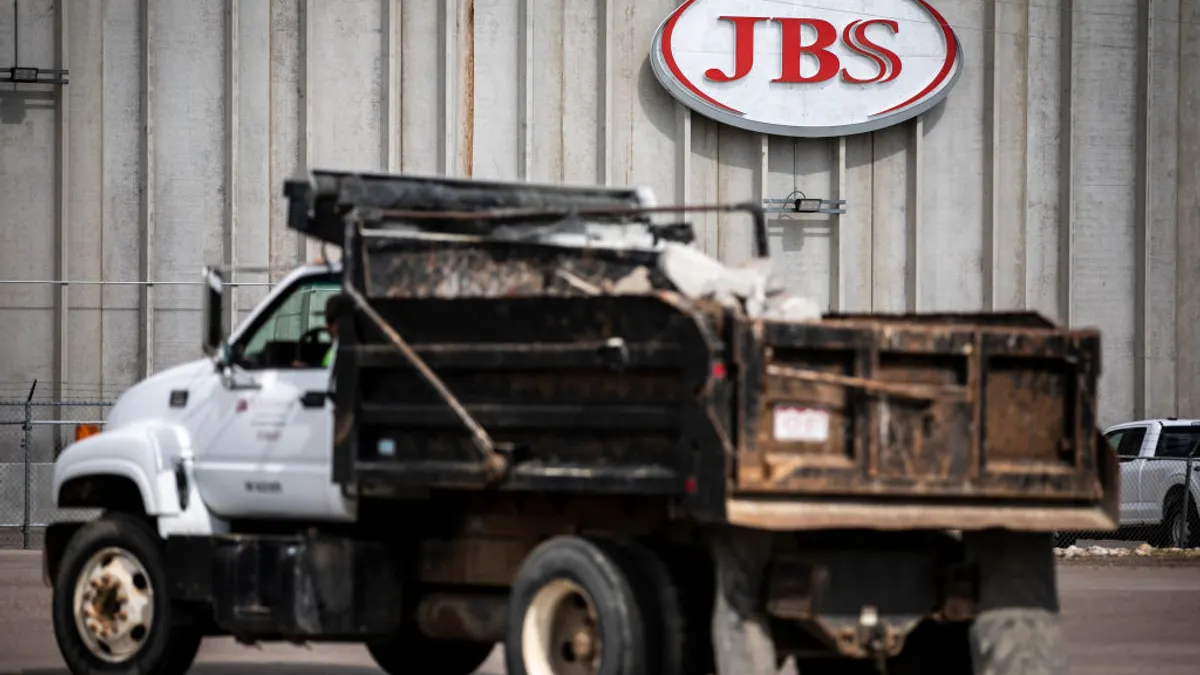
- Around 3,800 JBS meatpacking workers went on strike Monday, slowing production at one of the largest beef plants in the U.S. at a time of record-high prices.
- Union workers said they were unable to reach an agreement with the world's biggest meatpacking company to increase wages. Employees also want JBS to stop charging for the protective gear needed to do their jobs.
- JBS said in a statement to Food Dive that it stands by the offer presented to workers, calling the deal "competitive." The company is shifting manufacturing capacity to other processing facilities to minimize disruption, it said.
Dive Insight:
JBS’ work stoppage comes as U.S. beef prices soar to record highs. The firm’s plant in Greeley is capable of handling up to 6,000 cattle per day, according to the Wall Street Journal, or roughly 7% of its total beef processing capacity in the U.S.
Kim Cordova, president of UFCW Local 7, the union representing the workers, said wages have failed to keep up with the pace of inflation in Colorado, which has higher costs of living compared to other states.
“JBS can afford to do better,” Cordova said.
The impact of the work stoppage on consumer beef prices is unclear, but it's unlikely to drive up consumer costs further. Many beef packers are dealing with excess processing capacity amid a severe cattle shortage that has driven up the cost of livestock. Companies, including Tyson and Cargill, have closed facilities as they report losses in their beef businesses.
Despite recording record revenue for beef in its last quarter, JBS recorded a 50% decline in gross profit due to the higher cost of livestock.
In its statement, JBS said the company is "operating the facility to the best of our ability this week" and will continue to pay workers who show up to the Greeley facility. The meat processor noted many employees chose not to participate in the strike.
"We will continue scaling operations this week as more team members return," a JBS spokesperson said. "Our focus is on supporting our workforce, safeguarding the future of the facility, and continuing to serve our customers and community without interruption."
The prospect of a JBS plant slowdown "has traders worried," according to an investor note from ADM, which said a closure could "back up cattle and limit beef supplies." The report noted that President Donald Trump could step in to block the strike using the Defense Production Act, last used during the COVID-19 pandemic to keep meat plants in production.