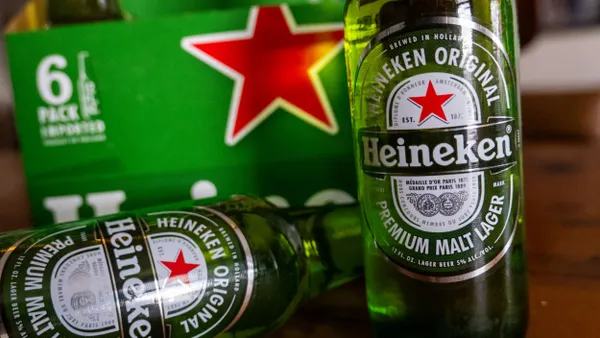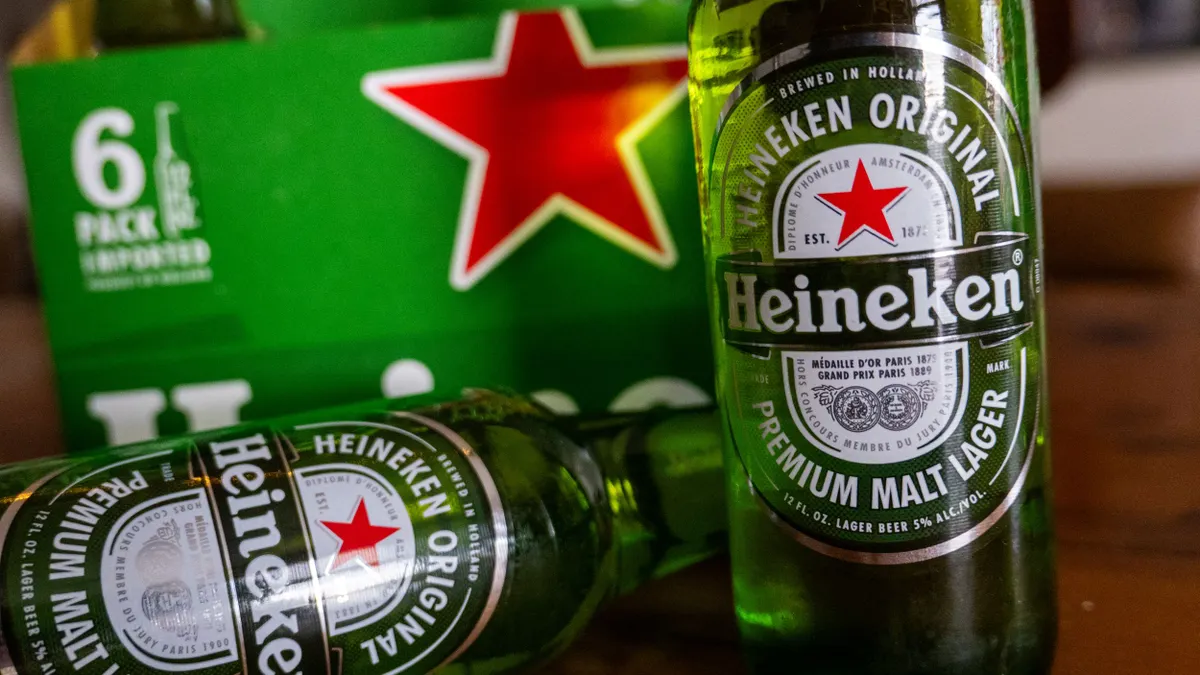
Heineken plans to cut up to 6,000 roles, or about 7% of its workforce, during the next two years as it looks to reduce costs amid declining beer sales, the company said Wednesday.
The news comes as Heineken searches for a new CEO to replace Dolf van den Brink, who remains with the company until June 1 in an advisory capacity. The beer giant is also in the midst of a corporate restructuring initiative that eliminated 400 corporate jobs last fall.
Van den Brink said the reduction is necessary to accelerate growth at the brewer, which saw volumes fall 1.2% in its 2025 fiscal year. Declining alcohol consumption and higher costs from tariffs have created a one-two punch for the sector in the U.S., prompting many to consolidate operations and enter other growing beverage segments like nonalcoholic, energy drinks and soda.
The Dutch beer maker is looking to accelerate its productivity as part of its five-year growth plan , which the company said also includes investing in its global brands and pushing for more innovation.
“Our first priority is to accelerate growth, funded by stepped up productivity and operating model changes that will involve a significant cost intervention over the next two years,” van den Brink said in a statement. “This will unlock stronger people productivity and enable greater speed and efficiency. At the same time, we remain prudent in our near-term expectations for beer market conditions.”
As part of the cuts, Heineken will streamline its supply chain through plant closures and "brewery digitization," CFO Harold Broek said in the earnings call. It will also exit markets where “we do not see a path to sustainable growth."
About half of the 6,000 jobs lost will be transitioned to the Heineken Business Services unit, which provides services to Heineken’s operating companies across the globe.
Despite ongoing challenges, Heineken still expects the beer market to become a growth category in the medium term. The company’s namesake brand continues to resonate around the world, with volumes growing 2.7%. It’s looking to use its global footprint to deepen its presence in emerging markets.
In the U.S., Heineken is doubling down on nonalcoholic options, including the release of a new low-calorie version called Ultimate. The brewer believes nonalcoholic beers can play into occasions such as sports or business dinners, and it is working to expand the market for the growing segment.
Heineken isn’t alone in making cuts or undertaking new strategies to fuel growth. Molson Coors also announced 400 corporate layoffs last fall as it broadens its portfolio beyond beer into categories like energy drinks.
Unlike Molson Coors, however, Heineken doesn't intend to look into “beyond beer,” instead using its brand power as an alcohol company to lean into nonalcoholic options. Van den Brink said in the call that nonalcoholic beers command premium pricing and are positioned as more natural because they have less sugar and calories.
“By extending our 0.0, we can play into premium adult natural beverages, which is clearly complementing soft drinks, and it's an area where soft drinks cannot go as easy as we can using a beer brand as a brand carrier makes it more adult,” van den Brink said.