Dive Brief:
- The world’s 100 most valuable food brands face a $73 billion risk from an uptick in consumers using GLP-1 drugs to lose weight, according to a report from Brand Finance, a brand valuation consultancy firm.
- Top food brands make up $278 billion in value, and roughly a quarter of that is at risk from the effect of GLP-1s, the report said.
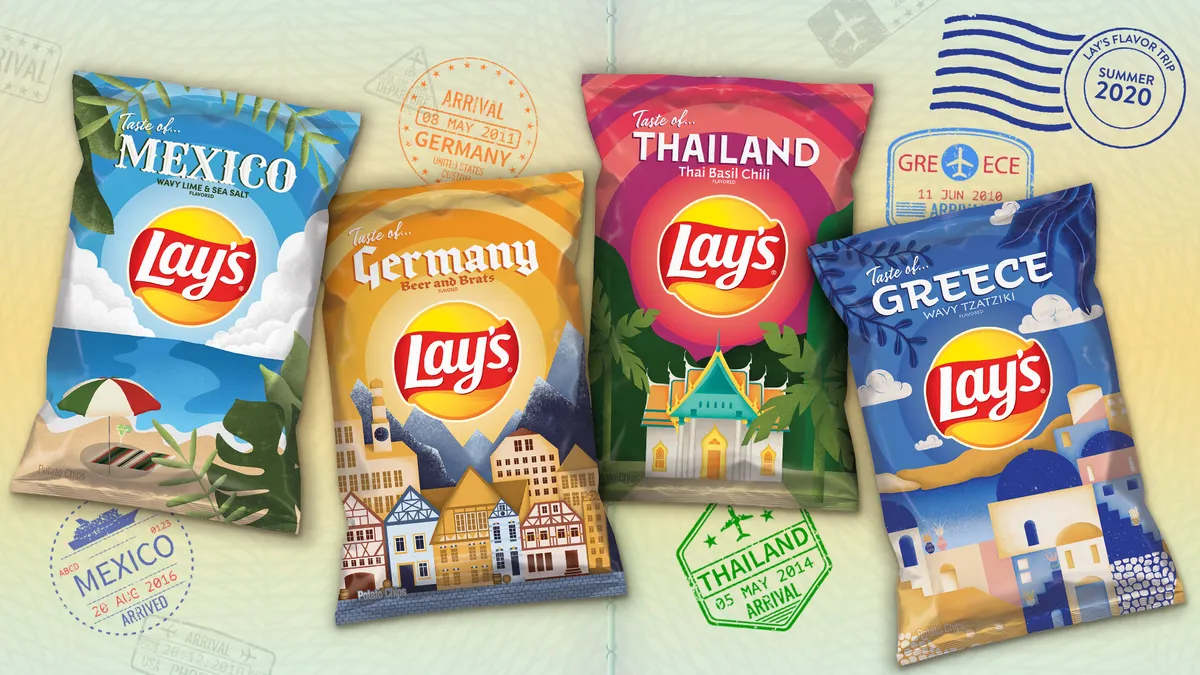
- Lay's is the most exposed food brand to the phenomenon globally, with the report finding $6.8 billion of its $15.1 billion brand value at risk. PepsiCo's five major snack brands collectively have $14.1 billion in exposure, the consultancy firm determined.
Dive Insight:
Around 11% of U.S. adults currently take appetite-suppressing GLP-1 medications for weight loss, according to a Gallup update in September, close to quadrupling from 3% in 2024. With 137 million Americans — or more than half of all adults — eligible for the drug, the market for these medications is expected to skyrocket.
This could have major implications for major food companies, many of them snack manufacturers. In households containing at least one person taking weight loss drugs, grocery spending fell 6%, a Cornell study found.
A FAIR report from July 2025 noted people using GLP-1s eat 700 fewer calories a day, and they were most likely to eschew processed foods, sugar-sweetened beverages, refined grains and beef. The latest report issued by Brand Finance echoes those observations.
Confectionery and chocolate, together with savory snacks, account for 53% of the total brand value at risk in this analysis, despite representing just 30% of brand value.
Seven of the 10 most exposed food brands in the world are based in the U.S., including Doritos, Hershey's, Cheetos, Kellogg's and Reese's.
The findings singled out Lay's as the most exposed food brand worldwide, with 45% of its brand value sitting in categories at structural risk to the medications. With consumers demanding fewer calories, people will be less inclined to reach for chips and similar snacks designed for mindless munching.
“GLP-1s could redraw the competitive landscape for the food industry,” Henry Farr, valuation director for Brand Finance, said in a statement. “The challenge is not that consumers will stop buying chocolate or crisps altogether, but that millions of everyday consumption decisions could become smaller, less frequent, or shift towards entirely different categories. At the scale of the world’s biggest food brands, even relatively modest changes in those habits can have significant commercial consequence.”
Farr noted that several of the brands most susceptible to experiencing a drop in consumption because of GLP-1 drugs are “performing extremely well today.” This positions their business owners to respond from a position of strength to shore up their operations through innovations or acquisition of trendy brands. Food makers have already responded.
Nestlé launched its first major U.S. brand in nearly three decades in 2024, called Vital Pursuit, for consumers taking GLP-1 medications and other individuals focusing on weight management. A year later, Danone rolled out an Oikos yogurt drink aimed at users of GLP-1 drugs that helps build and retain muscle mass. Conagra Brands has added a “GLP-1 friendly” label to some of its Healthy Choice frozen meals.
And just last month, Nutella-maker Ferrero, only 11 months after closing the Kellogg acquisition, purchased better-for-you oatmeal and granola brand Purely Elizabeth for an undisclosed amount.
As food remains at risk, the beverage segment could benefit.
Several major U.S. beverage brands are already benefiting from consumption changes from GLP-1s, including Gatorade and Aquafina, both PepsiCo brands, Brand Finance determined. Coca-Cola’s Minute Maid and energy drink Monster were among the other beneficiaries. These brands are thriving as people continue to look for products that meet health, functionality and hydration needs.