Yoni Glickman is managing partner of FoodSparks, an agri-food seed-stage fund at venture capital firm PeakBridge. Opinions are the author’s own.
After some $8 billion deployed, wild overvaluations and countless high-profile bankruptcies, the easy money era of food technology is over. Good riddance. What we need isn't more capital-chasing science projects; it's frameworks that separate real opportunities from expensive experiments.
I've spent north of 20 years in the food industry, involved in over 50 transactions both as a corporate leader and a PE investor. Reflecting on the past five years of food tech investing leads me to one conclusion: If we look past the wreckage, we now seem to be set up for some of the most significant opportunities this sector has ever had.
Let's walk through the Good, the Bad and the Ugly when it comes to food tech investing over the past five years to understand what got us here and, more importantly, where we go next.
The Ugly: Billions burnt on predictable failures
Let’s do this out of order and start with the carnage, because we need to learn from it.
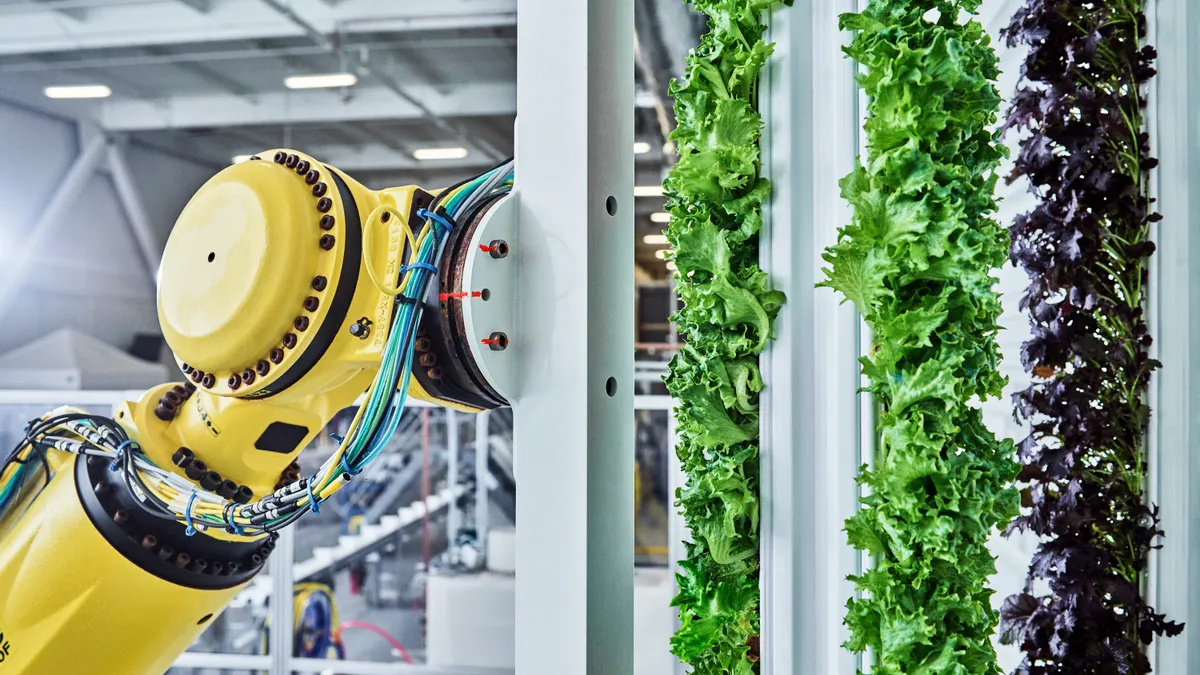
Vertical farming. Frankly, I never understood how cash replaces photosynthesis. The thesis is that someone is going to spend a bunch of cash for something we get from the sun. Grow lettuce - which is 90% water - and transport it to fancy restaurants who will pay more because it's grown locally. Not the most sound business model. And now we witness the massive bankruptcies.
Insects! In Thailand, people enjoy eating insects. In the West, not so much. So the insect protein pitch pivoted to feed. But at the end of the day, there was massive CapEx, no adoption, and inevitably widespread restructuring or bankruptcy. A solution looking for a problem. Again, billions burnt. These were predictable. Investing and innovating in food tech does not work if you ignore what people will actually eat.
Overall, the patterns were there if anyone wanted to look. But in any era of easy money, pattern recognition matters less than storytelling (AI investors, I’m looking at you).
The Bad: Why good ideas still fail
Now we get to the trickier stuff: promising sectors with hidden adoption issues, monetization problems, or timelines that simply don't work for venture capital.
Sugar replacement. Every time someone pitches me on this, my first instinct is to leave the room. Of course sugar isn't good for us, and there is enormous potential in smart clean label technologies. But sugar itself is more than sweetness; it's mouthfeel, bulk, texture. It's super cheap. If you want to take it out, you have to replace it with something much more expensive, and most of the food industry simply doesn't have relevant margins to absorb that.
Discovery platforms. The promise goes, ‘We're going to use AI in our discovery platform and discover something new and wonderful.’ I've seen this movie before. You have at least seven to 10 years until you can unveil a product because you've got to go through discovery, regulation, production and more. And then how are you going to make money? Royalties. This is not a venture play. I don't care how much AI there is, the rest of the stuff after that is still going to take seven years.
These aren't bad technologies, they're bad venture investments. There's a difference.
The Good: Where real value gets built
All of that said, I firmly believe in food tech for a reason (many in fact), so let's look at what actually works and why it’s crucial right now.
Data plays with clear ROI. I don't care if it's called AI or generative AI. I only care about one thing: Can you measure the gains? Process efficiency, waste reduction, faster NPD? You need a super-specific solution where you can show great ROI. The underlying technology is a tool, not the end.
Specialty ingredients. This is still where the largest value capture is in the food chain by far. If you go through the whole value chain from agriculture to CPG, the only place you see businesses making 20% to 35% EBITDA margins is specialty ingredients. There is nowhere else with these margins.
But there are non-negotiables: existing demand, clear labeling, taste, and cost that works. Why do I love vanilla? Because everybody loves vanilla. It slips into the food system. We're not inventing the wheel. That's what makes it scalable with proven manufacturing.
Proven nutrition products. The idea of general wellness is over. People don't want to take a one-a-day multivitamin, they want something that's going to help their cardiovascular health or cognitive health. They want specificity backed by science. Robust clinical outcomes create trust, but they also create pricing power. At the end of the day, we have to be in the game of margins.
Where we are now: Crisis meets promise
We're. are. in. crisis. I can't underestimate how important that is. Tropical commodities are in massive disruption. Coffee, cocoa, vanilla, palm oil — prices are through the roof, and Mediterranean crops are next. Has anyone noticed the price of olive oil? It's doubled in the last year because the crop yield has halved. And grape prices have increased 50% in the last two years.
This isn't just about climate change, though that is real. We have significant labor shortages, disruption of shipping lines, and tariffs on crops, machinery, and fertilizers driving up agricultural input prices dramatically. Immigration policy changes mean we're not sure who's going to actually pick the crops in California, or anywhere else.
The companies that can provide truly robust supply chains have a huge advantage. But crucially, those supply chain solutions need to work in the real world, not in a pitch deck. In a factory, at scale, with positive unit economics.
And here's the good news: We actually have significant upside potential now. Decent valuations. Regulatory frameworks are finally moving in the right direction — The EU is simplifying novel foods, there are clear pathways for cell-based products in multiple geographies, and Make America Healthy Again might actually change regulation in the world's most important economy.
Not only that, but consumer preferences have also completely changed. People read their labels, and want to see ingredients they can understand. Big Food is going through disruption, with companies breaking down into more agile business units and understanding they need innovation. The only way they know how to get it is through acquisitions.
AI is driving new opportunities in robotics, precision agriculture, and logistics. Climate is forcing change. The crisis is creating demand.
To capitalize on this, we need entrepreneurs who understand two things: capital efficiency and strong unit economics. For the investors and innovators who made it through this healthy market correction and heed those guidelines, the future is bright.