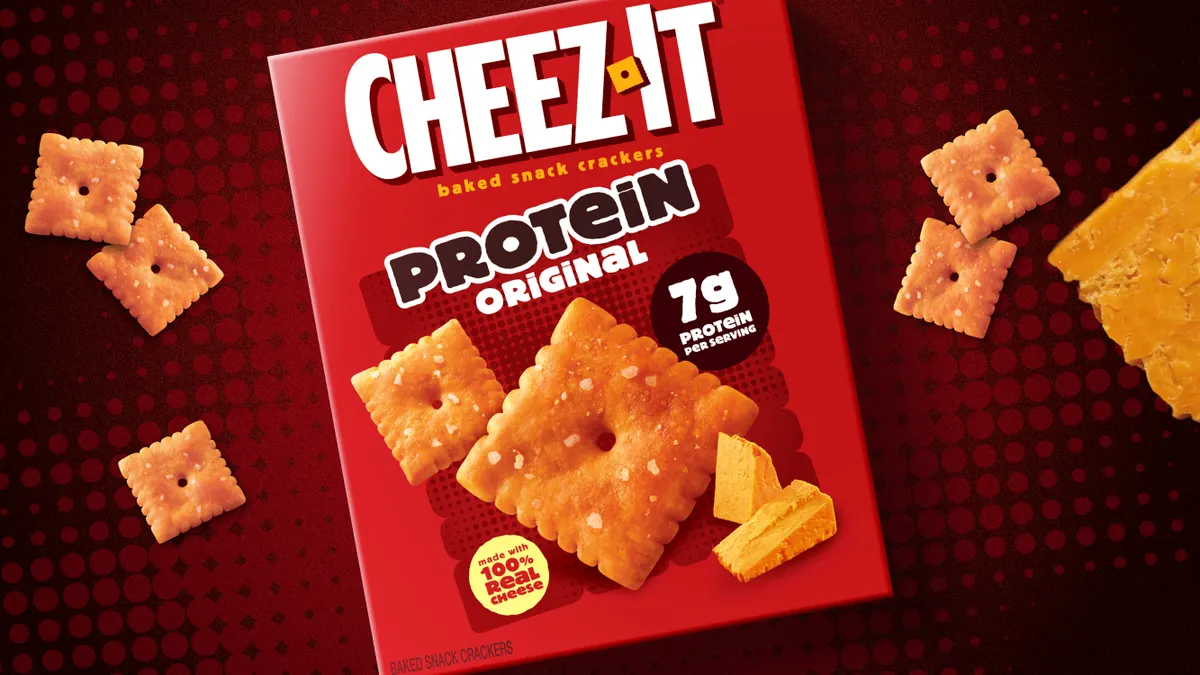
ERLANGER, Kentucky – As consumers demand additional protein in everything from sweets to salty snacks, food manufacturers are rushing to bulk up their offerings. However, not all proteins are the same, putting companies in the difficult position of balancing quality, cost and other factors when using the ingredient.
Protein is one of the key drivers of food product reformulation, ingredients supplier ADM said during a media day earlier this month at its reformulation hub in Erlanger, Kentucky. Two-thirds of consumers are looking to increase their protein intake, ADM said, and the trend has received additional momentum from expanding GLP-1 use. But choosing the right type of protein can be challenging and depends on a brand's messaging and overall goal for a product.
The company is working with food makers on the best types of protein to use in reformulation, which can include dairy, soy and pea protein, and at times combinations of each.
Right now, consumers are less concerned with the type of protein in their food and are instead concerned with quantity, ADM said. But different types of protein with varying amino acid contents are becoming more prominent as consumers grow more discerning and companies look to stand out in a crowded field.
“We still see a lot of requests on our side in customer meetings about hitting a protein number and getting a certain amount,” John Powers, marketing director at ADM, said. “Now they are looking at [amino acid content] more, but right now I would still say the main driver is the quantity.”
Amino acids are the building blocks of protein, determining the structure and functionality of the ingredient.
Soy and pea protein are among the most popular options for food companies, especially as ADM’s research finds that nearly half (46%) of consumers are “flexitarians,” or are looking for more plant-based or less animal protein in their food and beverage.
Among plants, soy has the highest protein digestibility corrected amino acid score, or PDCAAS, which is the standard measure of protein quality, according to ADM. This puts it on par with most animal-based protein. Soy protein also has less flavoring challenges, has high gelling capacity and can improve textures.
Most importantly for food companies, soy proteins are significantly cheaper than dairy, another popular option that is considered a complete protein because it includes all nine essential amino acids. Whey, normally a low-value byproduct of cheese production, is now in high demand and pushing up prices and straining availability of whey-based products.
“With the increased price in dairy, protein isolates, concentrates, and powders are just going up and up and up,” said Mike Cocco, senior food scientist for ADM. “Soy is fairly steady. When you sub a soy protein isolate for a milk protein isolate, you’re getting that same PDCAAS, you’re getting that same protein quantity and quality, and your cost is three, four or five times lower.”
Some products use both dairy and soy protein because the compounds digest differently in the body, and ADM said some consumers want both options. A blend also makes it easier to balance protein level and quality with cost efficiency for both the producer and the consumer.
This hybrid protein model isn’t new, Brigitte Welsby, business development director for proteins at ADM, wrote in a report. Companies have often used combined protein sources in the past to ward against ingredient cost and supply chain volatility. Combining the two could also lower the risk of cardiovascular disease, according to the report.
However, some clean label concerns remain around soy protein compared to dairy, as consumers tend to favor naturally protein-rich foods as their primary protein sources. ADM said it is working to address these perceptions by focusing on soy’s relative allergenicity and its support for heart health, according to Powers.
Concerns around soy could lead to the rise of pea proteins, another plant-based alternative to dairy. No allergen labeling is required when using pea protein, and the ingredient is becoming more interesting to consumers, providing companies another option to differentiate themselves.
Pea protein is also a lighter and more neutral color, which makes it easier to add into formulations without having to do many color changes, Powers said. While pea protein’s PDCASS level isn’t as high as soy’s — it’s about 80% — it is still high, according to ADM.