ERLANGER, Kentucky — As more companies look to meet demand for protein and better-for-you ingredients, reformulation is no longer just an opportunity, but a necessity.
Inside a facility in Erlanger, Kentucky, food scientists with ingredients supplier ADM are dedicating significant effort to help food brands remove sugar or add on-trend nutrients like fiber to food, all while ensuring a product still tastes like consumers expect. The Erlanger campus is where ADM does a bulk of its product development in North America, and it houses ADM’s flavors and colors business, including its natural colors portfolio.
As demand for reformulation spikes, ADM is investing to keep up. The company this year said it will invest$26 million to expand the facility and increase its capabilities by 40% through efficiencies in raw material handling. The new investment comes after it spent $15 million in 2025 on a 7,200-square-foot expansion of its Customer Creation and Innovation center.
Brad Schwan, ADM vice president of global category marketing, said during a media tour of the facility in April that the company is seeing unprecedented demand as reformulation is becoming more of an “imperative” for the food and beverage sector.
“I took my first job in the food industry more than 30 years ago, and I will tell you, I have never seen the pace of change like this,” Schwan said of reformulation demand.
Shifting consumption habits and regulatory changes are accelerating the pace of reformulation. ADM data shows that 52% of consumers see it as an imperative for food makers to offer better-for-you options. The Trump administration and the Make America Healthy Again movement has also raised pressure on food makers to voluntarily remove certain ingredients such as artificial dyes.
Expanding use of GLP-1s for weight loss is another factor, as consumers on these medications seek out foods with more nutrient density and ingredients like protein or fiber. The company estimates 10% of Americans are on the drug for weight loss or Type 2 diabetes.
To meet those demands, ADM is focusing its formulation solutions on five key pillars: reduced sodium, reduced sugar, more protein, optimized fat and cleaner label.
Ingredients like sugar and sodium can provide texture, binding and preservation, making it difficult to simply reduce or remove certain items.
As a result, ADM's guiding focus remains “consumer delight,” Schwan said. Because if it doesn’t taste good, it’s back to the drawing board.
Reducing sugar and sodium
ADM has made strides in finding ways to replace sugar and salt with alternatives that still feel and taste the same.
ADM’s research found that 57% of consumers are looking to minimize their salt and sodium intake. But around 90% of consumers still eat more sodium than recommended by the FDA.
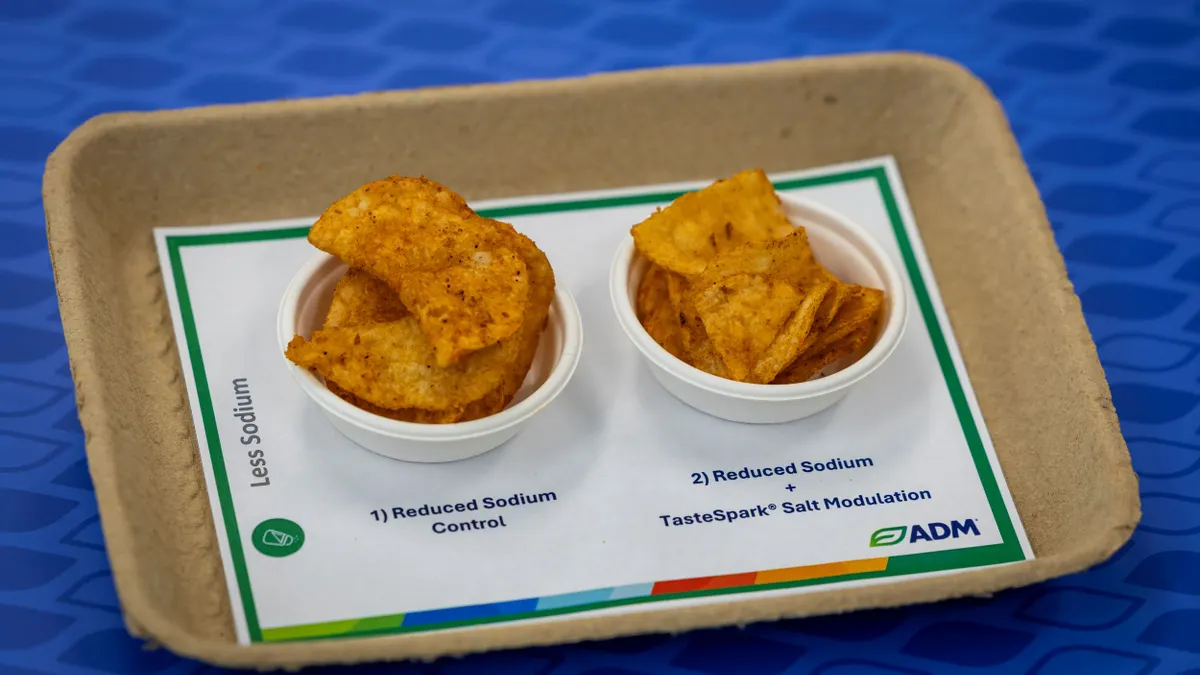
To adapt to these preferences and concerns, ADM uses flavor modulation tools and leverages other savory flavors.
In 2024, the FDA asked companies to voluntarily reduce the sodium content in products to reduce the average consumer intake by about 20%.
ADM has developed a flavor modulation tool called Tastespark that can bring out a food's umami characteristics while still having reduced salt. It's designed to increase the mouthfeel of food and recreate what Shelley Rudisill, senior director of creation, design and development, called the “craveability” of food.
In addition to Tastespark, ADM utilizes potassium chloride, potassium salt or a specialized blend of sea salt, which all have less sodium. Potassium chloride, in particular, brings a salty perception to the products without sodium.
ADM is also using Tastespark in sugar reduction, noting 83% of consumers intentionally avoid or have reduced their sugar intake.
ADM has a process that it calls replace, rebalance and rebuild for sugar reduction that ensures that products still have the full function, taste and sensory experience.
The ingredients supplier also uses a stevia leaf solution to reduce sugar. ADM’s solution is soluble so it can be used in beverages.
While consumers are interested in sugar reduction broadly, their attitudes to it differ from one product to the next, said Erica Campbell, technical manager for carbohydrate solutions.
“A product with juice in it, I might still want some of that sugar and be okay with it. Same thing with a cake or a cookie,” Campbell said. “But then maybe for my nutritional products or an energy drink, I feel very differently about the number of sugars or even the types of sugars that I'm using in those different products.”
Adding more nutrients
People across all walks of life are looking to increase their protein content, with ADM estimating that 66% of consumers are seeking out more of the nutrient. Consumers who use GLP-1 medications, in particular, are looking to increase their intake, making protein fortification essential for companies hoping to reach these consumers.
According to ADM data, consumers also rank protein as the top nutrient they’re looking for in products.
ADM is leveraging its status as a commodity giant to offer companies different protein options made from plants. The ingredients supplier is educating food manufacturers on what protein to use to keep up with consumer demands while still balancing plant-based items.
In May, the company released eight different protein products across North America and Europe to meet this demand. The protein options are soy- and pea-based to meet consumer demand for plant-based products while offering companies a more stable and cost effective supply source. ADM said 86% of consumers see diverse protein sources as healthier.