Nestlé USA is bringing Gerber into the pediatric rehydration space as the CPG giant expands the infant and toddler brand beyond its core meals segment, part of a broader turnaround effort for the century-old offering.
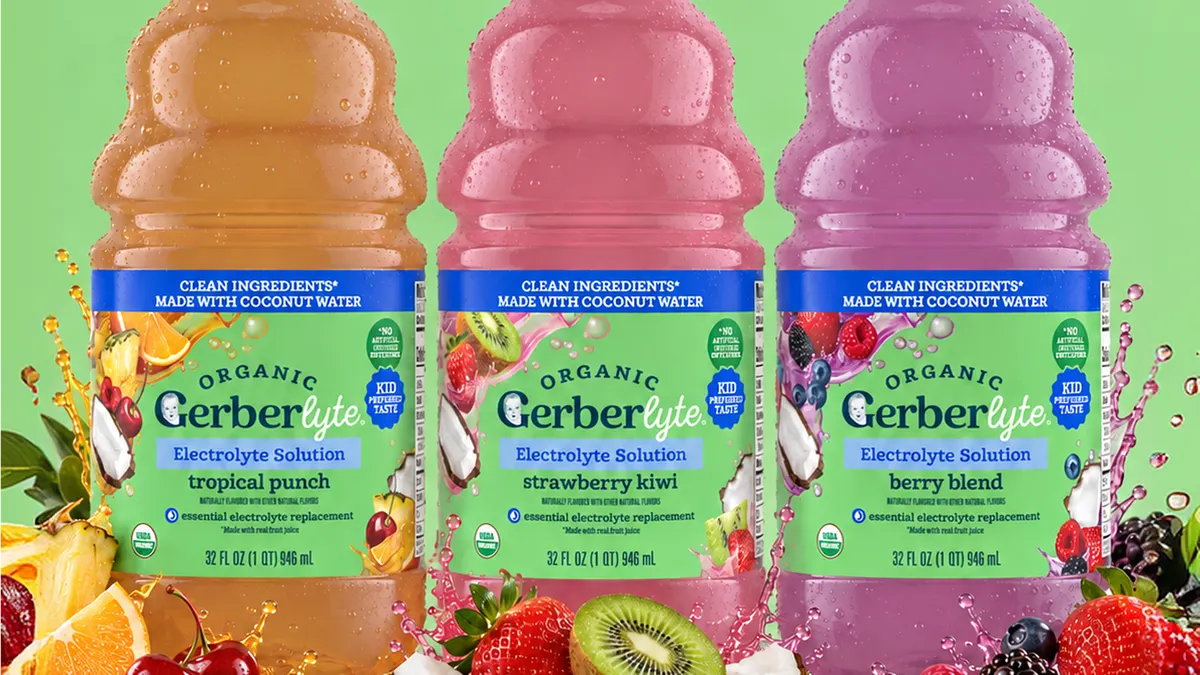
The electrolyte kids' drink, Gerberlyte, is designed to treat and support mild-to-moderate dehydration for children and will give Gerber a prominent position in the pediatric electrolyte market expected to reach $451 million by 2031, according to market data cited by Nestlé.
The idea for Gerberlyte comes after parents called and emailed Gerber seeking a trusted hydration option for fussy children — a need solved with Nestlé's global R&D team and expertise in nutrition science.
Parents also wanted a product without artificial ingredients and colors that consumers are increasingly avoiding, said Oscar Benitez, president of Nestlé Nutrition U.S. and a father of two young children.
“We’ve known for some time that we had this untapped need in the market,” Benitez said in his first interview since stepping into the role last year. “This is a very clear example of the transformation journey that the Gerber brand is having now and will continue to evolve in the upcoming years.”
Gerberlyte, intended for children ages one to three, comes in strawberry kiwi, berry blend and tropical punch flavors. It is touted by Nestlé as the first USDA Organic-certified pediatric oral rehydration solution made with coconut water and 25% daily value of zinc per 12-fluid-ounce serving.
The drink is launching as school gets underway and ahead of the upcoming cold and flu season — a critical time when parents are searching for hydration alternatives.
Benitez added that Gerberlyte will also be an option for parents to give to extremely active kids, noting the product “hydrates faster than other normal beverages.”
Gerberlyte will be available nationwide starting this month in the baby aisle in 32-fluid-ounce multiserve bottles and four-packs of 4-fluid-ounce bottles.
“We have the strongest baby food portfolio in the U.S.,” Benitez said. “We cover breakfast time, meal time. We cover dinner. We cover snacking. So we have the entire portfolio. However, we know that certain spaces require specially designed recipes for infants and toddlers, and we saw this as an opportunity to stretch.”
Gerber, which dates back to 1927, was founded in Fremont, Michigan, where Gerberlyte was developed and is being produced. Today, Gerber has the highest market share in the U.S. and is the top pediatrician-recommended baby and toddler food brand based on a 2026 survey of U.S. pediatricians, a IQVIA survey cited by Nestlé showed.
Still, Gerber isn’t without its blemishes. Nestlé has said the performance in Gerber “continues to be challenged.” The company announced earlier this year that it took a write-down of Gerber.
Philipp Navratil, Nestlé’s CEO, told analysts in February he was “unhappy” with Gerber, noting it was “a drag in terms of market share, and we're still not where we should be.”
While Navratil has sold off other businesses within Nestlé, including vitamins and waters, the executive has instead pushed for a turnaround within Gerber.
“The team is working relentlessly to get innovation back on shelves and to revive the brand,” Navratil added. “I'm not infinitely patient, but we have to give it a try to drive growth in this category. I believe in the category. It's an essential category when you think about our nutrition portfolio for kids and toddlers.”
Gerberlyte rolled out regionally first at H.E.B. in Texas earlier this summer and achieved 5% market share in the infant nutrition category after a month. Gerberlyte will be available in most U.S. retailers later in September.
In addition to launching Gerberlyte, Nestlé said it is transforming more than half of Gerber's purees, cereals, toddler meals and snacks by reducing added sugars, removing artificial preservatives and simplifying ingredients to align with the demands of modern parents. It swapped out rice used in one of its Gerber snacks with sorghum, for example, and is increasing organic offerings across the portfolio.
New packaging that displays ingredients, nutritional benefits and existing certified quality claims will make their way to shelves through early 2027.
“This is an example of how we're evolving, transforming and simplifying our portfolio,” Benitez said.