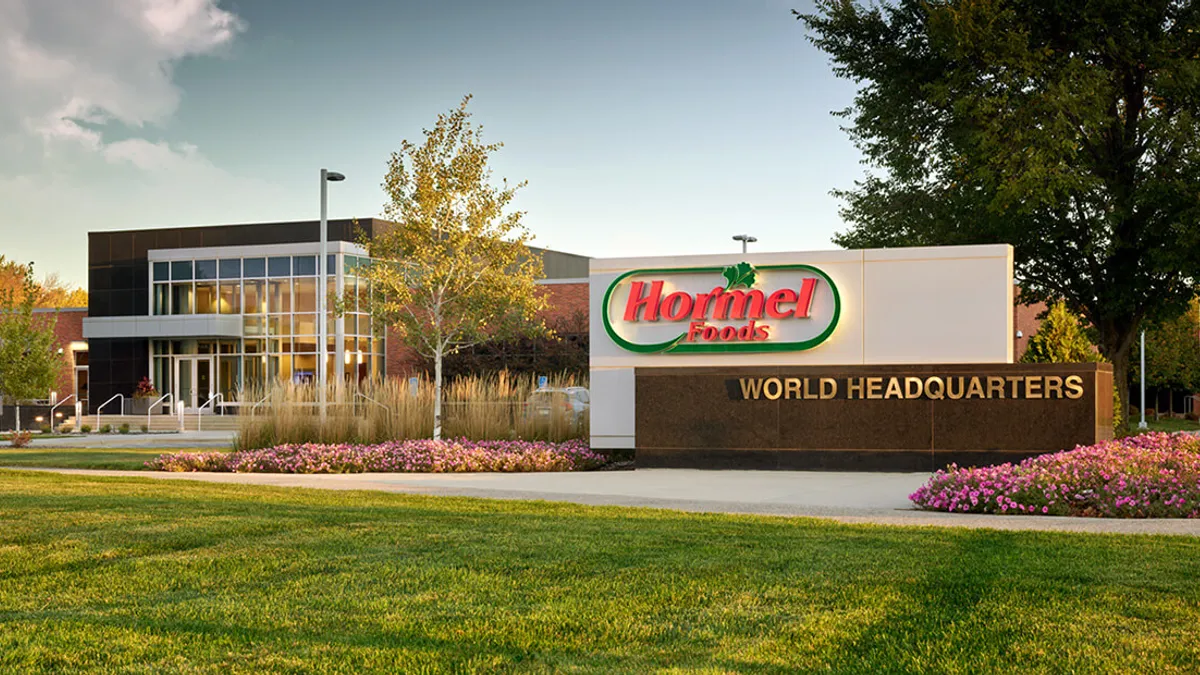
Hormel Foods has reached a deal to sell its Brazilian operations, allowing the Spam maker to exit a market that has weighed recently on its international operations.
The Planters maker said its business in Brazil, which operates under the Ceratti brand, will be sold to Zanchetta Alimentos, another food maker in the country. Financial details of the transaction were not disclosed. Ceratti offers meats such as mortadella, sausage and salami for the Brazilian retail and foodservice markets.
“The divestiture reflects Hormel Foods ongoing efforts to simplify and streamline its portfolio and focus its international strategy on markets with the strongest long-term growth opportunities,” the Minnesota company said in a statement.
The transaction is expected to close in the coming weeks following regulatory approval. In the interim, operations will continue as usual.
Hormel’s international business makes up a small portion of its sales, the majority of which come from U.S. retail and foodservice. The company purchased Ceratti owner Cidade do Sol for $104 million in 2017, saying at the time it would allow Hormel to enter Brazil and serve as a platform for future growth in South America.
During the company’s fourth-quarter earnings call in December 2025, interim CEO Jeffrey Ettinger told analysts that the Brazil market was “challenged” and hurt the ability of its international segment “to deliver on our growth objectives.”
“Brazil, for sure, has been a drag in terms of our overall performance,” Ettinger said at the time. “Everything is under review. We do continue to look at our portfolio in total for what makes sense, what doesn't.”
Hormel is at least the second large food manufacturer to exit Brazil this year.
General Mills announced in March that it planned to sell its business in Brazil to food and beverage owner 3corações for roughly $153 million (800 million Brazilian reais) as the snack and cereal maker aimed to boost its margins and sharpen its international focus.
The move to leave Brazil comes as companies assess their business operations in the U.S. and in other parts of the world. As consumers pull back on spending and shift eating habits, food companies are making tough decisions to cut costs and prioritize geographies with the most opportunities for growth.