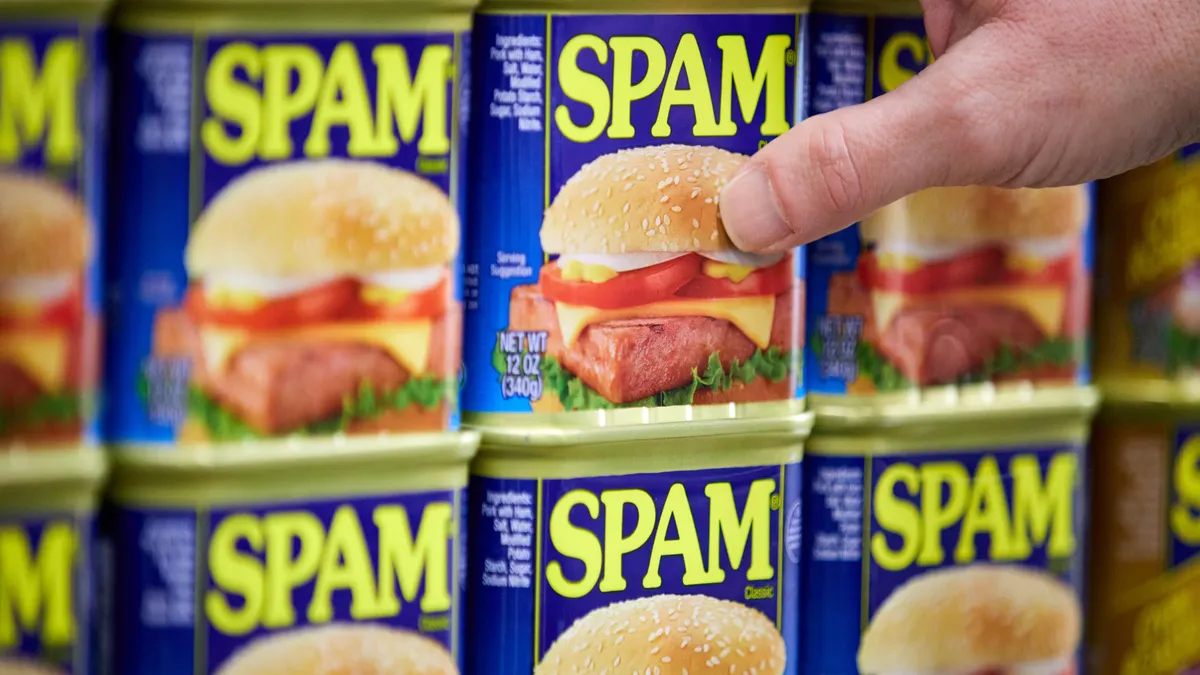
Few brands are as closely tied to their packaging as Spam is to its blue and yellow can. But for owner Hormel Foods, a bigger part of Spam’s future will be fostering a bigger presence outside its signature packaging as an ingredient in everything from sushi to hot dogs.
“We continue to innovate inside the can, but we're really trying to think about how can we get outside” of it, said Kelsey Hannon, a brand manager for Spam. “We do see a huge opportunity.”
Spam, now available in 11 different varieties, has achieved record sales in nine out of the last 10 years, according to the company. Hormel has put its money behind the expansion, hiring Hannon and two other brand managers in 2025 to shepherd Spam’s growth.
Hannon said there is “potential for extreme growth” for the 90-year-old brand beyond the can. After noticing the popularity of Spam musubi, a popular Hawaiian snack including a slice of grilled Spam sandwiched between or on top of a block of rice and wrapped together with nori, Hormel looked into bringing the brand into sushi.
Spam first partnered with Kroger in 2025 to incorporate Spam into the grocer's prepared sushi. Other retailers, such as Albertson’s, have since added Spam to their own version of the Japanese dish.
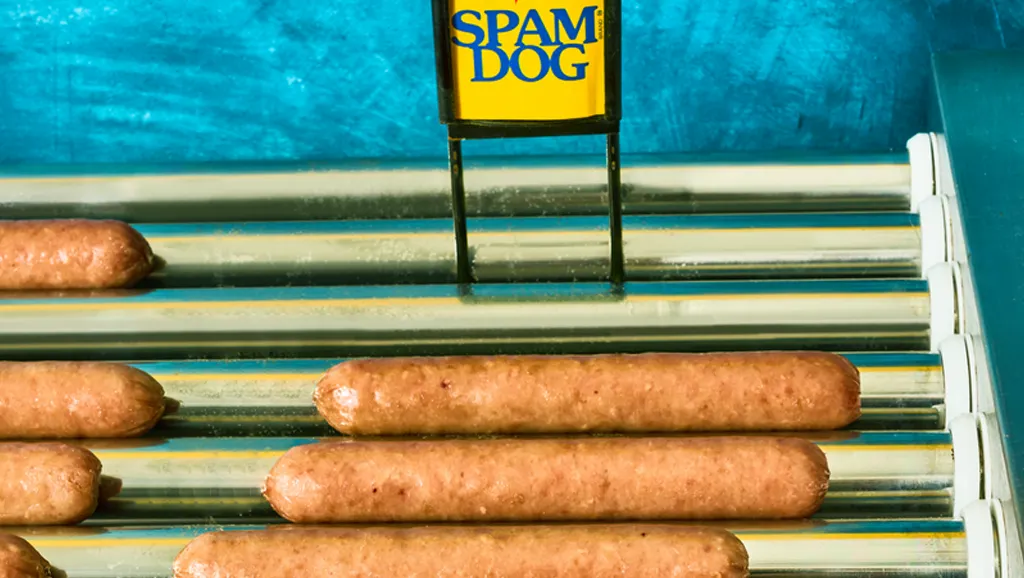
Hot dogs were next on the menu after Rutter’s, a convenience store chain in the northeastern U.S., launched Spam hot dogs in partnership with Hormel in February. The frankfurter has since been added to other venues, including stadiums and other retailers.
Hannon said consumers on social media have chosen to experiment with Spam on their own, deep-frying the product or adding it to eggs for breakfast. She added that Hormel wants to expand Spam’s reach through different packaging options, flavors and eating occasions.
Hormel has attempted to bring Spam into other food products before. A decade ago, it launched dried Spam bites, only to end the innovation six months after their debut when sales reportedly fell short.
Focusing more on entertainment venues or convenience stores could prove more advantageous. This strategy fosters awareness in a new category and promotes the product’s versatility. Sushi, for example, provides an ideal platform for consumers hesitant to try Spam with a way to sample it for the first time, Hannon noted.
This often leads to an uptick in canned sales, with consumers who try Spam in other foods like sushi more likely to pick up the brand in its most traditional packaging at the store.
“We are thinking about things like that because ... convenience is a trend, and it's not going anywhere,” she said.
Spam traces its origins to 1937, and was praised as "miracle meat" during the height of the Great Depression due to its convenience as a non-refrigerated protein and its affordable price point. It got its iconic name from the brother of a Hormel Foods vice president who won a $100 naming contest.
One popular belief claims the word Spam was derived from the words “spiced ham,” but a Hormel spokesperson previously told Food Dive the real answer is known by only a small circle of former Hormel Foods executives.
Despite being the brunt of so many jokes, the Spam brand is widely loved by many Americans.
It’s so popular that more than 10,000 people make an annual trip to visit the Spam Museum near Hormel’s headquarters in Austin, Minnesota.
And each year, Hawaii — which has the highest Spam consumption rate in the nation at approximately 7 million cans annually — hosts the Waikiki Spam Jam festival. At that event, as many as 40,000 people gather for a day in April to prepare their favorite recipes and sell souvenirs like Spam soap.
“We've gotten all new leadership [at Hormel,] and they truly see the potential of this brand,” Hannon said. “We say it was born in America, but it was raised around the world. And we have consumers that have such authentic connections to the brand that we need to figure out how to tap into that.”