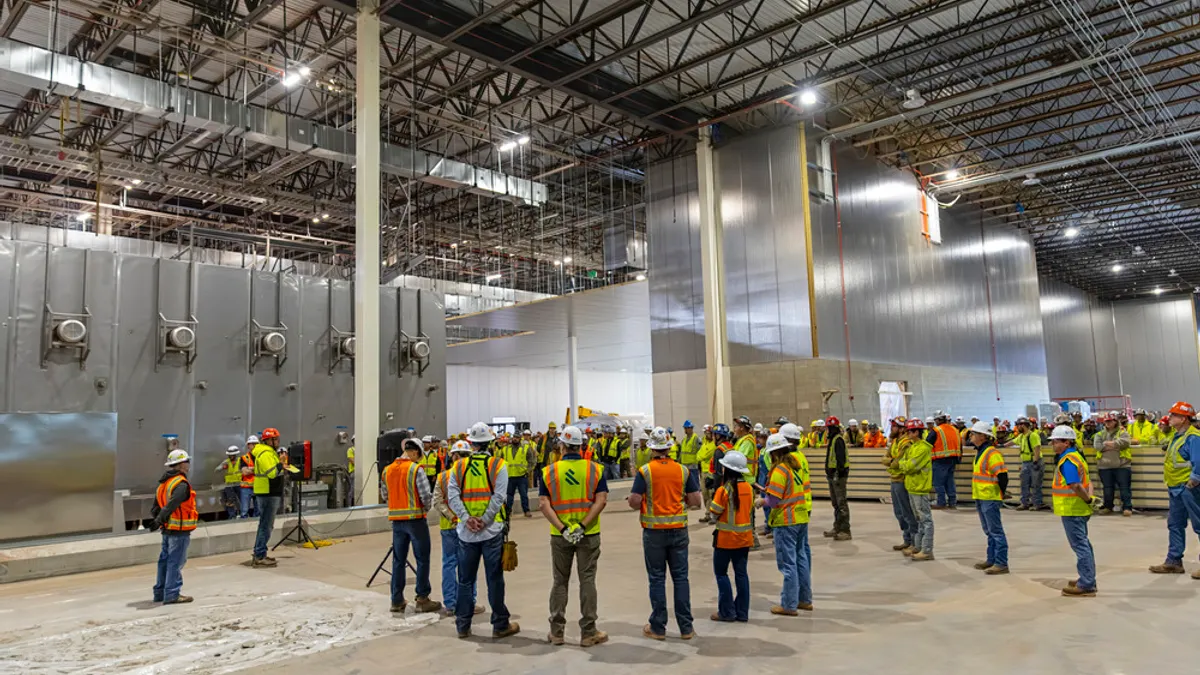

Today, unprecedented spending on energy and digital infrastructure construction is pulling specialized tradespeople away from food and beverage manufacturing. What might this mean for the future of craft workforce development?
Food and beverage manufacturers planning capital projects face a crowded industrial construction environment. A heavy concentration of data centers, megaprojects and infrastructure builds is absorbing the nation’s skilled trades, leaving regional labor pools depleted. For food and beverage manufacturers, the shortage creates immediate project risks, from missed production launch dates to inflated budgets.
For decades, capital project planning followed a predictable formula. Project owners desired to expand, hired general contractors and trusted that regional labor markets would supply the tradespeople needed to build facilities.
That dynamic has changed. Across the industrial sector, project owners are now taking direct control of workforce development. According to the latest Burns & McDonnell Construction Market Update, project owners are directly funding training programs and investing capital upfront to build the craft labor pipeline required for their capital programs.
Major technology and investment firms with significant facility portfolios are helping drive this paradigm shift, committing more than $265 million to workforce training. Meta, Google, Micron and BlackRock are among those making sizable investments in craft workforce development.
These facility owners, and others like them, are protecting their capital investment timelines by treating craft recruitment and technical training as core components of their project planning. The programs these companies are embarking on represent three key resources that large owners bring to workforce development: substantial capital, modern learning technology and exposure to construction trades through large international platforms.
Long-term, in-depth craft development over the course of a career will always depend on traditional apprenticeships, mentorship and hands-on training, but accelerated training programs offered by Meta, Google and others can create an entry point into the trades, help address immediate workforce needs, build foundational skills and prepare workers to contribute quickly, safely and productively on jobsites.
The Specialized Labor Squeeze
With retirees outpacing new workers, a survey from the Associated General Contractors of America found over 92% of construction firms reported having a hard time filling open craft positions in 2025.
Active partnerships between project owners, constructors and vocational training institutions are essential to helping meet workforce demands.
By partnering with established organizations like the Associated Builders and Contractors, which educates more than 10,000 trainees annually in Houston, companies can leverage existing training facilities, proven curricula and experienced instructors. Likewise, programs like the Burns & McDonnell Construction Academy, which delivered 14,245 training experiences during its first year, complements client-based craft training by providing skills assessments, hands-on learning, career exploration and long-term career development.
As owner investment joins forces with established trade programs, a structured, collaborative framework is likely to emerge. Six priorities outline how food and beverage manufacturers, contractors and educators can work together to build and sustain a more resilient and adaptable talent pipeline:
1. Treat workforce development as a strategic investment.
Labor availability is a critical risk affecting project schedules and industry growth. Manufacturers, contractors and educators must plan for workforce needs with the same rigor applied to site selection, permitting and infrastructure development.
2. Choose collaboration over competition.
No single entity can solve craft shortages alone. Success requires active partnerships among facility owners forecasting capital programs, contractors executing work and educators preparing the next generation of skilled craft professionals.
3. Focus on workforce retention and career growth.
Recruitment is only the first step. Retention requires structured career pathways, mentorship, stable project pipelines and ongoing skills development that helps workers advance from initial training to field and industry leadership.
4. Build a culture that supports the workforce.
Workforce support must continue beyond training. Jobsites require strong safety practices, quality supervision and respectful communication. Training programs must foster engagement, belonging and clear career paths to keep workers in the industry.
5. Leverage technology to expand workforce capacity.
Addressing labor constraints requires maximizing productivity, not just adding headcount. Virtual reality and digital learning tools accelerate training, while modular construction, automation, digital planning platforms and other technology help improve jobsite efficiency.
6. Create flexible pathways into and through the trades.
A resilient workforce requires multiple entry points. While traditional apprenticeships and training programs provide essential skills depth, accelerated programs help meet immediate project demands. Collaborative and connected pathways between the two forms of training can help individuals navigate long-term career success.
Training’s Long-Term Value for Capital Programs
For food and beverage manufacturers, the labor shortage is a severe growth constraint as data centers and other large capital programs compete for the same specialized trades professionals needed for plant expansions, line additions and modernization projects. Manufacturers that wait until a project breaks ground to address workforce capacity may already be behind, risking project delays and costly overruns. Treating labor as a strategic input and planning for it as deliberately as equipment, utilities and production capacity can protect schedules and preserve speed to market for food and beverage products.