Dive Brief:
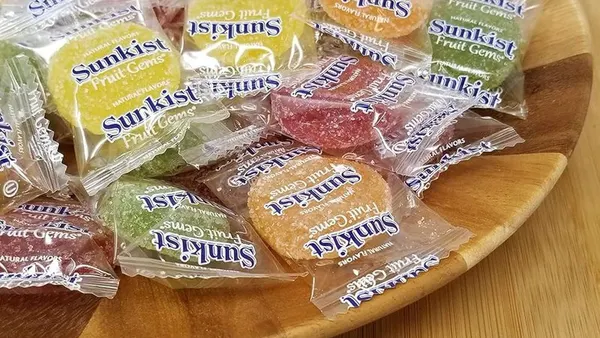
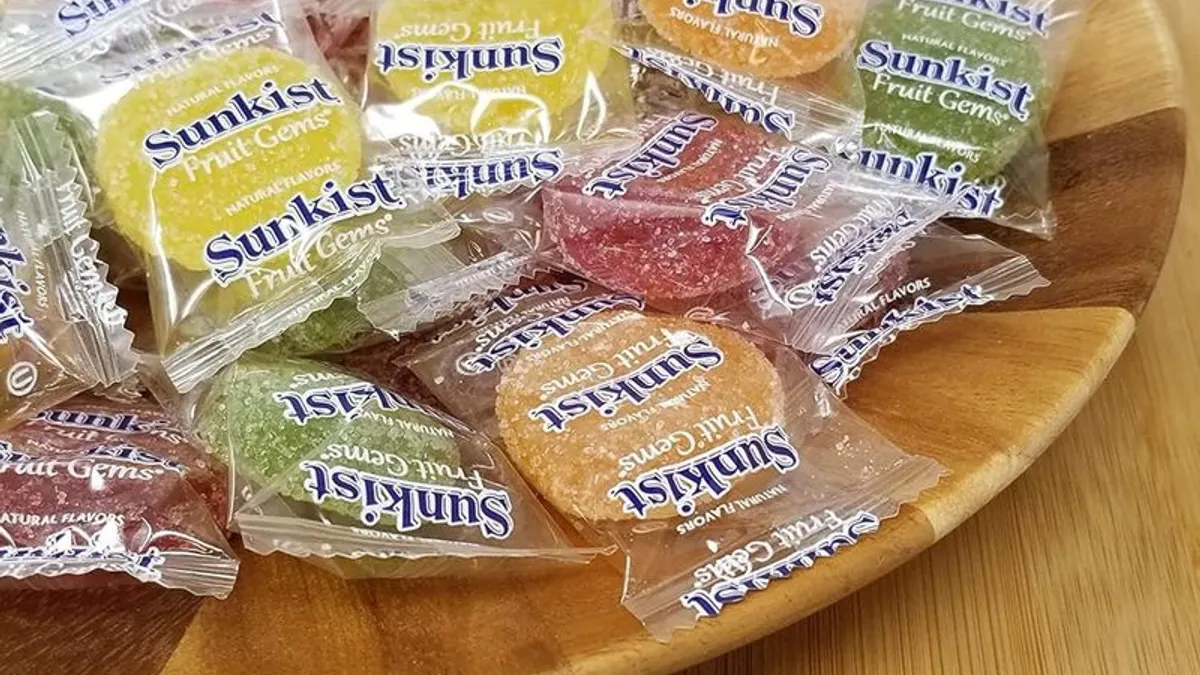
- Sunkist Fruit Gems, a beloved treat that's become a fixture at Jewish celebrations, will remain in production after news of its discontinuation led to national outcry across social media.
- Sunkist Growers said in a statement to Food Dive that it has found a new manufacturing partner for the kosher candies in CandyRific, a Kentucky-based confectionery company. Sunkist plans to bring the gems back in early 2027.
- The candies, which are individually packaged and a staple at bar and bat mitzvahs, were discontinued by Nerds maker Ferrara following its purchase of the Jelly Belly portfolio, the confectionery giant confirmed in an emailed statement.
Dive Insight:
Sunkist said it received "overwhelming support and enthusiasm" for the return of the fruit gems after news of its discontinuation began to spread following a report from Jewish publication eJP.
Sunkist Fruit Gems were first introduced more than half a century ago and manufactured as part of a licensing deal with Ferrara, brand anthropologist Jason Liebig said in a LinkedIn post. The candies are kosher because they use citrus pectin instead of gelatin, and the gems are ubiquitous in synagogues and celebrations – many Jewish couples are showered not with rice, but with Sunkist Fruit Gems, on their wedding day.
Sunkist said it has spent several months looking for a new manufacturing partner and chose CandyRific based on its experience in the confectionery industry. CandyRific manufactures a number of products under license agreements, including popping candies for Warheads and Kool-Aid.
"Consumers can expect the same key product characteristics they know and love, including individually wrapped pieces, a soft texture, fruit flavors, and kosher certification," Sunkist said in a statement.
Ferrara stopped manufacturing the gems as part of a larger decision to streamline the Jelly Belly portfolio, though did not say when it discontinued the brand. The move allowed the company "to focus resources on future growth and innovation," Ferrara said in a statement to Food Dive.
The U.S. kosher market generates over $12 billion in annual sales, according to OU Kosher, the world's largest kosher certifier. While kosher products are designed to be in compliance with Jewish dietary law, other consumers have gravitated toward these products because of dietary restrictions and perceptions around health and food safety.