
New research from Zappi shows that 69% of American consumers would accept fewer product options if it meant lower prices.
For an industry that has spent decades expanding assortment to drive growth, that signal is more than a shift. It’s a reversal.
Until now, the playbook amid inflation has been straightforward: raise prices and expand product lines to protect margins. Bain reported that more than three-quarters of sales growth from CPG manufacturers globally came from price increases.
But that strategy is reaching its limits.
Zappi data shows 93% of shoppers are changing how they spend to offset sustained price pressure — clipping coupons (46%), buying essentials (38%) and purchasing fewer items (34%). In more extreme cases, more than one-fifth (22%) of consumers are turning to food banks and one-in-ten (11%) are using buy now, pay later for groceries — a signal that the pressure on household budgets is both deep and persistent.
The rise of the value-first consumer - at every income level
Price pressure has rewired how consumers evaluate products. Nearly 60% of U.S. households now spend more than $150 per week on groceries, and one in four spends over $250. Meanwhile, more than 80% report higher grocery costs in the last six months.
A 2026 survey from Deloitte showed 75% of CPG executives see value-seeking as structural — yet 23% still believe it will reverse with improving economic conditions.
Zappi’s consumer research suggests that the group may be in for a rude awakening. Even higher-income shoppers are changing behavior — 41% of those earning over $150K say they are buying in bulk to manage costs, while 40% of lower-income consumers are cutting back to essentials.
32% of consumers now buy the cheapest option that meets their needs, regardless of brand. At the same time, brand loyalty is eroding: two-thirds of consumers purchase a mix of brand and private-label products, up 12 points since March 2025. Brand-only buyers have fallen from 21% to 10%.
This isn’t just trading down. It’s a redefinition of value, and with inflation showing now immediate signs of tapering off, the tradeoffs made today are habits for tomorrow.
The closing perception gap between private label and national brands is accelerating the shift. More than 80% of U.S. consumers now rate private-label food as equal or better in quality than branded alternatives.
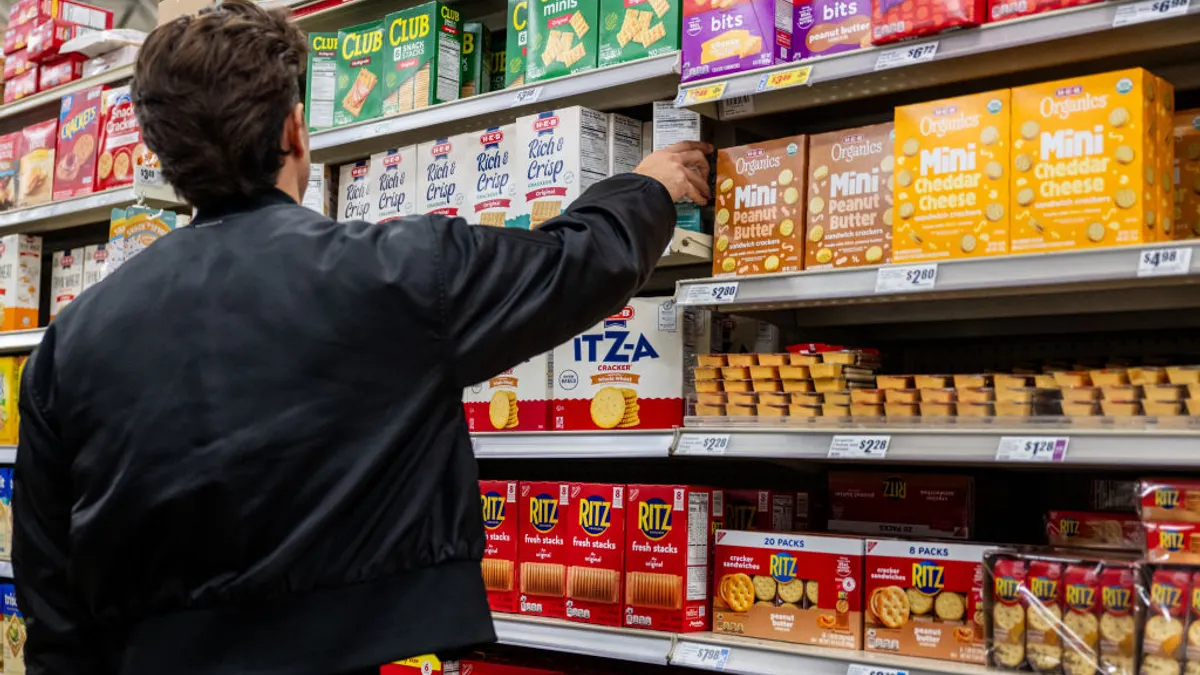
The result is a more competitive basket — with more decisions made at the shelf. For CPG brands, the challenge isn’t just losing share in the moment. It’s that once consumers change how they buy, winning them back becomes significantly harder.
Turning consumer signals into portfolio decisions
Recognizing the shift toward value is one thing. Acting on it is another.
Many CPG companies are already moving to simplify their portfolios — not by innovating less, but by testing more rigorously and launching fewer, stronger products. After years of expanding variants, flavors and pack sizes, consumers are signaling something different: less choice, less friction and clearer value. About half say they plan to reduce complexity to stay closer to evolving consumer needs.
But that response dilutes the risk.
In a market where consumers are buying fewer items, every product has to work harder to earn its place. The cost of getting portfolio decisions wrong is rising – and finding which products to streamline will be a moving target.
This isn’t just about reducing complexity. It’s about knowing where value is created — and where it’s watered down.
Remove the wrong product, and you risk losing shelf space. Keep the wrong one, and you add cost, fragment demand and weaken your value proposition. At that point, portfolio complexity stops being operational. It becomes competitive.
And the signals guiding those decisions aren’t stable. Consumers are constantly recalibrating what “worth it” means, and small changes in price or positioning can materially shift behavior.
Consumer understanding is fragmented across teams — innovation, brand and commercial groups often working from different data, collected at different times. By the time signals align, the opportunity has already moved.
The companies pulling ahead are solving for that by staying continuously connected to the consumer.
Most organizations hit a wall: consumer understanding is fragmented across teams. By the time signals align, the opportunity has moved. Leading CPG companies are starting to fix this — BCG found top performers are consolidating insights into a single, real-time view across innovation and growth. The advantage isn’t more data. It’s connected insights.
In a value-first market, advantage doesn’t come from simplifying faster. It comes from simplifying with clarity — and acting on consumer signals before competitors do.