
The food and beverage industry is undergoing significant transformation. Consumer expectations are changing rapidly, retailers are carrying more product variations than ever before and distribution networks are being challenged to move products faster, more accurately and with greater flexibility.
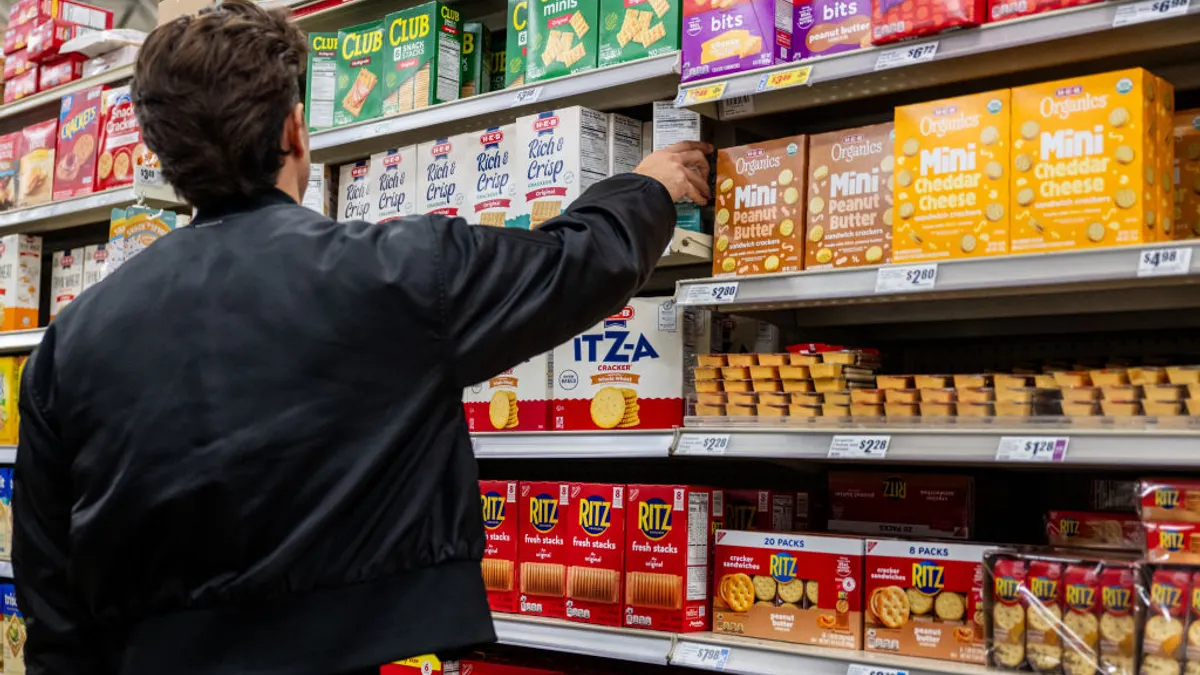
As SKU counts rise and retailers require more frequent deliveries, manufacturers and distributors face increasing pressure to optimize storage capacity, improve order fulfillment speeds and maintain product quality across the supply chain. Traditional warehouse operations built around bulk pallet storage and manual processes are often struggling to keep pace with today's demand for mixed-SKU orders, just-in-time replenishment and omnichannel fulfillment.
For food and beverage operations, automation has become a strategic advantage rather than a future consideration.
Key industry trends shaping food and beverage distribution include:
- Growing SKU proliferation, SKU churn and product variety
- More frequent, smaller retail replenishment orders
- Increased e-commerce and omnichannel fulfillment requirements
- Labor shortages and workforce retention challenges
- Rising transportation and operating costs
- Greater demand for product visibility and traceability
- Enhanced food safety and cold-chain compliance requirements
To meet these evolving demands, food and beverage companies are increasingly investing in warehouse automation technologies that connect storage, transportation, picking and inventory management systems into a cohesive operation.
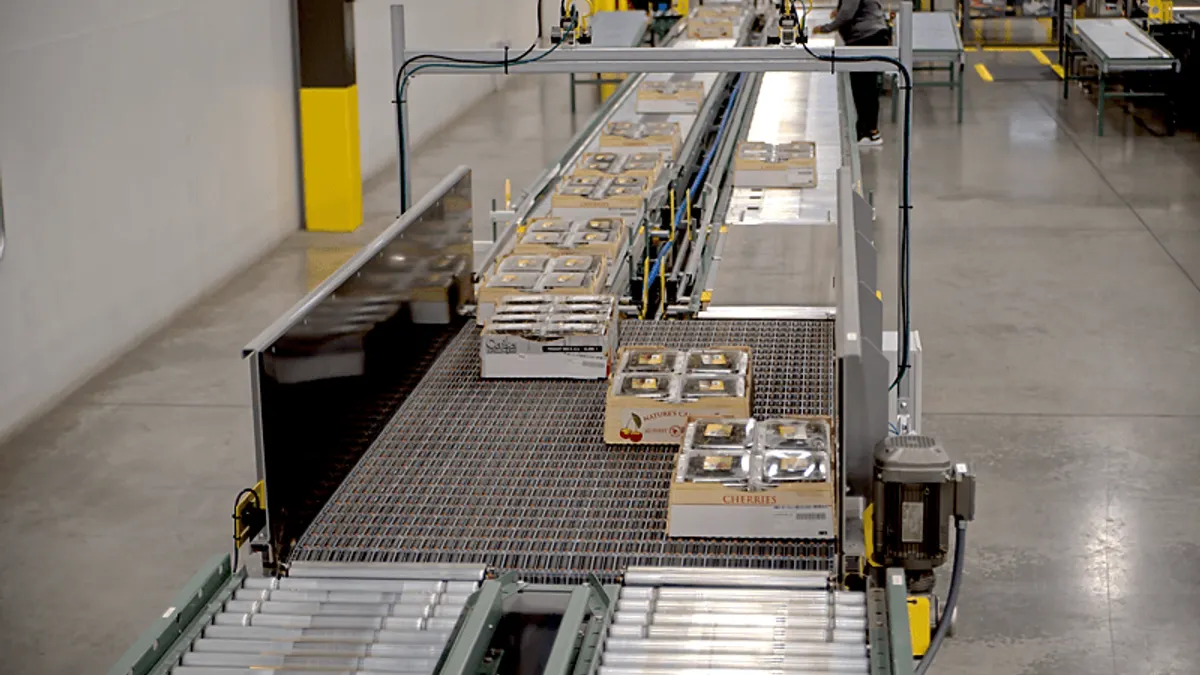
Solutions such as Automated Guided Vehicles (AGVs) and Autonomous Mobile Robots (AMRs) can streamline material movement throughout facilities while reducing product damage and dependence on manual forklift traffic. Unlike traditional fixed automation, these mobile solutions provide greater flexibility by supporting applications where conveyor systems may only be used for pallet and case movement, allowing materials to be transported efficiently between automated and manual processes.
Automated Storage and Retrieval Systems (ASRS) and robotic pallet shuttle systems enable high-density storage while improving inventory accessibility and throughput. Stock rotation/FEFO compliancy is also greatly improved versus relying on manual selection or stock rotation, even with WMS “pick from” designations, reducing losses due to expiry or spoilage.
For facilities managing chilled, frozen or deep-freeze products, automation can provide additional benefits by reducing employee exposure to harsh environments while improving inventory rotation and maintaining cold-chain compliance. Controlled or modified atmospheres especially benefit as automation can be used to store, rotate and access products, minimizing human exposure while maintaining the environmental storage conditions. Advanced warehouse control and management systems can further support traceability requirements by tracking products, lot codes and inventory movements throughout the distribution process. Each year, product labeling issues contribute to the largest percentage of food recalls, many from manual errors within the labeling process. Many of these errors can be mitigated with automation.
Robotic palletizing and mixed-case order fulfillment technologies also help food and beverage operations build store-ready shipments with greater speed and consistency. These systems support the increasing need for aisle-friendly pallets and customized order sequencing required by modern retail distribution models while also providing full compliance to food packaging requirements (i.e. protein cases palletized with all labels facing outwards).
Every operation has unique business objectives, facility constraints, product characteristics and growth plans. By evaluating the entire material flow, from receiving and storage to picking, staging and shipping, organizations can develop automation strategies that align with both current demands and future growth.
Whether designing a new greenfield facility or optimizing an existing operation, scalable automation solutions improve operational efficiency, increase storage density, strengthen inventory control and create safer working environments.
As food and beverage distribution continues to evolve, organizations that embrace automation will be best positioned to improve service levels, manage complexity and build supply chains capable of meeting tomorrow's challenges.