Dive Brief:
- Texas Attorney General Ken Paxton launched an investigation into Celsius Holdings to determine whether the energy drink company is marketing its beverage to children and teenagers despite having high levels of caffeine.
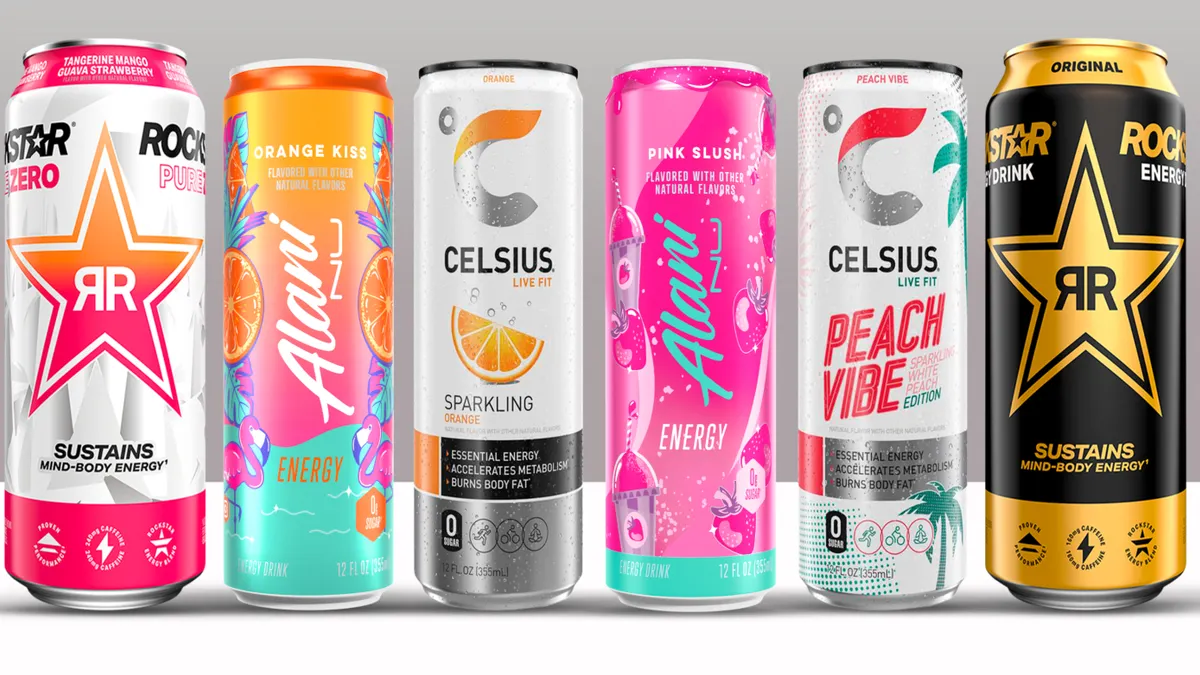
- The investigation focuses on the Alani Nu beverage brand, which Celsius purchased in 2025 for $1.8 billion. Paxton said Alani uses colorful packaging, a “playful” design and other strategies that appeal to younger individuals. Each 12-ounce of Alani contains 200 milligrams of caffeine, or roughly the equivalent of two cups of coffee, a level the attorney general says medical professionals consider dangerous for children and adolescents.
- The investigation by Paxton, who is running for the U.S. Senate in Texas, is the latest by his office to target food or beverage companies in the last year.
Dive Insight:
Earlier this week, Paxton announced he was looking into PepsiCo and other companies over whether glyphosate residue in food was putting people at risk of various illnesses, including cancer.
And last year, the attorney general said he was investigating Skittles maker Mars for failing to fulfill a 2016 pledge to remove artificial colors from its food products. Paxton also investigated Lucky Charms maker General Mills and Froot Loops manufacturer WK Kellogg for promoting their cereals as healthy despite containing artificial food colorings. General Mills and W.K. Kellogg later agreed to remove artificial dyes from their products.
In targeting Celsius-owned Alani, Texas is taking aim at one of the fastest-growing energy beverages, which is predominantly focused on female consumers.
Celsius CEO John Fieldly said last month that Alani posted net sales of $368 million in the most recent quarter, up about 60% from the year-ago period. The brand is on track to more than double shelf space across all channels, he said.
In a statement provided to Food Dive, Celsius said it “disagree(s) with the allegations and characterizations” and that it expects to cooperate with the Texas Attorney General’s office during the review. The company said Alani labels disclose total caffeine and include responsible-use guidance for consumers.
“Celsius and Alani Nu take product safety, responsible marketing, and transparent consumer information seriously,” the Florida-based firm said. “Our company policy is not to market or sample energy drinks to anyone under 18 years of age.”
Energy drink companies, such as Celsius and competitor Monster Beverage, have long been dogged by concerns over high caffeine levels and accusations that they were marketing their drinks to children and teens.
Paxton said “multiple” children and young adults across the country have reported “adverse health effects” following consumption of high-caffeine energy drinks.
The attorney general noted the family of a 17-year-old cheerleader from Weslaco, Texas, is suing the distributor of the Alani Nu after the teen died from an enlarged heart allegedly caused by consuming too much caffeine. The lawsuit claims the product failed to provide adequate warnings about risks associated with the drink.
“The tragic death of a 17-year-old Texas girl allegedly caused by consuming a highly caffeinated energy drink is a sobering reminder of what is at stake when companies prioritize profit over the safety and wellbeing of our children,” Paxton said in a statement. “I am looking into Celsius and Alani Nu to prevent more cases like this one and to ensure Texans are made aware of the [many] risks that come with consuming certain energy drink products.”
Despite lingering safety questions, the energy category continues to grow, with sales topping more than $23 billion annually. Fieldly told Food Dive earlier this year that energy drinks have moved beyond tired college students or gamers, and now are popular with mainstream consumers as a replacement for coffee, alcohol and sports drinks.