Dive Brief:
- San Francisco's city attorney filed the first government lawsuit against makers of ultraprocessed foods, claiming giants including Kraft Heinz and Coca-Cola knowingly marketed products that put consumers' health at risk.
- The suit, filed Tuesday in San Francisco Superior Court, argues 10 of the largest packaged food manufacturers engineered a "public health crisis" that has burdened the city with the cost of treating conditions such as diabetes and heart disease.
- The lawsuit aims to end or lessen companies' "deceptive marketing" and force them to pay damages to offset government healthcare costs. Companies named in the complaint include Kraft Heinz, Mondelēz International, Post Holdings, Coca-Cola, PepsiCo, General Mills, Nestlé USA, Kellogg, Mars Incorporated and Conagra Brands.
Dive Insight:
The first-of-its-kind lawsuit makes a similar argument to litigation against tobacco and opioid manufacturers, which has led to settlements worth hundreds of billions of dollars during the past three decades.
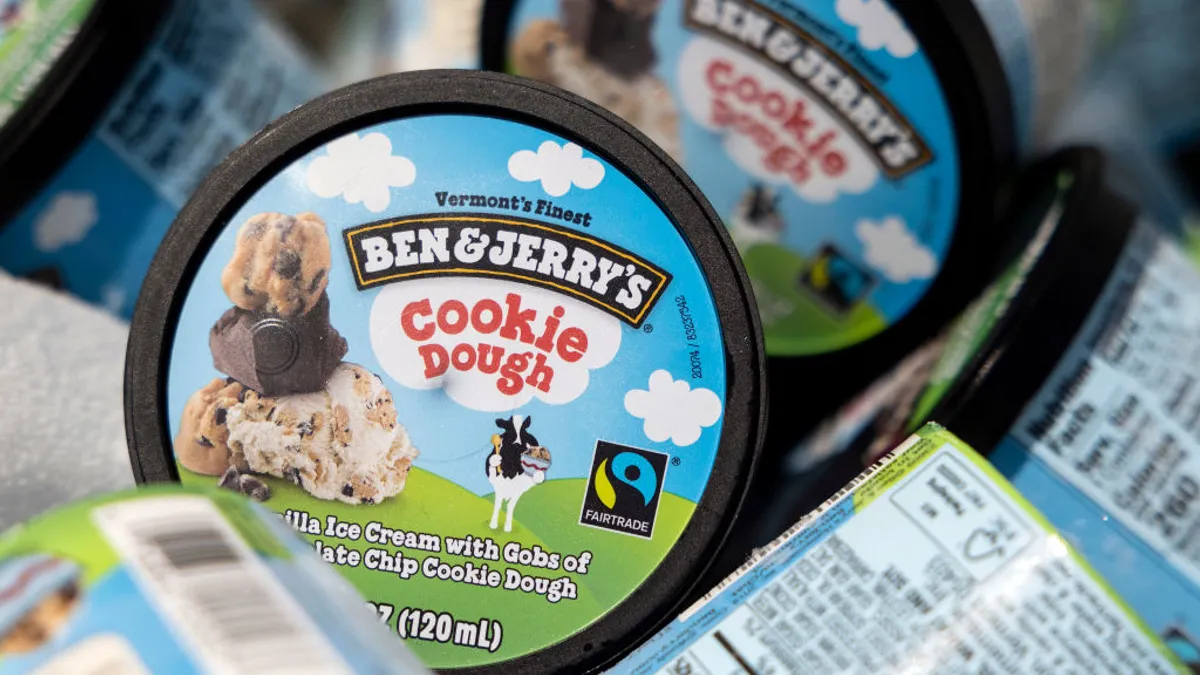
However, the case against ultraprocessed foods will likely be more complicated. There's no universally accepted definition of the term, which can include offerings ranging from potato chips and sodas to items perceived as healthier like granola bars and yogurts.
Ultraprocessed foods generally refer to products that undergo industrial manufacturing and are made with ingredients not typically found in a home kitchen. While California became the first state to define the term as part of a ban on ultraprocessed foods in schools, major details remain unclear — including which types of products would be subject to restrictions.
The FDA is also exploring how to define ultraprocessed foods, though it is still early in the process. However, as consumer momentum builds, it could accelerate efforts after placing pressure on companies to remove artificial dyes.
In August, a judge dismissed a lawsuit from a 19-year-old consumer who claimed ultraprocessed foods led to his Type 2 diabetes. The court ruled he failed to list specific products that caused his illness.
More broadly, San Francisco's lawsuit also underscores how the Make America Healthy Again movement is becoming increasingly bipartisan, with consumers' concerns around processed ingredients extending across party lines.
"Recent surveys show Americans want to avoid ultra-processed foods, but we are inundated by them," San Francisco City Attorney David Chiu said in a statement. "These companies engineered a public health crisis, they profited handsomely, and now they need to take responsibility for the harm they have caused.”
Beyond financial damages, the lawsuit asks a judge to require food companies to "ameliorate the effects of their prior false marketing." This could include consumer education on the risks of ultraprocessed foods or subsidies for "real food" in low-income and other communities disproportionately harmed by the prevalence of ultraprocessed foods.
Multiple states have moved to either ban certain ingredients or require warning labels, requiring companies to undergo complex and expensive packaging or reformulation changes. Food companies have also become louder in their pushback against the patchwork of state regulations, forming a new lobbying initiative to advocate for a single national standard.