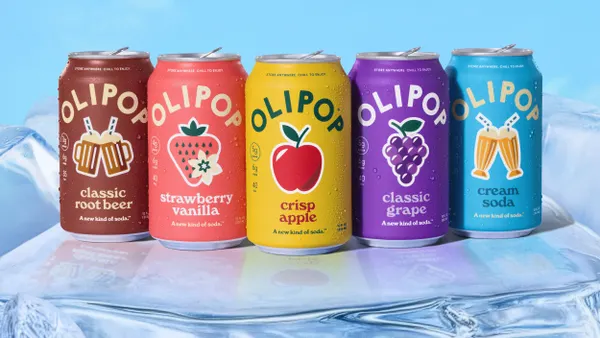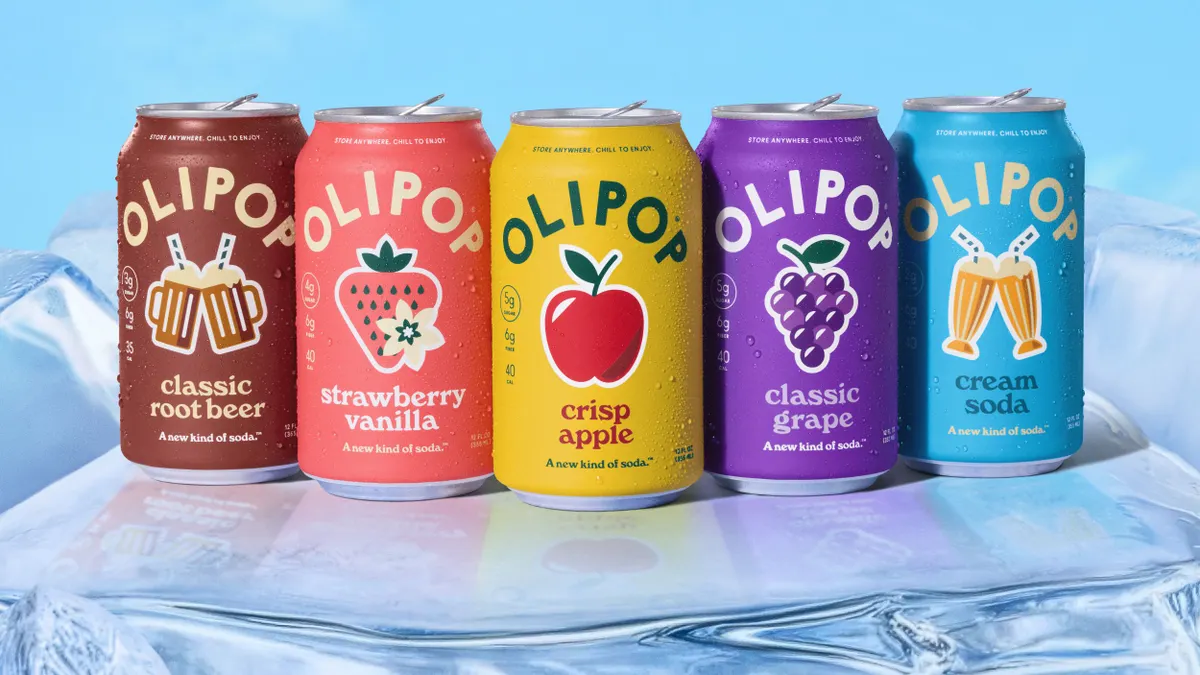
Olipop’s new CEO aims to grow the pioneering better-for-you soda brand to $1 billion in sales despite increased competition in the emerging category.
Christian Patiño Webb stepped into Olipop’s top leadership position in August. He’s the first non-founder to lead the brand after former CEO Ben Goodwin stepped into a research- and strategy-focused role and became chairman of the board.
“On the operational side, the not-so-fun part of the business, that’s where I come in,” Patiño Webb said. “The goal is that both [Ben] and I co-lead this organization to continue letting it grow and reach our first billion [in sales.]”
Olipop, founded in 2018, was valued at $1.85 billion last year after nabbing $50 million in funding from Growth Equity Partners. Olipop hit nearly $500 million in sales in 2024, according to media reports, though the company declined to share current sales numbers.
While Poppi, Olipop’s largest competitor in better-for-you soda that was founded three years before Olipop, sold to PepsiCo last year for nearly $2 billion, Goodwin has indicated that Olipop isn’t for sale. By hiring Patiño Webb, Olipop is doubling down on what it views as its science-backed value proposition.
Patiño Webb hails from hydration brand Electrolit, where he was CEO for four years following a stint at Unilever. At Electrolit, Patiño Webb said he enjoyed building a better-for-you brand with “best-in-class ingredients and a pharmaceutical heritage” — an approach he plans to replicate at Olipop.

His expertise will be tested by an increasingly crowded slate of rivals —roughly one new better-for-you soda competitor enters the market per week, Patiño Webb said. Olipop has worked to stand out from a growing list of better-for-you soda competitors by honing in on its health claims, investing in nutritional research to gauge the drink's effect on blood sugar and digestion. Still, the brand must also contend with broader macroeconomic headwinds, like consumer pullback and price sensitivity.
Cans of Olipop have significantly more fiber than other options, boasting up to 9 grams of prebiotic fiber per can compared to Poppi, which has 2 grams. This nutrition profile could help capture and retain health-conscious customers.
As more competitors enter the better-for-you soda space, Patiño Webb is focusing on Olipop’s execution to win at the point of sale. While functionality and science is important for Olipop, it’s still taste that wins, he said.
Olipop’s mission of constantly improving its formula to better suit the needs of consumers resonated with Patiño Webb, he said. Some of the biggest growth drivers for the company have been its limited-time offering flavors.
The brand additionally plans to expand distribution and enter new stores. Patiño Webb thinks such growth opportunities await both in and out of the U.S.
Despite the proliferation of better-for-you soda brands, the category still has a lot of room to grow, Patiño Webb said. Within soda, Patiño Webb estimates that about 5% of sales are going to better-for-you options. Patiño Webb wants to bring that number to 10%, 15% or 20%, not only for Olipop but for its competitors as well.
To expand the better-for-you soda category, beverage companies need to do a better job at educating consumers on the full functionality of their products to bring in new consumers. Patiño Webb said a lot of consumers think better-for-you soda refers to fewer calories, putting the onus on brands to explain to consumers how functional ingredients such as prebiotic fiber can benefit overall health.
“The more you can educate and drive awareness with consumers, you are going to either switch some consumers from legacy brands to better-for-you soda,” Patiño Webb said. “But at the same time, you can bring new users to the category that for years, for decades, were not interested in trying soda because it was not good for you.”
While the company has internally discussed expanding its portfolio into new categories, Patiño Webb said Olipop is primarily focusing on soda, which the company views as the biggest opportunity within the beverage sector.
“That doesn’t mean that [soda’s] going to be the only path that we’re going to go moving forward,” he said.