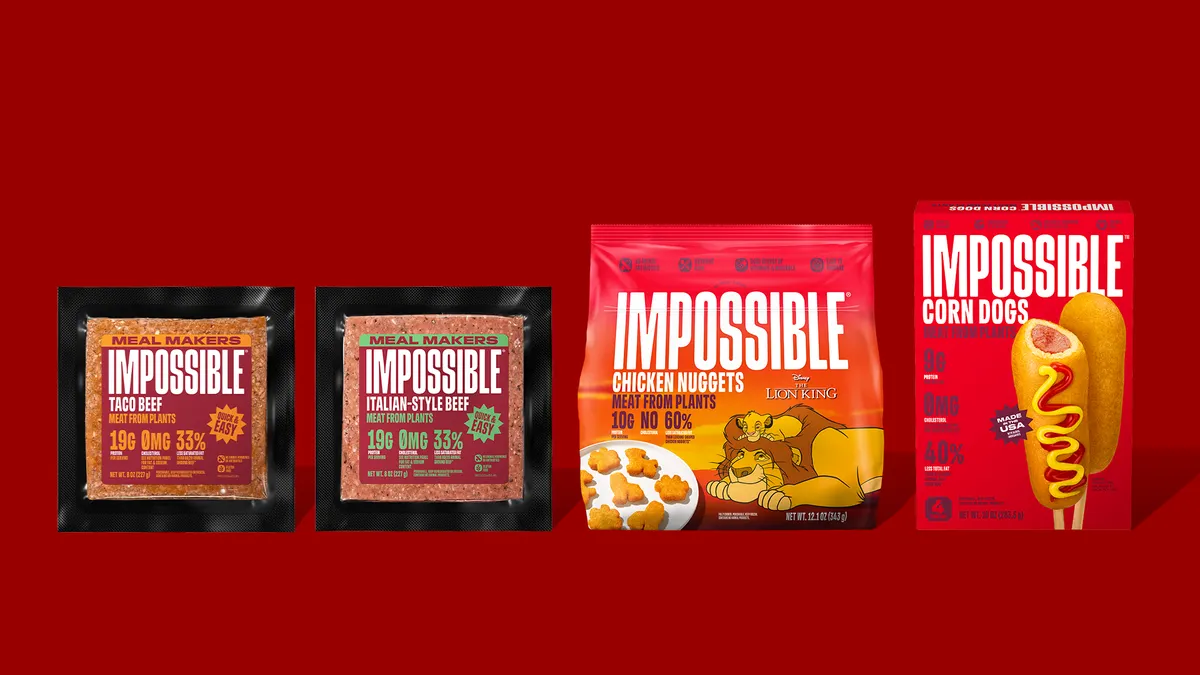
Plant-based meat giant Impossible Foods is aiming to strengthen its position in protein through a partnership with Equii, a maker of products that contain the popular nutrient.
Peter McGuinness, Impossible’s CEO, wrote in a LinkedIn post that there are opportunities for the company to deliver protein products beyond its plant-based burgers, hot dogs, chicken and sausages.
The former Chobani president said the licensing deal will allow Impossible “to deliver even more protein in a way that’s complementary to our existing plant-based proteins."
Equii already sells high-protein products such as bread, pasta and baking mixes that Impossible will immediately be able to offer with its existing items.
Impossible will partner with Equii on offerings that pair with the plant-based manufacturer's existing products. McGuinness hinted at a meal where both the plant-based meat product and the bun, for example, provide protein to the consumer.
Financial details of the transaction were not disclosed.
“This is a big step forward for us and the rest of the category as consumers are looking for ways to pack in the protein,” McGuinness said. “We're excited to lead the charge.”
Shoppers are loading up on protein, prompting food makers to include the nutrient in products ranging from pasta and cereal to ice cream and snack bars.
The partnership with Equii will make it easier for consumers to enjoy a full, even more protein-packed meal – potentially giving Impossible an edge over competitors.
The Equii deal could also prove valuable by giving Impossible a boost in a plant-based meat sector that has been struggling as a whole.
Economic uncertainty and concerns over the processed nature of the plant-based meat have prompted shoppers to cut back on spending or to load up their carts with cheaper animal options. Impossible, Beyond Meat and other plant-based firms have responded in recent years by trimming their workforce to cut expenses and bring costs in line with product demand.
The Good Food Institute estimated sales for plant-based meat and seafood in 2024 were down 7% to $1.2 billion, with unit sales dropping 11%.