Food and beverage companies in 2026 will need to cater to a consumer who is full of contradictions.
Shoppers are increasingly prioritizing health and wellness and pushing for more clean-label food options that appear less processed. At the same time, consumers still want the convenience, indulgence and value factors traditionally associated with packaged foods and drinks.
To address these conflicting trends, food and beverage giants are rethinking their portfolios, with some using M&A to grow their presence in health and wellness. Others are relying on innovation to create better-for-you-twists for core brands. PepsiCo, for example, recently launched a prebiotic version of its namesake soda and artificial dye-free options for Cheetos and Doritos.
Companies will face even more pressure to transform their portfolios as the Trump administration and the "Make America Healthy Again" movement takes aim at ultraprocessed foods, including in its latest dietary guidelines. Rising use of GLP-1s by consumers for weight loss is also spurring more businesses to add protein and fiber to their products.
The main challenge for companies in 2026 will be meeting all of consumers' contradicting needs while keeping operations focused and their portfolios streamlined. Here are the five trends Food Dive is watching for the coming year.
Weird is winning
To grab consumer attention in a time of fierce competition and slowing sales, food companies are starting to think way outside the box.
While shoppers once accepted weird or wacky food and beverage items, often as part of seasonal offerings when browsing the store, many people are now actively seeking out unusual flavors or brand collaborations.
It’s a trend that is particularly popular among younger consumers, with 90% of Gen Z and millennials seeking out new food and beverage flavors, with the majority saying "the wilder the better," according to NACS Magazine.
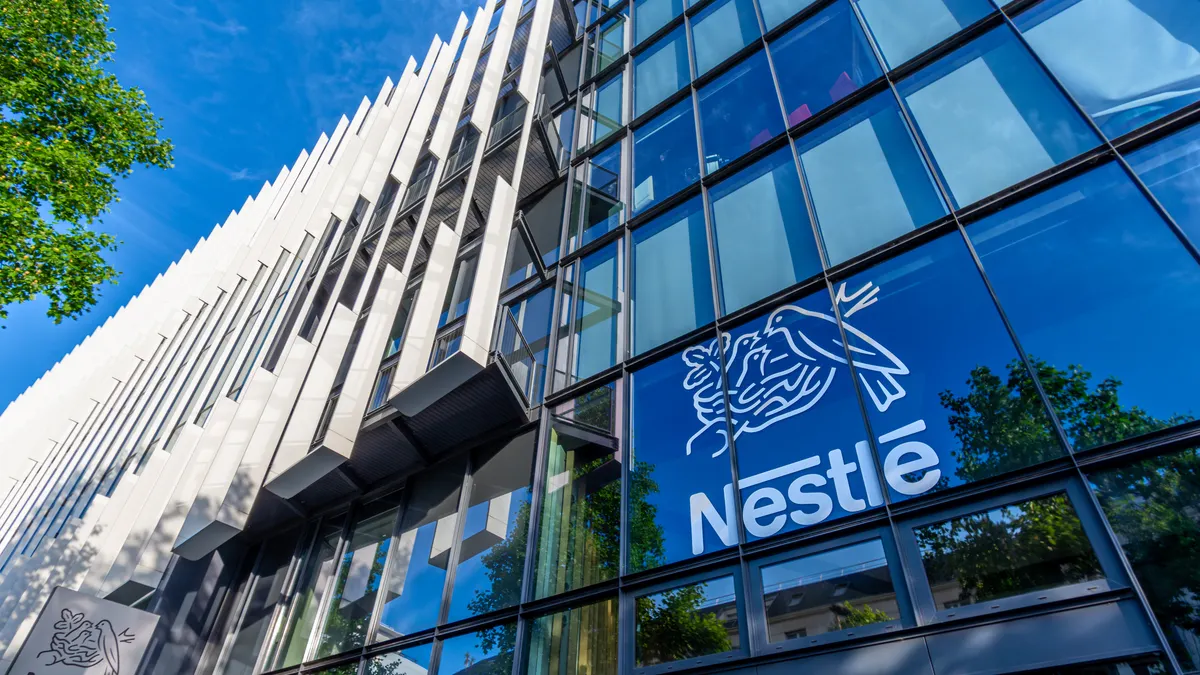
“Weird is winning the grocery aisle,” Mike Van Houten, Nestlé USA vice president of commercial excellence, said.
Nestlé has launched several outside-the-box products, including a Tombstone pizza with a French fry-style crust, a Seattle’s Best Campfire S’mores Roast flavor and a DiGiorno Thanksgiving Pizza topped with roasted turkey, green beans, crispy onions, dried cranberries and gravy.
Interest in the unusual is unlikely to dissipate any time soon, Van Houten said. Even though “extreme things with a little more shock value might come and go,” there is a desire among most consumers for weird to be a mainstay in product launches going forward.
2025 was inundated with a hotbed of unusual food product launches as companies looked to woo price-conscious consumers.
In their quest to standout, some food CPGs are choosing to collaborate and combine the brand equity of two popular, highly recognized brands.
The Campbell’s Company, for example, partnered with Pabst Blue Ribbon on beer-flavored soups. Kellanova teamed up with Wendy’s on a Cheez-It inspired by the fast food chain’s Baconator burger.
“Consumers are definitely more open to trying different things,” said Nico Amaya, Kellanova’s North America president. "[They are] looking for those partnerships, those collaborations of things that might not match.”
Amaya said unusual collaborations help “drive an immediate awareness, immediate interest, to try” the product and potentially bring in lapsed consumers back to one or both of the core brands.
M&A poised to sizzle
An active M&A environment is expected in 2026 as companies look to fill gaps in their portfolios and boost margins amid a challenging sales landscape.
Erin Lash, a senior director of consumer equity research at Morningstar, said businesses will seek acquisitions that broaden their appeal to consumers in areas such as healthier eating or supporting the use of GLP-1 medications to lose weight.
“That's likely to remain front and center,” Lash said, adding that companies targeted for acquisitions will likely be “be smaller, niche operators, as opposed to larger, transformational deals.”
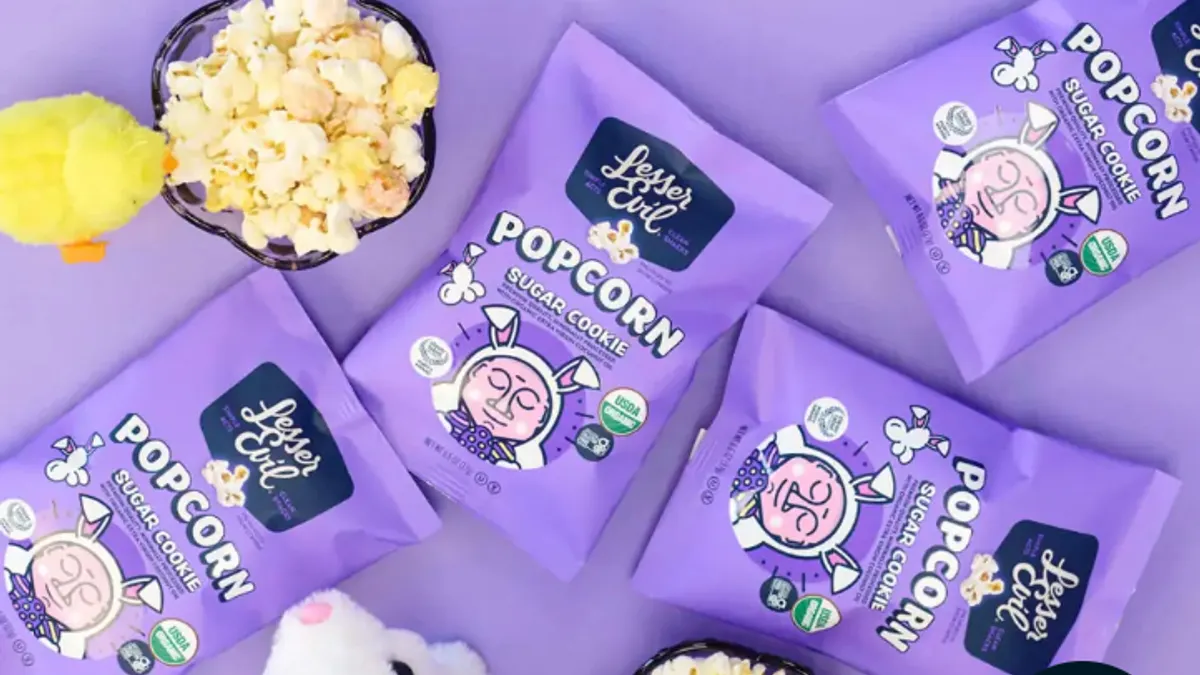
Small, targeted acquisitions have been a popular strategy in the food and beverage industry in recent years, including in 2025. PepsiCo, for example, acquired prebiotic soda brand Poppi for nearly $2 billion, while Hershey gobbled up LesserEvil, a maker of popcorn, puffs and rings made with ingredients such as coconut oil and avocado oil.
Bigger deals could be on the horizon, especially as food maker margins are squeezed by higher input and operational costs. With the exception of privately held Mars’ $36 billion takeover of Cheez-It and Pringles maker Kellanova, the food space has largely avoided mega-mergers for several years.
Brian Choi, a managing partner and CEO of The Food Institute, said big CPG companies are seriously considering multi-billion dollar deals more than they have in previous years. Dealmaking could be a way for companies to combine operations, helping them reduce expenses through the closure of plants, job cuts and the removal of other redundancies.
“With the pressure from shareholders and the desire for management teams to see bigger scale growth, they're actually going up the enterprise value spectrum” for acquisitions, Choi said. “They are looking for bigger size acquisitions, if not transformational acquisitions, that can drive efficiencies and potential growth opportunities.”
Alcohol innovation is a priority as sales decline
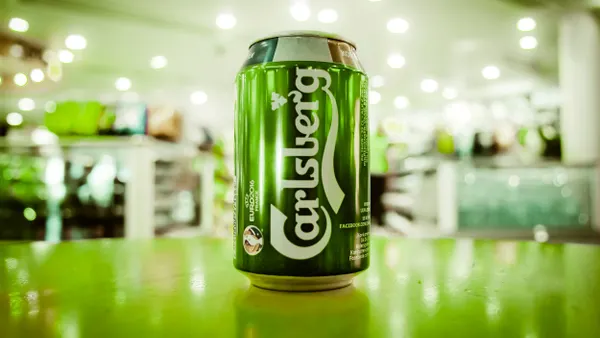
After alcohol consumption hit an all-time low in 2025, beer and spirits makers will either need to expand their portfolios or introduce bold new innovations if they hope to turn around slumping sales.
Total alcohol volumes have declined 19% since 2019, including a 4% year-over-year drop in the first half of 2025 alone, according to data from IWSR. There are pockets of growth, particularly in ready-to-drink beverages, which saw volumes grow 2% in the first half of 2025 compared to the year-ago period.
“Higher costs and tariffs weighing on the alcohol sector are also reinforcing cautious consumer spending, rising moderation and the evolution of consumption toward smaller, at-home and daytime occasions,” Emily Neill, COO of IWSR, said in a statement.
To respond to the slump, companies need to accelerate the pace of innovation to activate and engage consumers, according to Dan Su, equity analyst at Morningstar. However, many consumers tapped out from an endless array of craft beer options, flavor innovation alone will not be enough.
Some players have instead returned their focus back to core brands, releasing low-calorie or nonalcoholic versions of their classic beers. Consumers remain loyal to their preferred brands even in the face of inflation, but do seek value through bulk purchases or by buying at discount chains, Su said.
“The common theme across is that companies remain focused on production innovation and investment in branding and marketing as a way to reinforce their position in the market and continue to engage with consumers,” Su said.
Several companies are working to further diversify their portfolios by adding beverage options beyond beer. Molson Coors and Anheuser-Busch have both added nonalcoholic and energy drinks to their beverage offerings.
Health and wellness to define consumer trends, policy
Protein, fiber and other functional ingredients are expected to take center stage this year as consumers look to maximize health benefits in the products they eat.
While protein is still king, fiber is quickly on its heels as the next big functional ingredient, according to a Dataessential outlook. More than half of shoppers say consuming foods and beverages for gut health will be important to them in 2026, possibly reflecting the rise in GLP-1 use among Americans.
Consumers expect their foods to support all aspects of their health, from physical to mental. More ingredient companies are leaning into energy-boosting or sleep-inducing ingredients, McKinsey found, prompting them to personalize nutrition options for consumers from when they wake up to the time they go to bed.
"Rather than only thinking of healthy food as foods that are free from certain components, such as gluten or sugar, consumers are now looking for foods that include high-value components, such as protein," McKinsey said.
The Trump administration’s “Make America Healthy Again” movement is likely to intensify a crusade against ultraprocessed foods, with the FDA working on a definition for the term that would pave the way for future regulation. States have also picked up the mantle on food regulation, banning certain ingredients or additives and sparking a legal fight with the food industry.
Despite negative associations with ultraprocessed foods, however, they remain a growing way for Americans to get nutrients. Consumers are attracted to protein-packed popcorn, fiber-boosted sodas or other fortified foods.
Better-for-you beverages play up indulgence
Nearly every beverage company is working on reducing sugar and calories to make better-for-you drinks, said Su. From energy drinks to sodas, companies are focusing on functionality by adding nutritional ingredients like protein, fiber or prebiotics.
Despite trends shifting toward healthier options, there are still consumers that see a soda as a small indulgence in moderation, Su said. As a result, many better-for-you brands are trying to capitalize on the two polarizing trends, relying on traditional and nostalgic flavors.
Consumers are likely to continue to seek out classic soda flavors, such as lemon-lime and cherry, according to a 2026 beverage forecast from beverage consultant Flavorman. PepsiCo released a prebiotic version of its namesake soda and new entrants like Stiller’s Soda made a bid to tap into nostalgic and better-for-you trends like low-sugar.
With the abundance of healthier options, some are doubling down on the traditional soda. Consumer nostalgia for older beverages was at the forefront of soda in 2025, with companies like Keurig Dr Pepper and Coca-Cola investing in older brands RC Cola and Mr. Pibb.
“Better-for-you is probably a long-term trend,” Su said. “[But] there is still appeal of the classic recipe.”