Dive Brief:
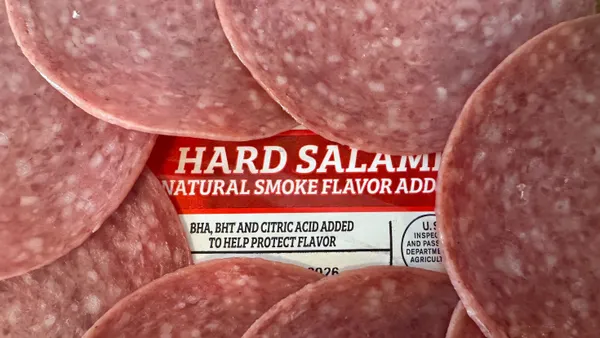
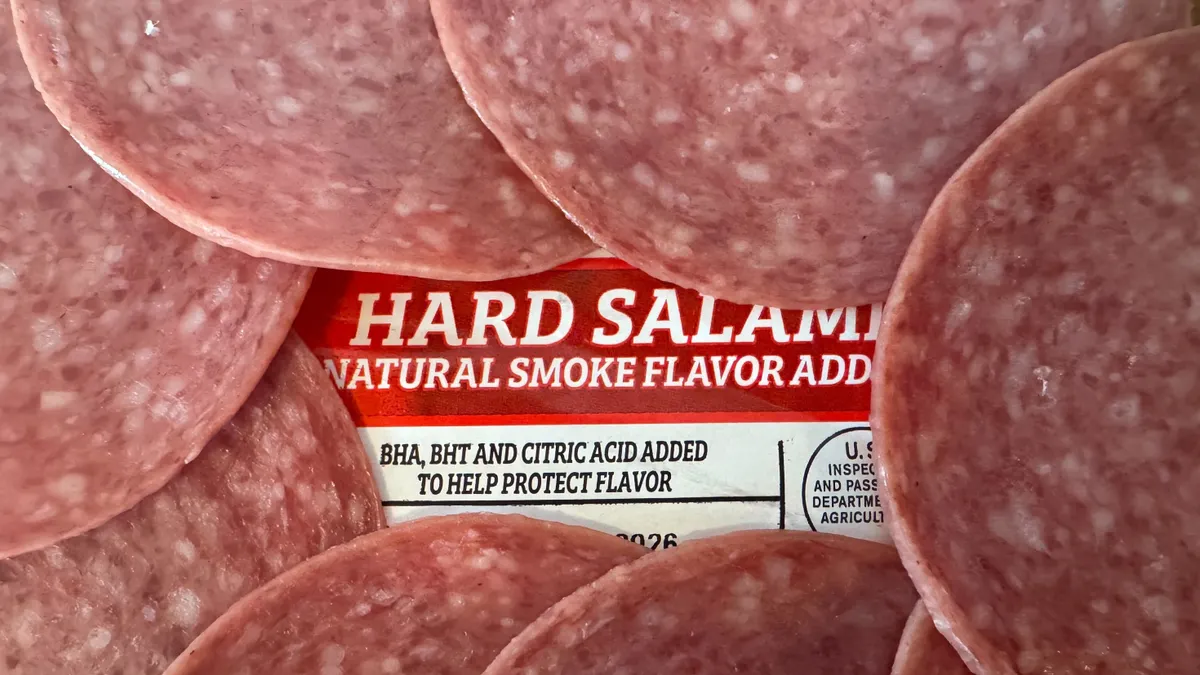
- The FDA on Monday said it will review the safety of butylated hydroxyanisole, or BHA, a food additive commonly used to preserve freshness in bread, lunch meats and snacks.
- The agency launched a comprehensive re-assessment of BHA to consider whether it is safe to use "based on the latest scientific information." Health Secretary Robert F. Kennedy Jr. said BHA was called "reasonably anticipated to be a human carcinogen" by the National Toxicology Program.
- The safety review is part of a larger assessment by the FDA of food chemicals already on the market. The agency also plans to review ADA, BHT and other additives based on consumer concerns.
Dive Insight:
BHA can prevent fat and oils in food from spoiling and is used across products including cereals, frozen meals, ice cream and lunch meats. The additive was approved in 1961 a few years after being listed as "generally recognized as safe" by the FDA, a designation that has also come under Kennedy’s scrutiny.
"If BHA cannot meet today’s gold-standard science for its current uses, we will remove it from the food supply and continue cleaning up food chemicals," Kennedy said in a statement, adding the “reassessment marks the end of the ‘trust us’ era in food safety."
BHA has been listed as a known carcinogen under California’s Proposition 65 since 1990 and the European Union has listed it as a potential endocrine disrupter. While there are few studies evaluating the link between cancer and BHA, a 2014 review by Regulatory Toxicology and Pharmacology found the ingredient is unlikely to harm humans even though it can cause stomach tumors in rats. As an antioxidant, BHA could even provide some health benefits at low levels, the study suggested.
The FDA has the authority to ban ingredients if they cause cancer in rats, even if the risk doesn't translate to humans. The agency recently leveraged that power to ban Red dye No.3 under the Biden administration.
BHA was last evaluated for safety by the FDA in 1978 when the agency completed a broad review of all ingredients approved under the GRAS system, which allows food manufacturers to bypass regulatory review in certain cases. The agency concluded "uncertainties exist requiring additional studies be conducted" for BHA, though made the same determination for ingredients like caffeine, nutmeg and mace.
The FDA signaled last May that it intends to complete a similar post-market review of GRAS ingredients, but the agency will choose which ingredients to reassess based on factors like consumer concerns. Following its evaluation of BHA, the FDA said it will reinvestigate the safety of BHT, another ingredient used to preserve freshness.
The Environmental Working Group, which has advocated for additives like BHA and BHT to be removed from the food supply, said the FDA should take more decisive action given there have been concerns around the preservative for decades. West Virginia banned BHA as part of a larger prohibition on food additives and dyes, the group noted, while Kroger, Hy-Vee and Aldi prohibit the ingredient from their private label brands.
"A petition to ban BHA has been pending for over 30 years, during which time evidence of risk has accumulated, consumers have voiced concern, and states and retailers have stepped in where federal regulators would not," Melanie Benesh, EWG vice president for government affairs, said in a statement. "Americans deserve timely, decisive food safety regulation, not another slow-walked process that treats urgency as optional.”