LAS VEGAS — An estimated 17,500 people descended on Las Vegas last week for the 2026 Sweets & Snacks Expo, where some of the biggest food giants display their innovations.
While major companies such as Conagra Brands, Mondelēz International, Ferrero and Hershey showcased many offerings, just steps away were hundreds of smaller candy and snack innovators displaying their novel products to retailers, competitors and other attendees.
Some of the offerings are just a few months old. Others have been around for a few years, or even decades. But the one thing these sweets and snacks manufacturers have in common is that they’re either looking for their big break or hoping to further expand in a crowded sector already filled with options.
Here are five products that caught our attention:
Shedding a prickly reputation
Cactus Candy aims to bring the desert heat to the confectionery sector with the unlikeliest of ingredients.
The Arizona-based company uses juice extracted from the prickly pear cactus in many of its products, including jellies, candies, syrups and dressings. The juice reportedly tastes like a cross between a raspberry and a strawberry, according to Cactus Candy.
The food maker’s use of the prickly pear cactus doesn’t end there, according to Angelo Casciato, the company’s vice president. Cactus Candy’s salsas, for example, include the pods – the flat, fleshy, green stems — of a cactus.
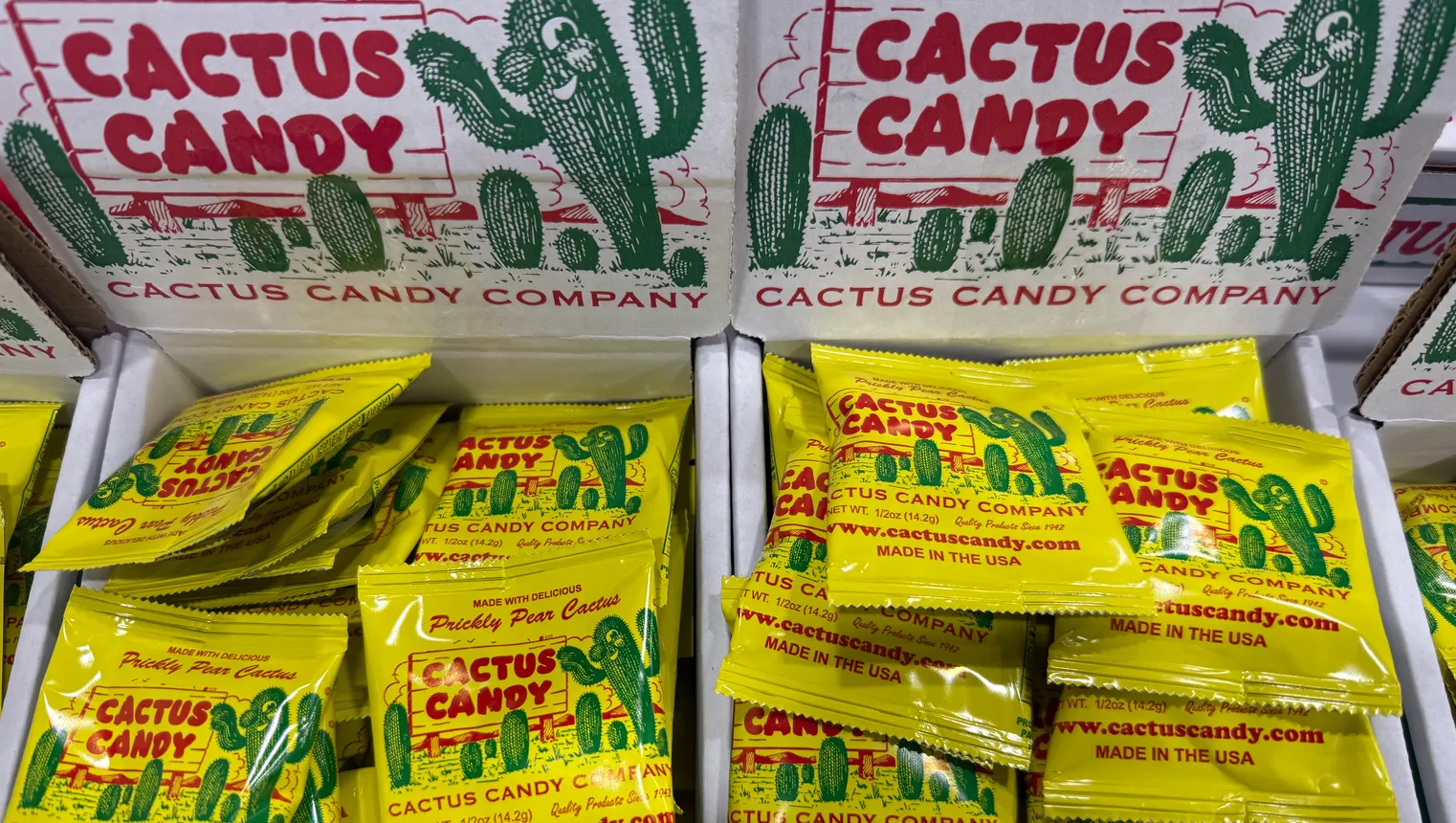
Cactus Candy has been around since 1942, and the mission for the brand remains the same as it has for years: convincing skeptical consumers to try products with cactus juice.
“They're hesitant more than anything, so they don't know flavor-wise what to expect,” said Casciato, whose father acquired the company 30 years ago. “If they taste it, you see their eyes just change when they actually taste it. Like, ‘Oh, it's not what I expected.’ They’re hooked.”
The cactus-infused products are sold in Arizona, New Mexico, California and Texas, with Cactus Candy wanting to branch out into other markets across the U.S. Most of its products are currently sold online or in smaller retailers across the southwestern part of the country.
Crisps get corny
A decade ago, Joshua Chaitovsky and his partners had a growing business selling cornbread to deli counters and other businesses in the New York City area. But despite their success, the entrepreneurs were itching for opportunities to expand the market for cornbread.
“It's a staple item in most of the country. It’s a very popular item,” said Chaitovsky, CEO of Cornbread Crips maker Farmer’s Pantry. “Can we bring it to other usage occasions during the day?”
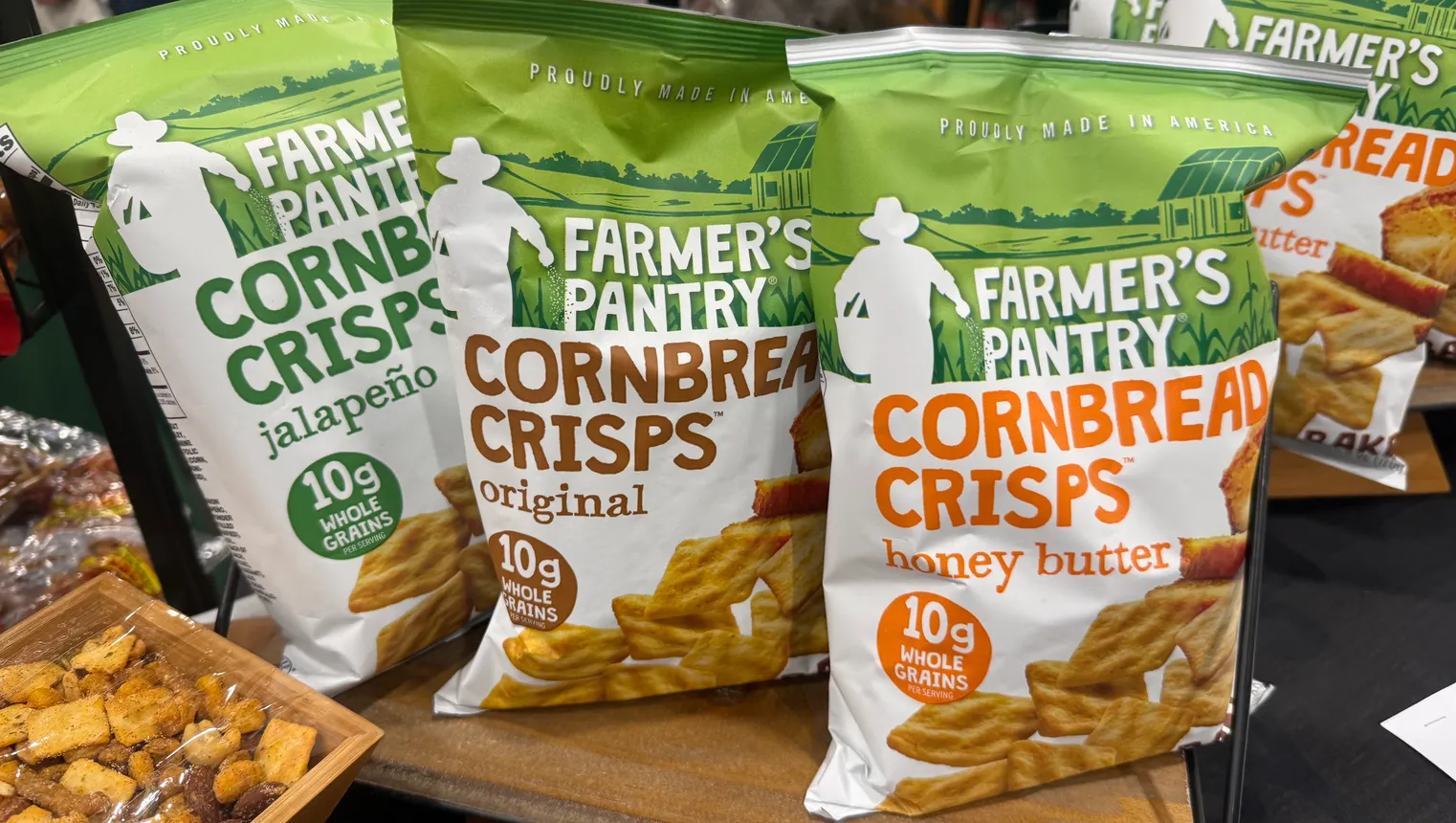
Chaitovsky and his team eventually settled on cornbread-style crisps and, after 18 months, created the winning recipe. Today, Cornbread Crisps are sold online and in stores, including banners operated by TJ Maxx. Several grocery store chains also stock them in their deli’s soup or salad stations.
The popularity of cornbread made it easier for the crisps to gain acceptance among consumers, Chaitovsky observed, which would have been harder with new and unfamiliar food innovations.
Consumers purchase Cornbread Crisps for use at home, often as a crumble on foods or as a breading for chicken. Some food companies also add them into their salad kits or snack mixes.
Cornbread Crips are available in three flavors: original, honey butter and jalapeno, with plans to bring cheddar, lemon berry, zesty ranch and apple cinnamon to the market in June.
The snack has proven to be a hit, not only because of the novel format, but because it resonates with many of today’s trends. The snacks are portable, easy to add to at-home recipes and are baked instead of fried.
“This is what people are looking for, and we're just trying to run with it,” Chaitovsky said.
Minty breath that’s not gone in a flash
Nude Mints is exposing a new way for consumers to freshen their breath for longer.
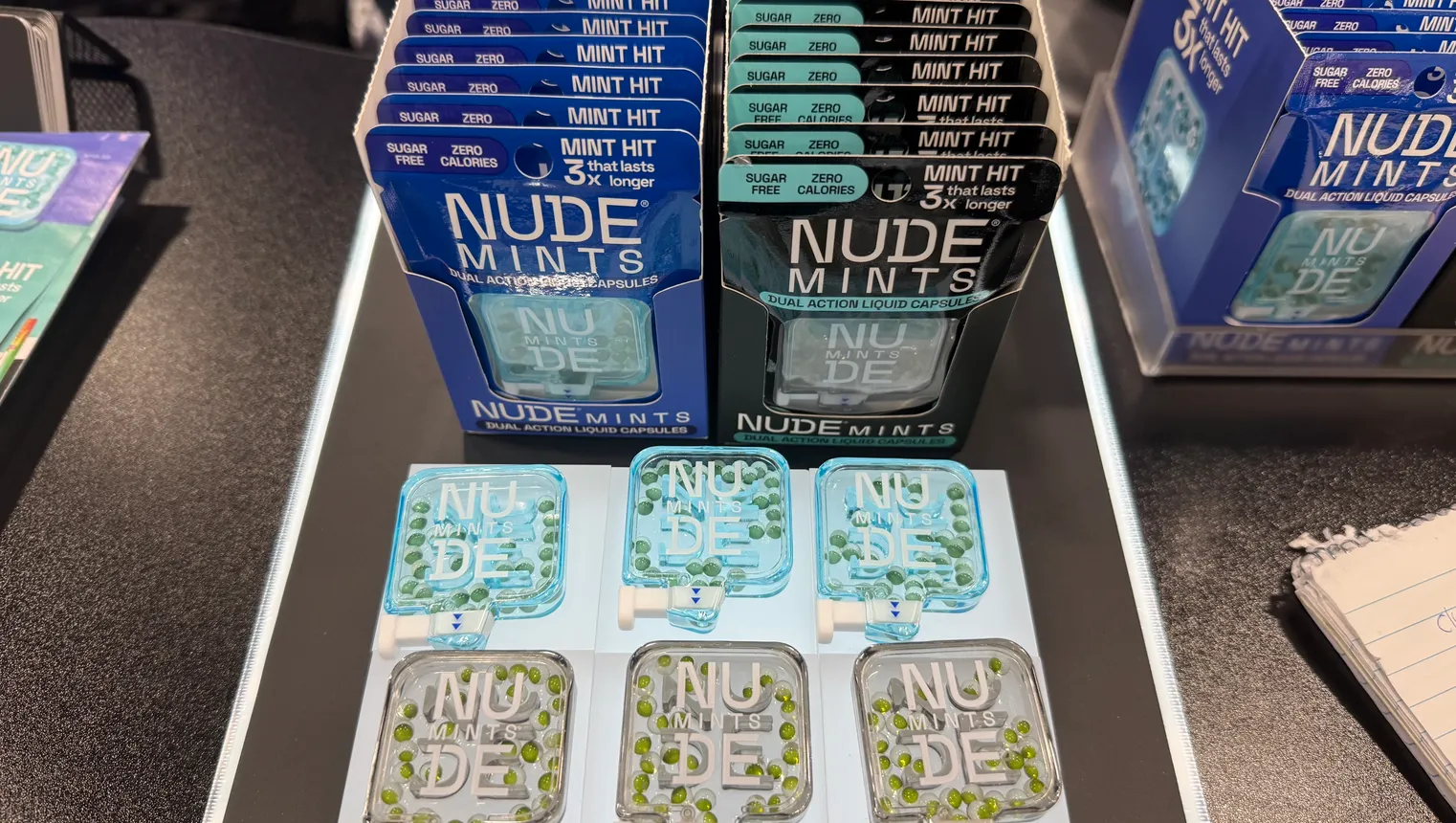
The company’s mints are tiny liquid capsules that contain two parts. The outer shell contains a mint extract that quickly dissolves, helping improve a person’s breath in as little as three seconds.
Inside the larger bead is a smaller, harder shell that dissolves more slowly. This gives Nude Mints time to reach a person’s gut before it dissipates, where the next round of extract can eliminate any lingering odor.
The unique combo helps Nude Mints freshen a person’s breath three times longer than other mints on the market, according to the company.
Nude Mints launched in 2020, and today is in about 12,000 stores, including 7-11, CVS and Circle K. The products tend to be especially popular with higher-income, younger consumers who eschew mints commonly sold at the front counter of many retailers, according to Sean Davis, the brand’s founder.
“Our audience is not necessarily the people buying Tic Tacs, Altoids and Icebreakers,” Davis said. “These people are serious about their breath care, their oral care.”
Davis said the Las Vegas-based company is considering whether to sell Nude Mints in the oral care aisle next to mouthwash. Other mints on the market, he said, are basically a candy that needs to be consumed for a long time to help improve breath.
In the case of Nude Mints, they work instantly, last longer and lack the fillers found in other products that contribute to a chalky texture. It is available in five flavors, including spearmint and peppermint.
Protein becomes Legendary
The founders of the Quest bar are looking to make protein pastries, donuts and chips the stuff of legends.
The impetus for Quest came 16 years ago when Shannan and Ron Penna grew dissatisfied with other protein bars on the market that were often tasteless, made with low-quality ingredients, had incorrect nutritional labels and loaded with sugar.
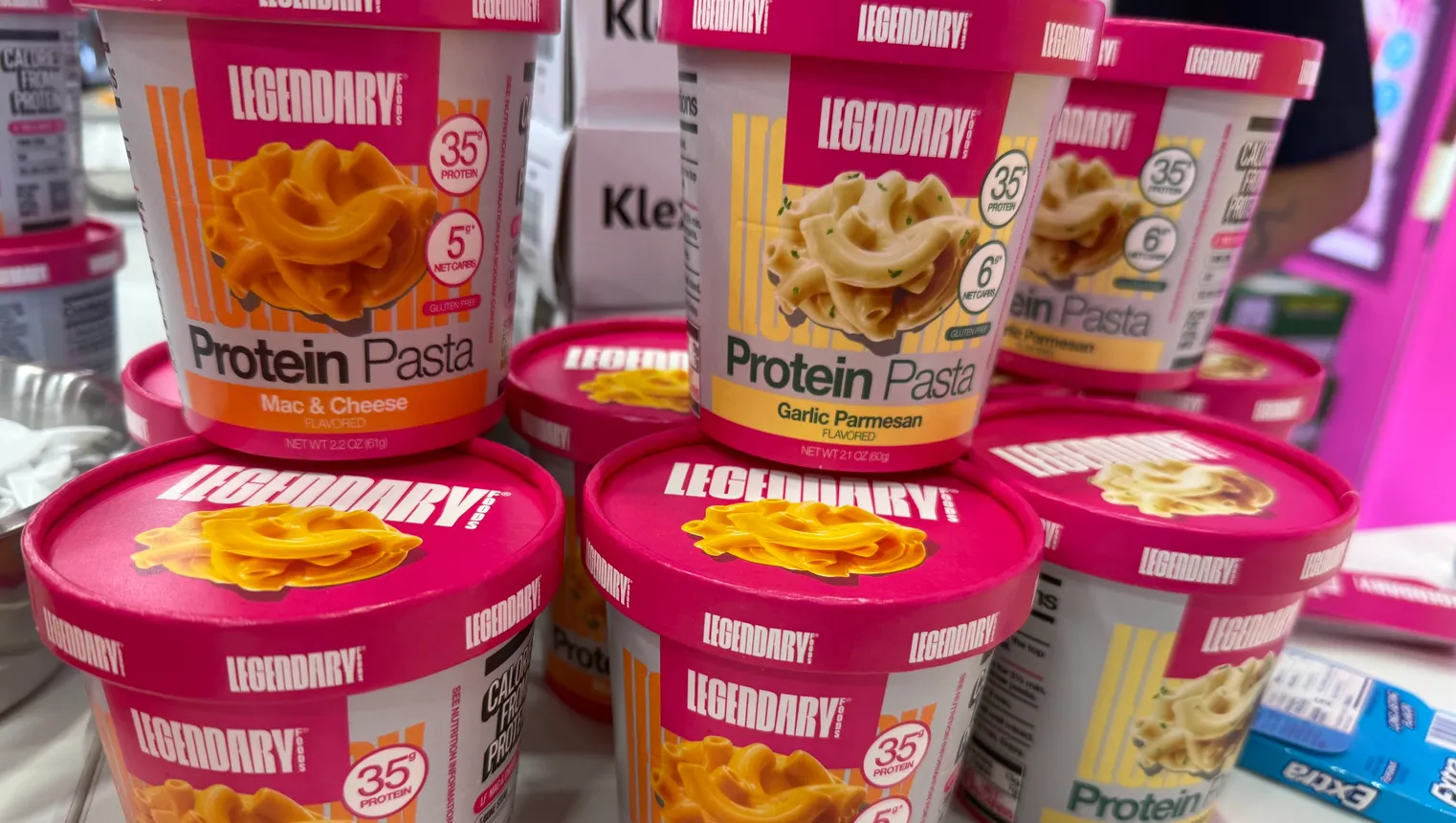
Now their new company, Legendary Foods, is building on Quest's mission by targeting indulgent foods such as donuts, rolls, pasta, pastries and chips. Legendary uses a protein blend as the top ingredient while slashing the amount of carbs.
The company launched a mac and cheese this year, which contains 35 to 48 grams of protein and 5 to 8 grams of net carbs — effectively flipping the protein and carb levels found in competing pasta products.
“Consumers are sick and tired of shakes and bars and all that stuff, ” said Greg Tetzlaff, Legendary’s vice president of marketing. “We take the foods that we love to eat, and we're making them with the macronutrients and the nutrition that we love to have.”
The better-for-you food maker isn’t planning to stop with pastries and chips, with “many more” savory innovations in the pipeline. Tetzlaff said Legendary is targeting other indulgent products while launching new product extensions to its existing lines.
Legendary’s products are carried at more than 100,000 stores, including Walmart and Target.
Sales have been rising “like a rocket ship,” Tetzlaff said, with the company estimating it sold more than $300 million in products at retail in 2025. To help it meet demand, Legendary opened a new 125,000-square-foot warehouse and production facility in California last year.
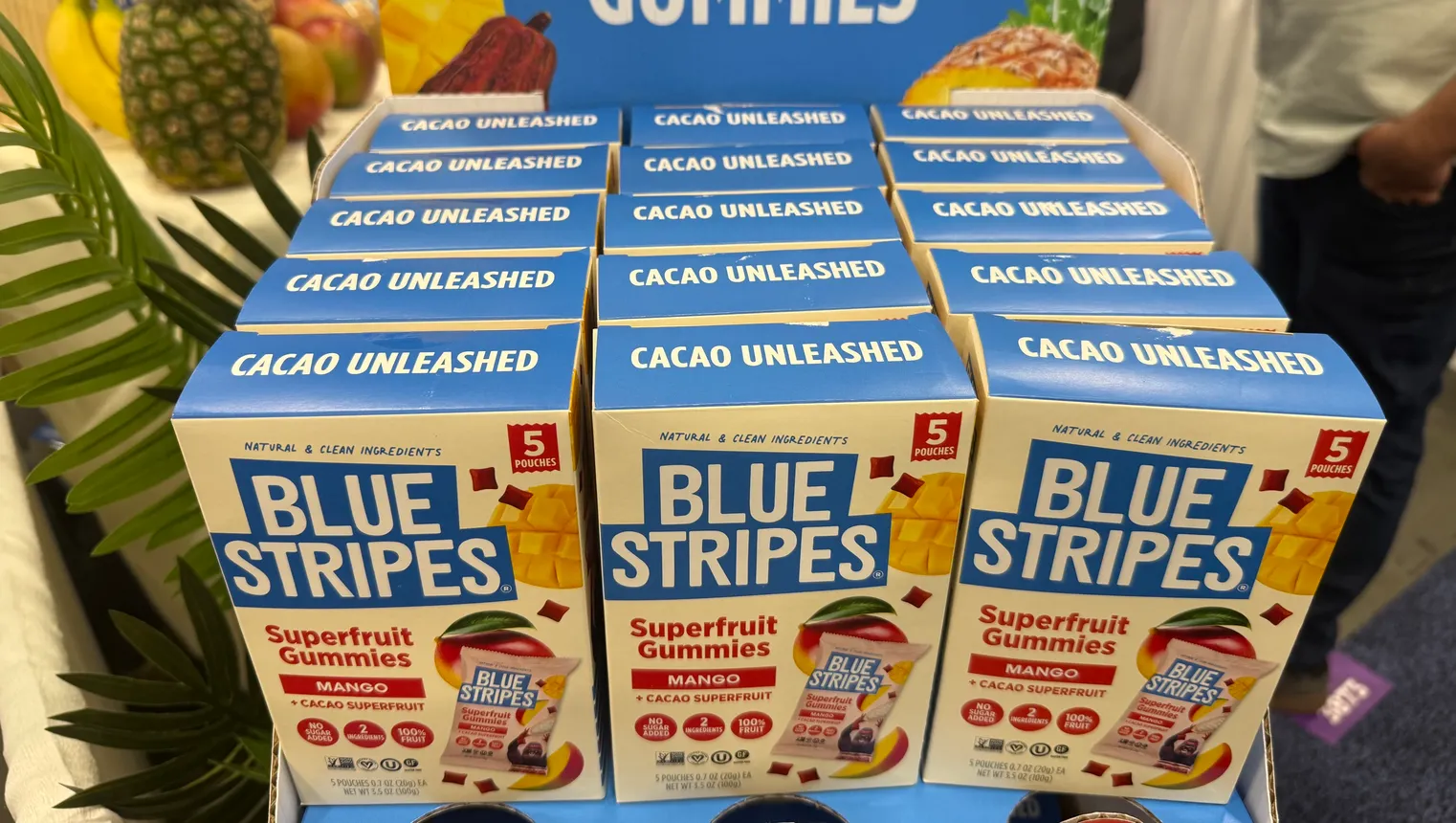
Blue Stripes sees green in cacao pods
Blue Stripes is making sure the vulnerable cacao pod finally earns its stripes.
Chocolate is made using the seeds of the cacao fruit, with the remainder of the pod typically wasted, according to Aviv Schwietzer, Blue Stripes' co-founder and COO.
The four-year-old Blue Stripes claims to be the first food company to use all of the cocoa pod. It not only makes chocolate, but also beverages, granolas and a host of other products from its cocoa pods grown in Ecuador.
Schwietzer said pod waste is a “tragedy” because it takes a single tree up to five years to grow a cacao fruit, which also requires lots of land, labor, water and other resources. Cacao fruit is also loaded with nutrients coveted by today’s consumer, such as potassium, magnesium, electrolytes and vitamin C.
When nearly three-quarters of the pod is tossed aside, it also means lost revenue for many farmers already struggling financially.
“There's just zero reason to waste it,” Schwietzer said. “It takes crazy people like us to push it the way that we do. It's very hard to educate consumers that chocolate adds a lot more behind the scenes than what they know.”
Blue Stripes takes the white pulp around the seed, cold-presses it and turns it into a hydration beverage described as sweet and tangy. The remainder of the pulp is dehydrated and put into gummies. The husk is incorporated into most of its products to add fiber. Blue Stripes also makes trail mix, granola and chocolate-covered cacao beans.
The company is “growing significantly” year over year, Schwietzer said. Blue Stripes is currently sold in Whole Foods and Sprouts, with plans to launch next month in Target.