
Each year, food brands pour small fortunes into experiential marketing programs that leadership can’t confidently defend. Not because experiential doesn’t work—it does—but because many still play by a 1999 playbook in a 2026 game. The result? Products reach consumers through poorly targeted, hard-to-measure activations that make experiential look like a PR spend instead of the conversion driver it can be.
Savvy marketers are no longer making these mistakes. They’ve moved past the “sampling is for awareness” era, treating experiential as a measurable performance channel with targeting precision and closed-loop attribution. They’re showing up to retailer conversations with proof that their sampling drives trips, lifts sales, and builds velocity. They’re defending budgets with iROAS data. And they’re winning.
Four persistent myths account for this divide. For marketers still clinging to old practices, it’s time for a recalibration.
Myth 1: Experiential Marketing Can’t Be Measured Like Other Channels
For years, experiential lived in a “brand building” bucket with soft metrics like earned media impressions, engagement photos, and surveys. When leadership asked “what did you get?,” marketers pointed to awareness, vibes, or backstage passes for the CMO.
Modern platforms now track the complete journey from sample to purchase. Retailer partnerships enable closed-loop measurement of sales lift, iROAS, conversions, and new-to-brand acquisition—the same incrementality metrics used for retail media. Platforms pioneering these capabilities, like Recess, connect sampling directly to in-store sales data.
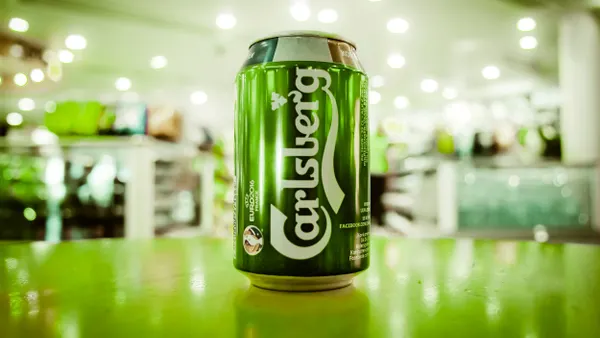
Take, for example, a multinational brewing company. The brand distributed 1 million samples of its alcohol-free beer across multiple venue types: fitness studios, races, drive-ins, and farmers markets. By surveying both samplers and non-samplers, the brand measured a 34% lift in purchase intent among those who tried the product, with 56% of samplers converting to actual purchases. This comparison-group methodology mirrors the incrementality testing used in retail media, proving that experiential campaigns can deliver the same experimental rigor as digital channels.
Myth 2: You Need Massive Budgets and Armies of Brand Ambassadors
Traditional experiential meant hiring brand ambassadors and managing complex logistics across markets. Brands invested in fixed assets like tents, activation setups, and branded vehicles, plus large upfront agency retainers or full-time brand ambassadors in each market. The perception stuck: only big-budget brands could scale sampling.
Modern approaches flip this model. Leveraging trusted community members (teachers, fitness instructors, workplace managers) creates more authentic word-of-mouth while eliminating staffing costs. It’s why many food brands now lean on Recess plug-and-play partner networks, where brands provide inventory while the platform handles distribution, data capture, and logistics.
Perfect Snacks is one of those brands. Looking to reach higher-income, health-conscious consumers with their whole-food protein bars, the brand distributed samples at select Orangetheory Fitness locations. At each location, studio staff handed samples to members post-workout, while Recess managed data capture and digital amplification. The result: massive engagement gains without a single brand ambassador. The fitness studio’s endorsement carried more weight than any hired representative could.
Myth 3: Our Product Is Too Complex/Logistically Challenging for Sampling
The objections are familiar: “We’ll break the cold chain.” “Our product requires preparation.” “Sampling can’t scale for us.”
In reality, experiential is often the best solution for products requiring education or temperature control. Complex products need hands-on trial in context. Banner ads can’t deliver that.
A plant-based protein shake brand faced both challenges: maintaining cold chain and educating consumers. They sampled refrigerated beverages at health-focused venues, reaching ideal consumers exactly where product benefits were most relevant. The campaign generated nearly 1,100 retailer coupon redemptions, proving that logistical complexity increases the value of sampling rather than preventing it.
Myth 4: Sampling Is Only For New Product Launches or Small Brands
Once a brand is well-known, sampling seems redundant. “Everyone knows what we taste like” is a common perception.
Rather than focusing on product discovery, recognizable brands use sampling defensively to protect market share, maintain shelf relevance, and prove to retailers they’re driving trips and category growth. Well-designed programs serve cross-functional needs: Sales teams gain proof points showing how sampling drives new trips and shoppers to retail partners. Merchants appreciate programs that drive store traffic. Social teams get authentic content from real activations, and marketing teams gather consumer feedback and purchase intent data.
With that in mind, PepsiCo activated “de-stress” lounges on college campuses during finals week, distributing product boxes to drive purchases on Gopuff. Despite being a household name with universal awareness, the campaign drove a 22% sales lift. Like PepsiCo, established brands have a lot to gain from experiential as an always-on channel for market share defense.
Making Experiential Accountable
The divide between market leaders and laggards hinges on understanding what’s possible with modern experiential infrastructure. “By debunking sampling myths and evolving past outdated practices, brands can unlock the full potential of experiential marketing, transforming sampling into a measurable growth driver,” explains Jack Shannon, CEO and co-founder of Recess.
This means treating next-gen sampling like a media unit: hyper-targeting audiences, retail targeting using shopper data, vetted partner networks for scale, and closed-loop metrics connecting samples to sales impact.
“Sampling is now a performance channel,” Shannon adds. “Activate through trusted local staff, target with retailer-integrated insights, and measure incremental sales lift and ROAS, so sampling performs like a channel, not a gamble.”
▷ Explore what’s possible: With 15,000+ sampling opportunities—all filterable by consumer demographic, shopper behavior, location, proximity to retailer—Recess helps brands activate near key retailers with full attribution from trial to purchase.