Hop water has carved out a space for itself in the nonalcoholic beer category, but to expand further, the segment is taking a page out of the better-for-you beverage playbook.
Sometimes called the “LaCroix of beer,” hop water is a sparkling water flavored with hops, the flowers that give beer its bitterness, taste and aroma. The beverage was first introduced in 2014 by home brewer Paul Tecker, and became one of the first players in the nonalcoholic beer space that began to take off a few years later.
But despite being a pioneer in the nonalcoholic sector, hop water has still struggled to take off — even as the nonalcoholic category overall explodes. Hop water generates about $28.5 million in U.S. sales, according to data from NielsenIQ, a small percentage of the nonalcoholic segment, which is set to reach $1 billion by the end of this year.
Sales of nonalcoholic beer grew 18% year over year during the 52-week period that ended Oct. 25, according to NIQ data, while hop water experienced a 7.3% decline.
However, experts agree there is still potential for the space, especially amid the rise of functional beverages with better-for-you attributes like no sugar or low carbs.As alcohol sales have dwindled, beverages with added functional properties have seen increased demand, including sodas with added prebiotics and energy drinks with added vitamins.
That could play to hop water's advantage. Unlike nonalcoholic beer, hop water typically has no calories, carbs, sugar or gluten.
Kaleigh Theriault, NIQ’s director of beverage alcohol thought leadership, said hop water's slowdown represented a maturing phase for the product after it saw curiosity-driven expansion when it first launched. But she still sees potential for a resurgence due to the drink's better-for-you attributes.
“Despite current declines, Hop Water’s premium positioning and crossover appeal to health-conscious consumers suggest potential for renewed growth as brands innovate in flavor, functionality, and distribution,” Theriault said.
The hop water segment has also attempted to carve out a place for itself in the THC-infused beverage category, with offerings from Hybrid, Lagunitas, Hop Dreams Sweet Dreams, and some regional players. This segment could be thwarted, however, by recent legislation that limits the amount of THC, the main psychoactive ingredient in marijuana, in products.
Brewer Sierra Nevada launched its line of hop waters, dubbed Hop Splash, in response to the national trend in alcohol shifting to moderation in 2022. The company was looking to launch a product that still creates the feeling of a beer that also could serve as a healthier alternative to soda, said Ellie Preslar, Sierra Nevada's chief commercial officer.
Moving forward, hop water makers are looking to expand their consumer base beyond the nonalcoholic beer drinkers and cater to growing demands for health and wellness. Sierra Nevada’s hop water, which makes up just 1% of the brewer's business, has seen the most success in wellness-focused spaces, including natural grocery stores.
“I think it’s just because of what they’re looking for from an ingredient and quality perspective,” Preslar said. “It really seems to fit. That’s where these products have taken off more than anywhere else.”
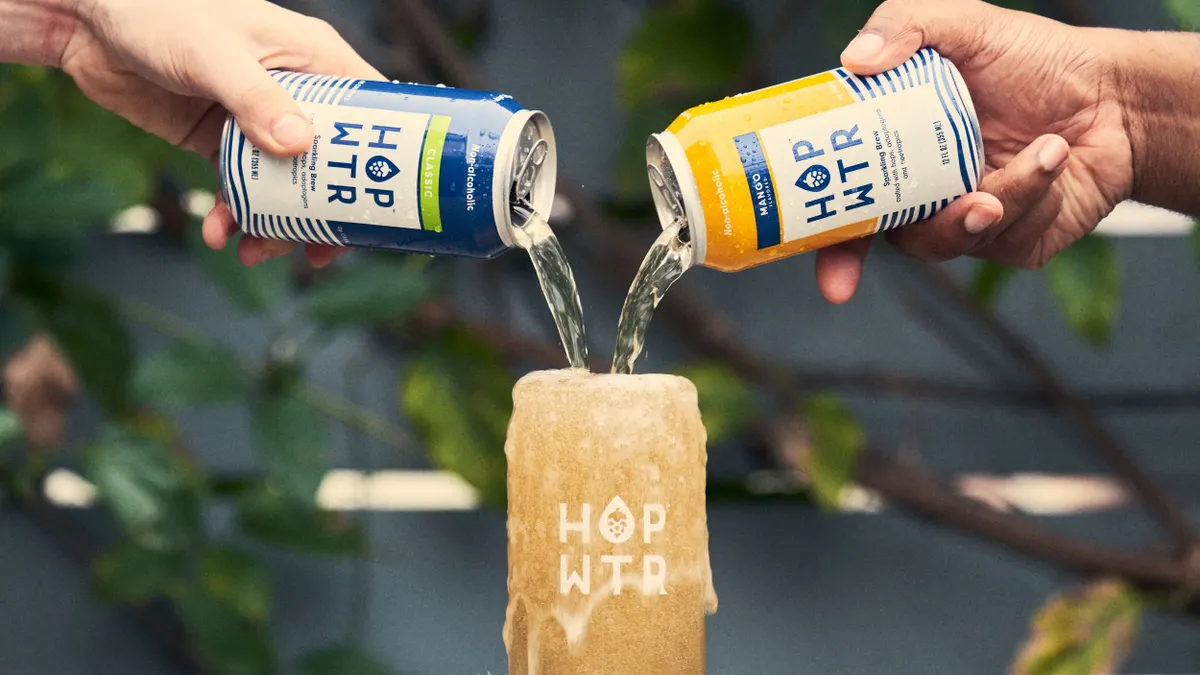
Hopwtr, a company founded in 2020 that exclusively sells the beverage, is leaning its marketing heavily into promoting itself as a functional beverage. Jordan Bass, cofounder and CEO of the company, said one of its key differentiators is adding mood-boosting adaptogens and nootropics to its content.
Appealing to both beer consumers and wellness consumers makes the market a bit wider, Bass said. But one of the biggest challenges faced by the hop water segment is that many consumers don’t know what it is.
To build excitement, producers are focused on new flavors and innovation, a similar tactic to what brewers did to build up the craft beer segment. Sierra Nevada sells hop water in a multipack with several different flavors, according to Preslar.
New flavor innovation has also been core to Hopwtr’s approach. It recently released a combined iced tea and lemonade flavor, which was driven by a growth in hard teas, and a spiced apple seasonal offering.
“Consumers always report flavor as one of their top purchase drivers,” Bass said. “We felt it was really important to have a great array of flavors.”