While the days of transformational megadeals in the food and beverage sector have subsided, the value of M&A hasn’t lost its importance for many executives.
During the last several years, CPG companies have focused on so-called “bolt-on” transactions. These purchases give firms a deeper presence in certain categories without saddling their businesses with huge amounts of debt or the complexities of integrating a new operation.
For many, M&A has emerged as a primary avenue to enter the buzzy health and wellness space, which has remained dominated by upstarts.
Declining sales and slowing consumption have prompted most companies to remain on the hunt for acquisition targets. Still, challenges remain for consummating any deals. Mondelēz’s CEO said this year that acquisition targets arebecoming “too expensive.”
Instead, many companies are reviewing their own business to see what they can sell, opening the door for smaller players and private equity firms to expand their portfolios.
Some companies have not been afraid to divest a brand that was slower growing or no longer core to their business. Conagra Brands, for example, sold its Chef Boyardee brand last year to a private equity firm for $600 million.
In this report, you'll find stories that include:
Food execs look for smaller deals in buzzy categories
Why Anheuser-Busch acquired a majority stake in BeatBox
Why companies are acquiring discontinued brands
How Hershey acquired LesserEvil to prioritize snacking
Why Nutella’s parent company may take an M&A “breather”
These are just a few of the many M&A developments in the food and beverage sector. We hope you enjoy this deep dive into this current trend
Food and beverage giants prioritizing small-scale M&A for a foothold in trendy areas
Kraft Heinz, Hershey and Molson Coors are among the firms looking for deals to boost sales and get them more exposure in fast-growing categories.
By: Christopher Doering• Published March 5, 2025
Food and beverage companies are unlikely to strike multi-billion dollar transformative M&A deals this year, with giants such as Kraft Heinz and Molson Coors focusing on smaller acquisitions that keep their finances in check while building exposure in categories such as better-for-you snacks and functional drinks.
The food space has largely shifted to so-called “bolt-on” deals in recent years as companies adopted a more disciplined approach after some large transactions during the 2010s failed to meet optimistic targets and left companies saddled with billions of dollars in debt.
Tracey Joubert, CFO with Molson Coors, said at the Consumer Analyst Group of New York’s (CAGNY) annual conference in Orlando last month that the beer giant will continue its successful “string of pearls” strategy for acquisitions or partnerships that prioritizes brands playing in categories where it lacks or has a limited presence. The transactions also must be big enough that Molson Coors can use its heft to scale the business.
The past few years have seen food makers engage in a handful of billion-plus deals, but in nearly every case it has been with a single company or brand that fills a void within their already burgeoning portfolios.
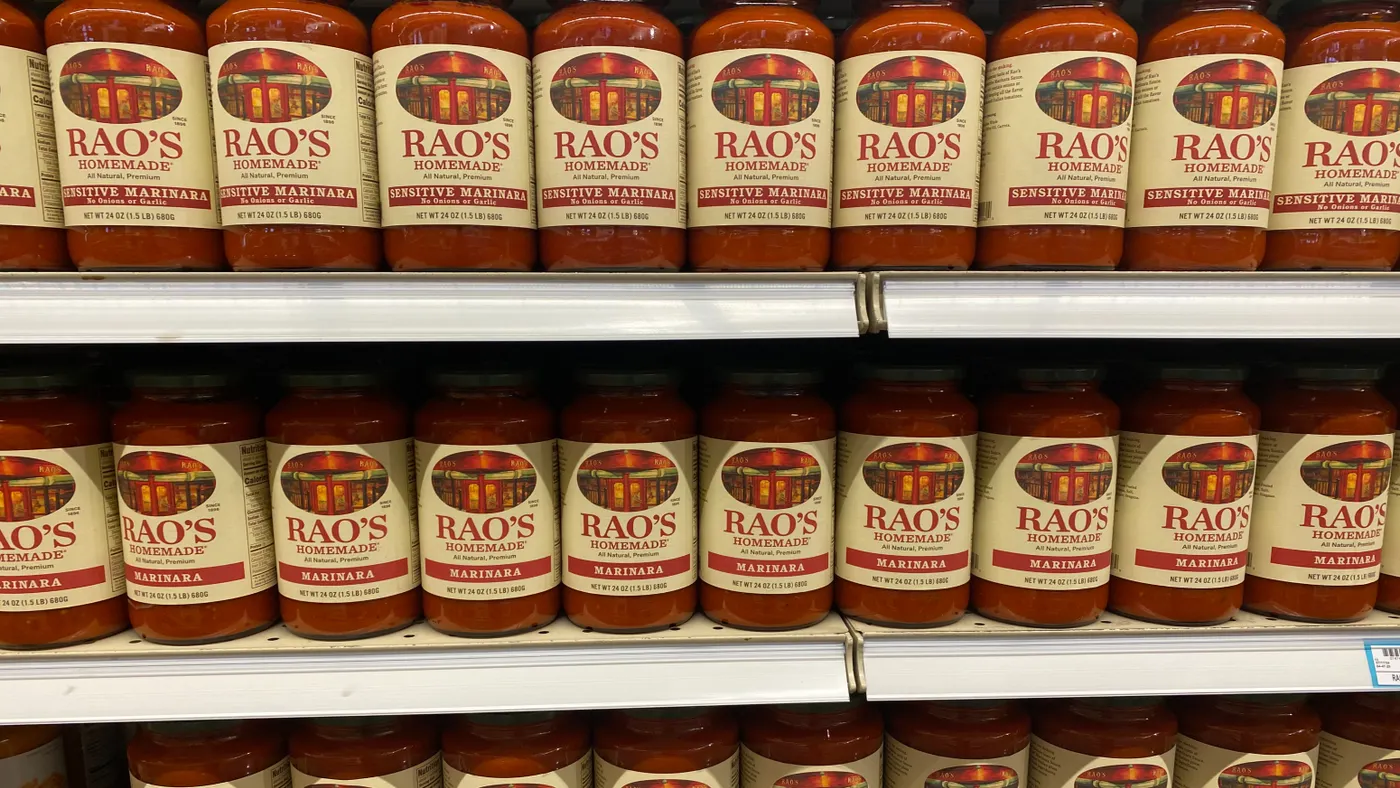
Last year, The Campbell’s Company closed a $2.7 billion deal for Rao’s sauces makerSovos Brands, while PepsiCo doled out $1.2 billion for Mexican-American food makerSiete Foods. And Hersheypurchased Sour Strips, a sour candy brand with a strong presence on social media.
Executives at CAGNY said they have improved their balance sheets and remain on the lookout for opportunities to reshape or improve their portfolios.
“When it comes to portfolio management, our priority is to do M&A that strengthens and accelerates our organic growth strategy ... with a bias towards bolt-ons,” Andre Maciel, Kraft Heinz’s CFO, told analysts.
Few companies have been as active in recent years as Hershey. The Reese’s and Kisses maker has used M&A to build its $1.1 billion salty snacks portfolio, snapping upDot’s Pretzels,SkinnyPop popcorn andPirate’s Booty puffs.
“M&A has played a key role in our growth over the years and really getting to that optimal portfolio, because it all starts in competing by having the right portfolio,” Michele Buck, Hershey’s CEO, said at CAGNY. “We will continue to use M&A as a way to expand our portfolio.”
Billy Roberts, a senior food and beverage analyst with CoBank, told Food Dive earlier this year he expected dealmaking to pick up. Last year averaged fewer than 500 deals per quarter, a nearly 40% decline from the 2021 to 2023 period, the cooperative bank noted in a report last November.
He predicted M&A would accelerate due to lower interest rates, fewer outside distractions for companies and a need to improve margins and growth since inflation-weary consumers are less tolerant of price increases.
“There are quite a few opportunities out there for M&A activity,” Roberts said. “We could see some smaller entities really get picked up, particularly in a couple of different categories” like snacking and plant-based alternatives.
Article top image credit: Christopher Doering/Food Dive
Why Corn Nuts is a ‘diamond-in-the-rough’ for Hormel Foods
The food maker has taken the snack into new retail channels and accelerated innovation after it was acquired as part of a $3.35 billion deal with Kraft Heinz.
By: Christopher Doering• Published June 16, 2025
When Hormel Foods spent $3.35 billion four years ago to buy Kraft Heinz’s snack nut portfolio, much of the attention was paid to the crown jewel of the transformative deal: Planters nuts.
And for good reason. Planters was nearing $1 billion in sales and would immediately become one of Hormel’s best-selling products, surpassing other portfolio staples such as Spam, Jennie-O turkey and Justin’s peanut butter.
But included in the mix was a brand Hormel viewed as underappreciated and one it was confident it could turn around.
The brand was Corn Nuts, a crunchy snack created during the Great Depression for bars and taverns. For years, Corn Nuts seemed to lack direction as Kraft Heinz prioritized investing in its better-selling cousin Planters, which caused the smaller brand to languish.
“There was a recognition that this was kind of like a diamond-in-the-rough-type situation where you had a really simple business in corn and a lot of opportunity for growth,” said Patrick Horbas, market director for Corn Nuts and Planters, who came to Hormel from Kraft Heinz following the purchase. “With a little bit of focus, attention and additional excitement, it could be something more than it was.”
Optional Caption
Courtesy of Hormel Foods
When the now 89-year-old brand was acquired by Hormel in 2021, it had a dominant presence in convenience stores but lacked meaningful exposure in other channels, such as grocery, where it could tap into growing consumer interest in snacking. The item also had largely saturated markets in the western U.S., close to its home state of California.
Hormel was determined to get Corn Nuts into more retail outlets and broaden its reach to other parts of the country, such as the East Coast. It also set out to deepen its focus on innovation. One of Corn Nuts’ most valuable assets is the snack’s ability to carry flavor due to its unique shape.
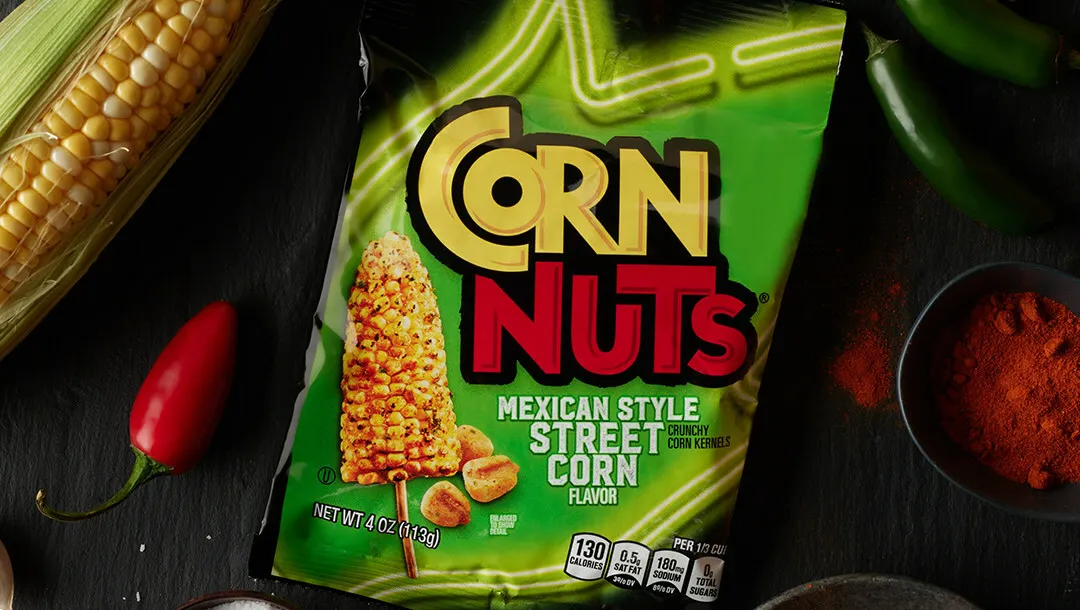
The brand has four main flavors — Original, Ranch, BBQ and Chile Picante Con Limon. Hormel aims to introduce a new limited-time Corn Nuts flavor every year that taps into an existing market trend before determining whether to scale it, Horbas said. Kickin’ Dill, Loaded Taco and Mexican Street Corn are just a few limited-time offerings that have become permanent fixtures in Corn Nuts’ lineup.
“A corn kernel is a great canvas for a lot of things,” Horbas observed. “It’s always tough when you have so many flavors that can go on something, you have to think it through.”
Since acquiring the Corn Nuts brand, Hormel “has seen strong momentum across key metrics,” including household penetration, sales, volume and distribution, according to a company spokesperson.
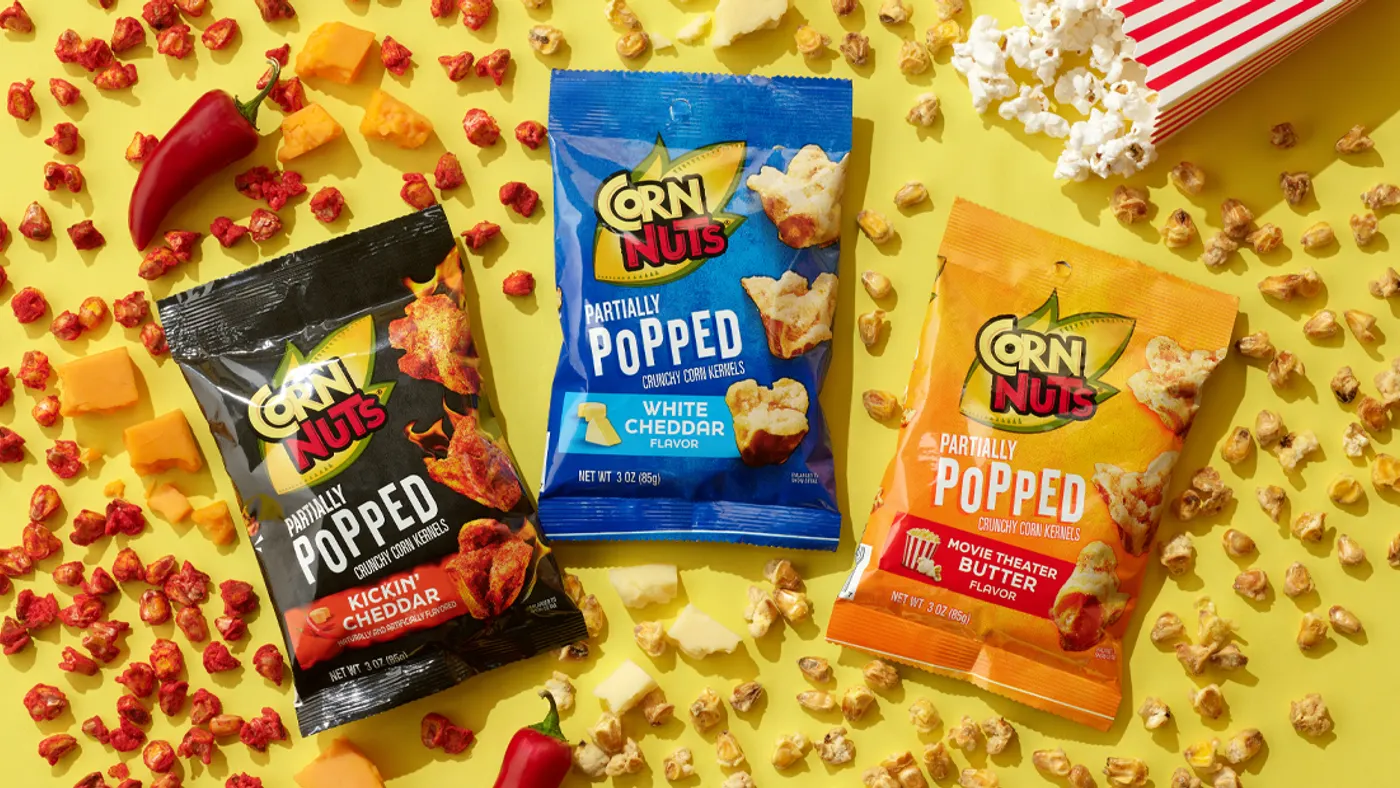
Hormel is exploring other opportunities for the brand. In May, it ventured beyond its traditional offering for the first time with Corn Nuts Partially Popped, combining the signature crunch of the snack with the light, airy texture of popcorn.
Horbas said Hormel could take Corn Nuts further beyond the iconic crunchy kernel and into other forms.
“It’s a little risky,” Horbas said about expanding Corn Nuts into new formats. “The upside is much larger, too, but you’re introducing something new. It takes a lot more education in the space. It takes a lot more trial of the product. But I would say those things are always on our mind.”
Article top image credit: Courtesy of Hormel Foods
Back from the dead: Once discontinued brands get another chance
Slice, Hydrox and Odwalla are back on the market several years after they left, often with modernized changes aimed at attracting new consumers without alienating nostalgic shoppers.
By: Christopher Doering• Published June 23, 2025
As companies look for an edge in launching products in a market where failure is almost inevitable, a growing number of businesses are turning to an unlikely source for an edge: Discontinued brands pulled from the market years ago amid plunging sales and increased competition.
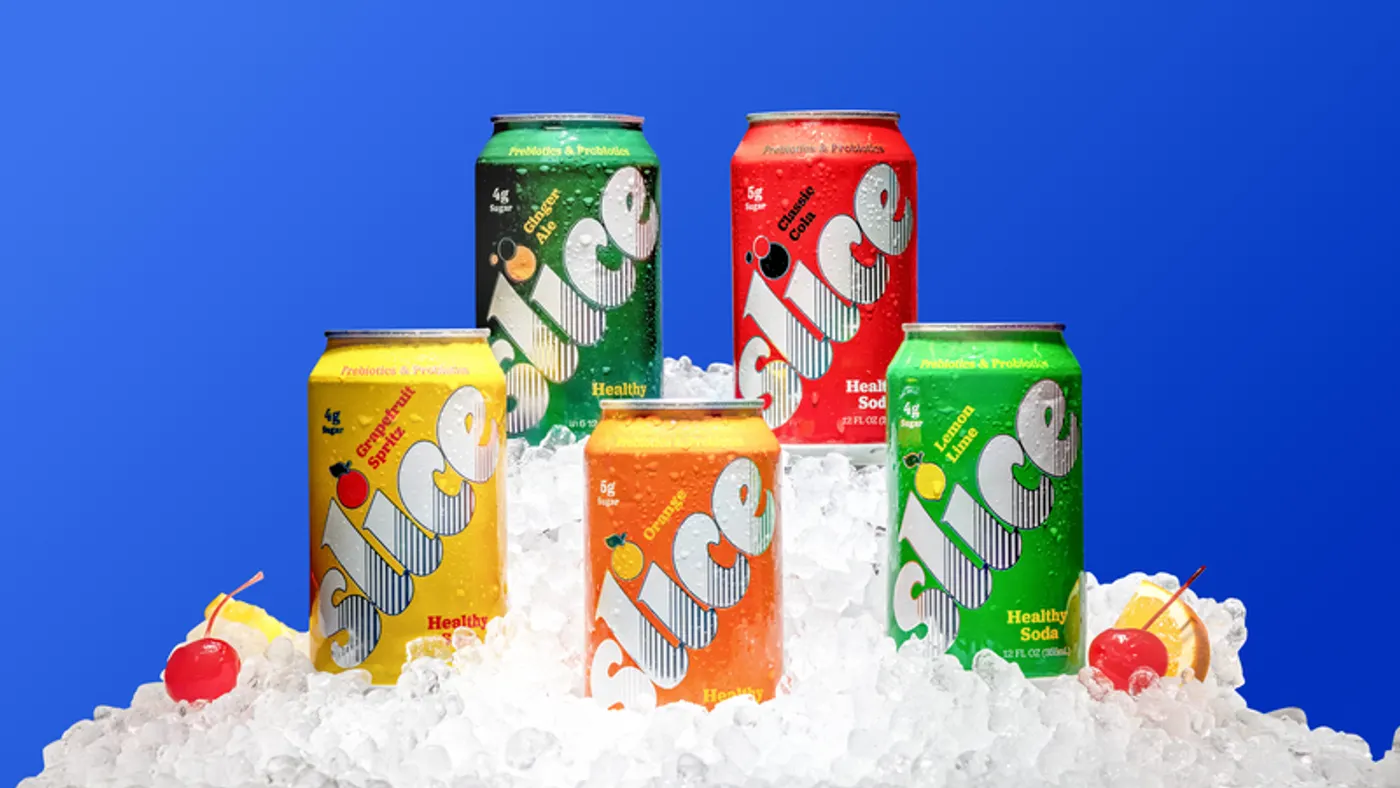
Slice soda, discontinued by PepsiCo more than 20 years ago, is one of the latest products to turn back the brand time machine. It was relaunched in January by Suja Life, known for its organic juices and boosters, as a better-for-you offering in the sparkling beverage space.
In buying “a powerful brand” like Slice rather than building its own from scratch, Suja wanted to “hit the gas” and “not have to spend time building up the brand,” said Jamie Berle, director of brand marketing at Suja Life.
“We know what it takes to build a brand from the ground up,"Berle said. "It’s not easy.”
Slice isn’t the only brand returning from beyond the grave. Jolt Cola, Odwalla smoothies and Hydrox cookies have all returned to retail shelves in hopes of using nostalgia to attract former buyers while drawing in a new generation of consumers.
Industry experts warn that bringing back a discontinued product can bring its own set of challenges. Companies must appease legacy consumers who fondly remember the product a certain way while making changes to attract a new, younger customer base.
“It’s certainly a tactic,” said Mike Kostyo, a vice president at consulting firm Menu Matters. “It’s a way to get attention, but the odds are kind of stacked against it.”
Optional Caption
Courtesy of Grupo Jumex
The easy way in?
About 15,000 new food products are introduced each year,according to Kansas State University, though the majority fail to take off. Some studies estimate 90% of new products launched meet their demise within the first 12 months.
By turning to a brand that has been off the market — sometimes for decades — food and beverage executives say they can tap into a name recognizable among many consumers and help jumpstart a costly development process where failure is the most probable outcome.
Slice’s brand awareness, for example, is nearly 50% with consumers between 35 and 44, the shopper base that grew up with the soda and is increasingly craving nostalgia, according to Suja.
Younger consumers have shown a penchant for turning to retro brands such as Slice.
Even if people didn’t grow up with the offering, there may be inherent interest in trying it — especially if the product now contains better-for-you ingredients, comes in sustainable packaging or promotes other attributes that weren’t as relevant to consumers the first time around.
In the soda’s updated version, Suja added a combination of prebiotics, probiotics and postbiotics. It also has 5 grams or less of sugar, while removing artificial flavors and high-fructose corn syrup and using only non-GMO ingredients — attributes that are valued among today’s shoppers who are closely watching what they eat and drink.
We don’t want “to spend time building up the brand, building up the awareness. We know what it takes to build a brand from the ground up. It’s not easy.”
Jamie Berle
Director of brand marketing, Suja Life
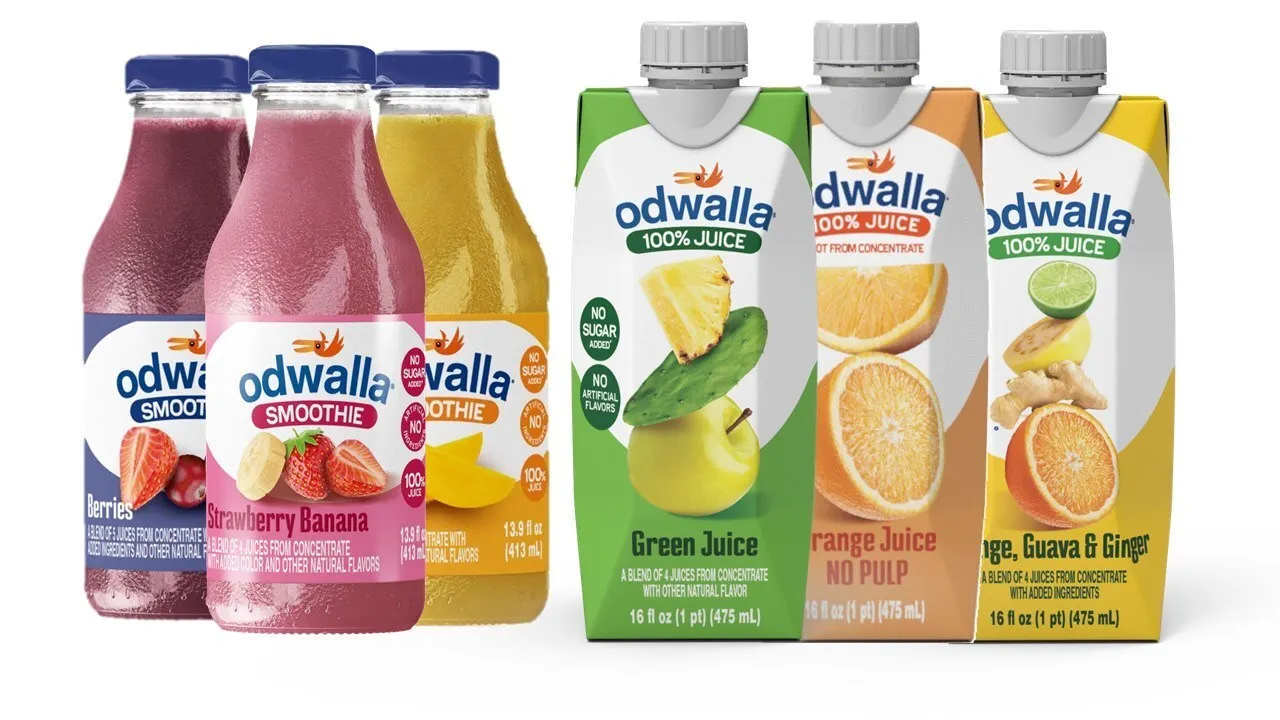
Capitalizing on existing brand awareness also was the impetus for Jumex, a 64-year-old Mexico-based beverage manufacturer, to acquire the license for the juice and smoothie brand Odwalla discontinued by Coca-Cola in 2020. Adding Odwalla to its portfolio allowed Jumex to capitalize on synergies with its existing offerings and further expand its U.S. presence.
Odwalla’s historydates back to the 1980s when a group of jazz players from Chicago launched a business selling orange juice out of a Volkswagen van to fund their musical ambitions. The brand’s product lineup grew to include other juices, waters, smoothies and energy bars.
Jumex was surprised to learn that many consumers thought Odwalla was still on shelves. This provided an opportunity to tap into that brand awareness to remind shoppers of its existence.
“This is a brand that built the RTD juice and smoothie category,” Ariela Nerubay, chief marketing officer with Jumex USA, “and so we’re again tapping into every aspect of that legacy in order to reintroduce it.”
To increase its chances of success, Jumex is leaning into Odwalla’s nostalgic roots while modernizing the brand to resonate with consumers. The beverage maker is tweaking the ingredients list by removing vitamins that previously were added to some Odwalla products; instead touting its simple, transparent list of real fruit and natural ingredients.
Jumex eventually wants to bring the brand “back to its former glory days,” said Carlos Madrazo, country manager with Jumex USA.
For now, Jumex isn’t rushing to rebuild Odwalla’s entire portfolio and instead prioritizing core products such as Strawberry-Banana smoothies and Green Juice, a blend of pineapple, apple and cactus.
“The U.S. is the most competitive market in the world. Obviously, it’s going to be a challenge,” Madrazo said. “We’re taking this one step at a time. I don’t want to minimize the complexity of relaunching it.”
Optional Caption
Christopher Doering/Food Dive
The calculus of reviving dead brands
For some executives, relaunching brands has become a full-time business.
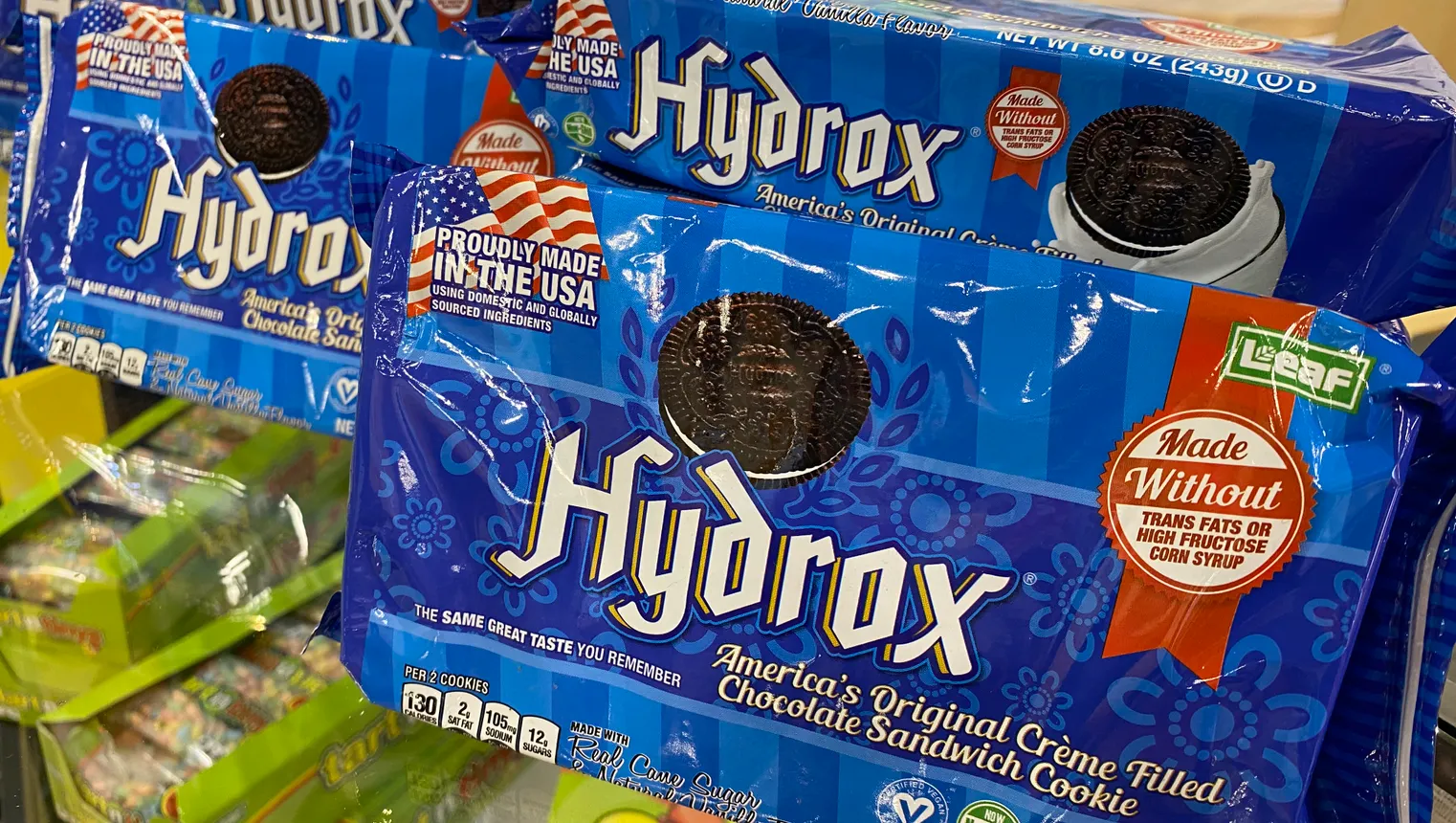
Leaf Brands CEO Ellia Kassoff has reintroduced several sweets to the market, including candies Astro Pops, Wacky Wafers and Tart n’ Tinys along with cookie brand Hydrox. The executive said it’s a time-consuming and expensive process to bring once-beloved products back from the dead.
With many of the items off the market for years, and often decades, Kassoff sometimes has to track down executives and founders to help recreate the product’s formula and find a manufacturing facility with the technology to make it.
Leaf, for example, is only now close to relaunching Bonkers, a rectangular-shaped candies with a fruity outside and a flavorful fruity center filling produced by Nabisco in the 1980s and 1990s, which it acquired the trademark to seven years ago.
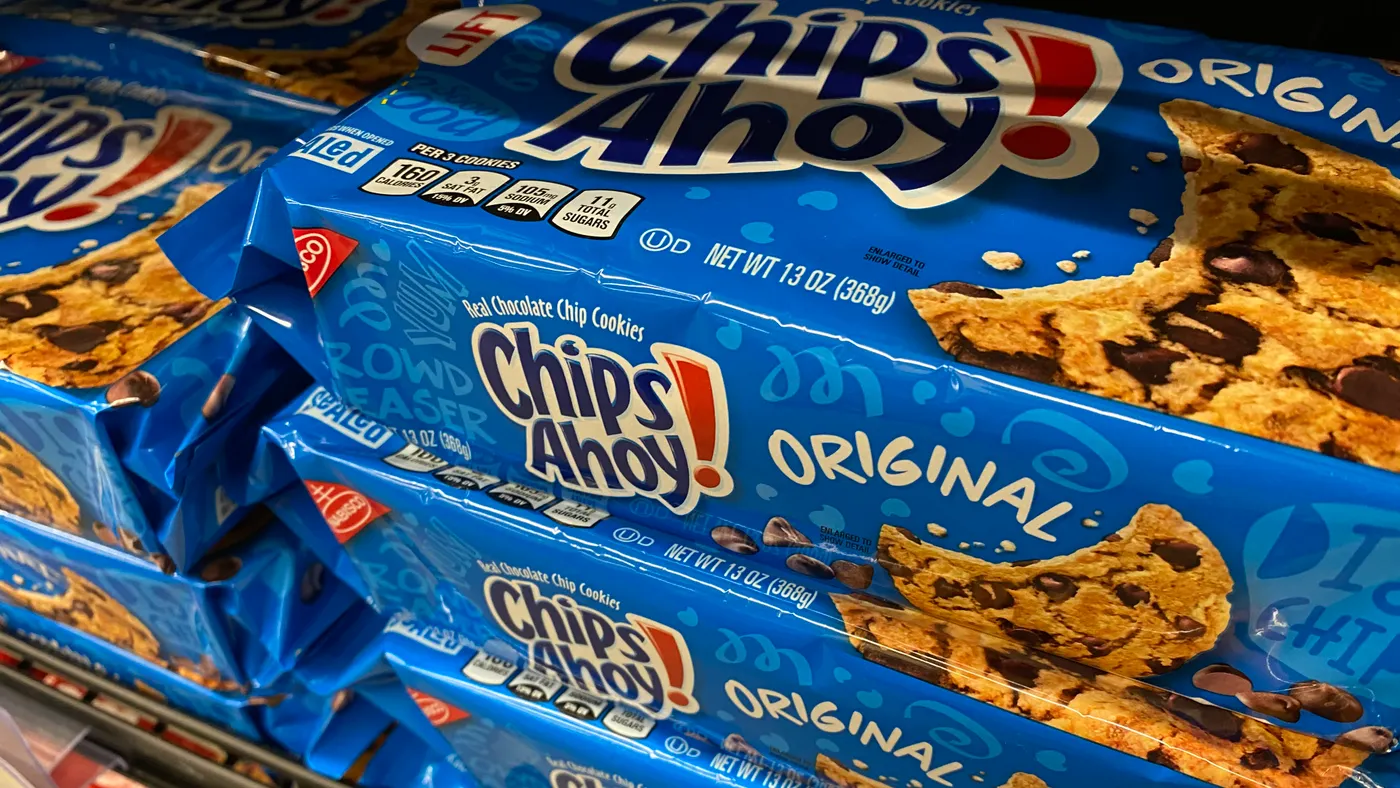
The company also has revived Hydrox, which differentiates itself from Mondelēz International’s $4 billion-plus Oreo brand with a crispier cookie, less sweet flavor and darker chocolate. Hydrox also is made with the original formulation from the 1960s and 1970s — before high fructose corn syrup and artificial flavors and colors surged in popularity — while including real cane sugar and vanilla.
When deciding whether to bring back a discontinued brand, Kassoff said he carefully balances recreating the original offering so it appeals to nostalgic diehards while finding ways to enhance it to appeal to new customers.
“If the consumer is excited and buys it but says ‘What the hell is this? This is not what I remember.’ You don’t have a customer anymore,” Kassoff said. “So it’s critical that you bring stuff back exactly the way people remember it.”
Some companies relaunching discontinued brands, however, are less concerned about the original formula to ensure that they’re speaking to the latest consumer trends.
Optional Caption
Permission granted by Redcon1
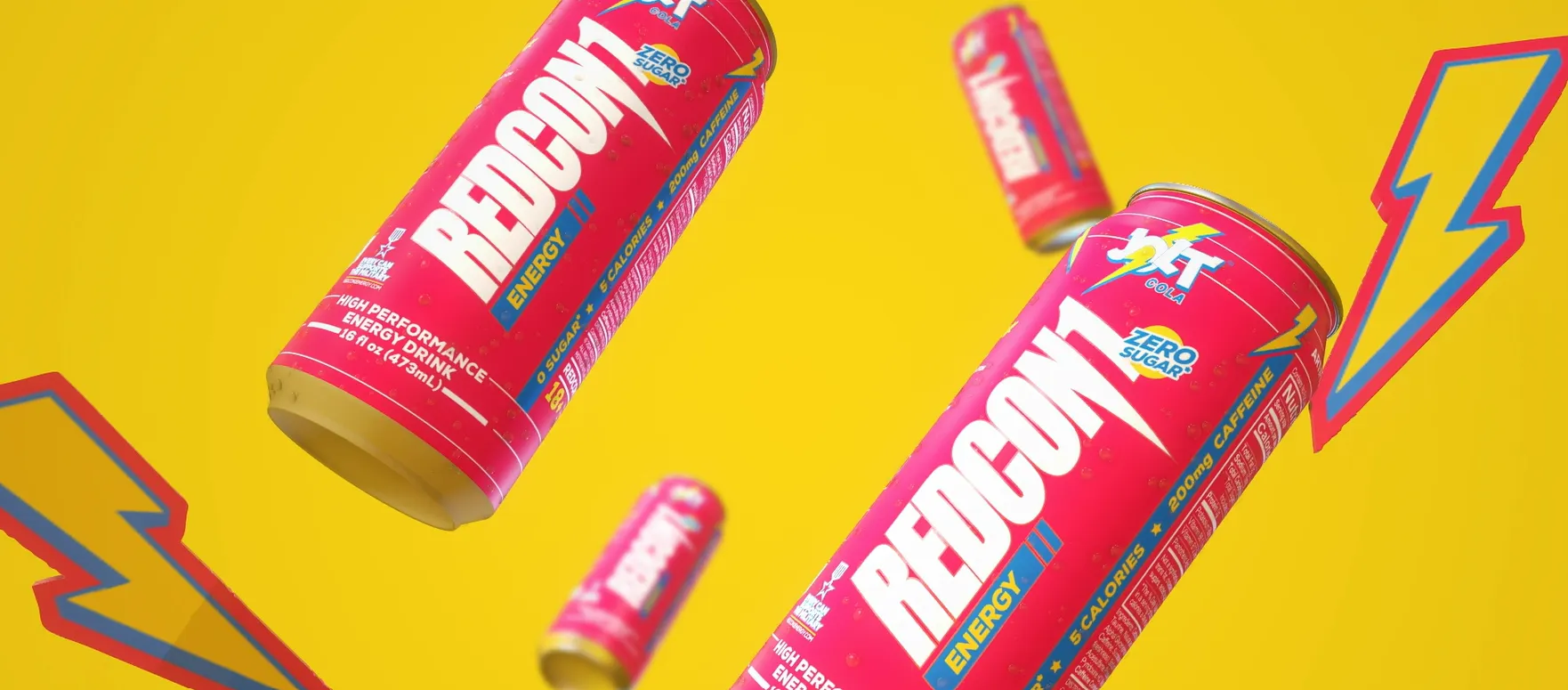
Jolt, a mainstay on shelves in the late 1980s and 1990s with twice the caffeine as other colas, is back this year after Redcon1, a Florida supplement and energy drink company, acquired the license.
This time Jolt is being positioned as an energy drink. Redcon1 has more than doubled the cola’s prior caffeine total and switched to sucralose as the sweetener instead of sugar.
Jolt has focus-enhancing nootropics, B vitamins, and a non-stimulant metabolism booster — appealing to consumers seeking functional benefits from their energy drinks. There are more changes, such as can size, which is increasing from 12 ounces to 16 ounces.
Jolt’s founder filed for bankruptcy in 2009 as market competition and a costly canning contract weighed on the brand. It briefly returned to the market in 2017, but a lack of distribution prevented Jolt from gaining momentum and it disappeared again.
Redcon1 is optimistic nostalgia for the beverage will draw in consumers who grew up with the brand while also attracting Gen Z shoppers, a demographic that is a big user of energy drinks and has shown a penchant for embracing the mantra that “what’s old is new.” The fast-growing energy drink market is valued at $23 billion.
“To the older audience like us, we remember when we weren’t allowed to have it,” said Ryan Monahan, chief marketing officer at Redcon1. “So that has that nostalgia play. But then just looking at industry trends, some of the old stuff is making a comeback with the Gen Z. They’re kind of reimagining these older types of experiences or brands or products in a new way.”
Kostyo, who consults for the food and beverage industry on consumer trends, acknowledged brands returning to the market after years away face an uphill battle.
The product was discontinued for some reason — a lack of innovation, the emergence of competitors, or the disappearance of a once prominent fad, for example — so inevitably some degree of change is likely going to be required to fix the problem or modernize the product.
“It’s really tricky,” Kostyo said. “The number of brands that we’ve seen successfully come back is so low.”
Still, with product failures continuing, future generations will itch to see some of their favorite brands growing up make a return to the market, said Dan McCarthy, an associate professor of marketing at the University of Maryland. This means today’s hot products could turn into tomorrow’s reboot several years from now.
“Brand reboots are here to stay,” McCarthy said. “Brands are dying every year. There’s certainly ample supply ... to be able to revive.”
Article top image credit: Permission granted by Suja Life
Inside the private equity firm giving new life to Chef Boyardee, Pillsbury
Brynwood Partners purchases well-known brands that have fallen out of favor with large CPG manufacturers, then boosts marketing and innovation to rejuvenate sales, says CEO Henk Hartong.
By: Christopher Doering• Published July 14, 2025
The fast pace of deal-making in the food and beverage space has recently put the spotlight on Brynwood Partners.
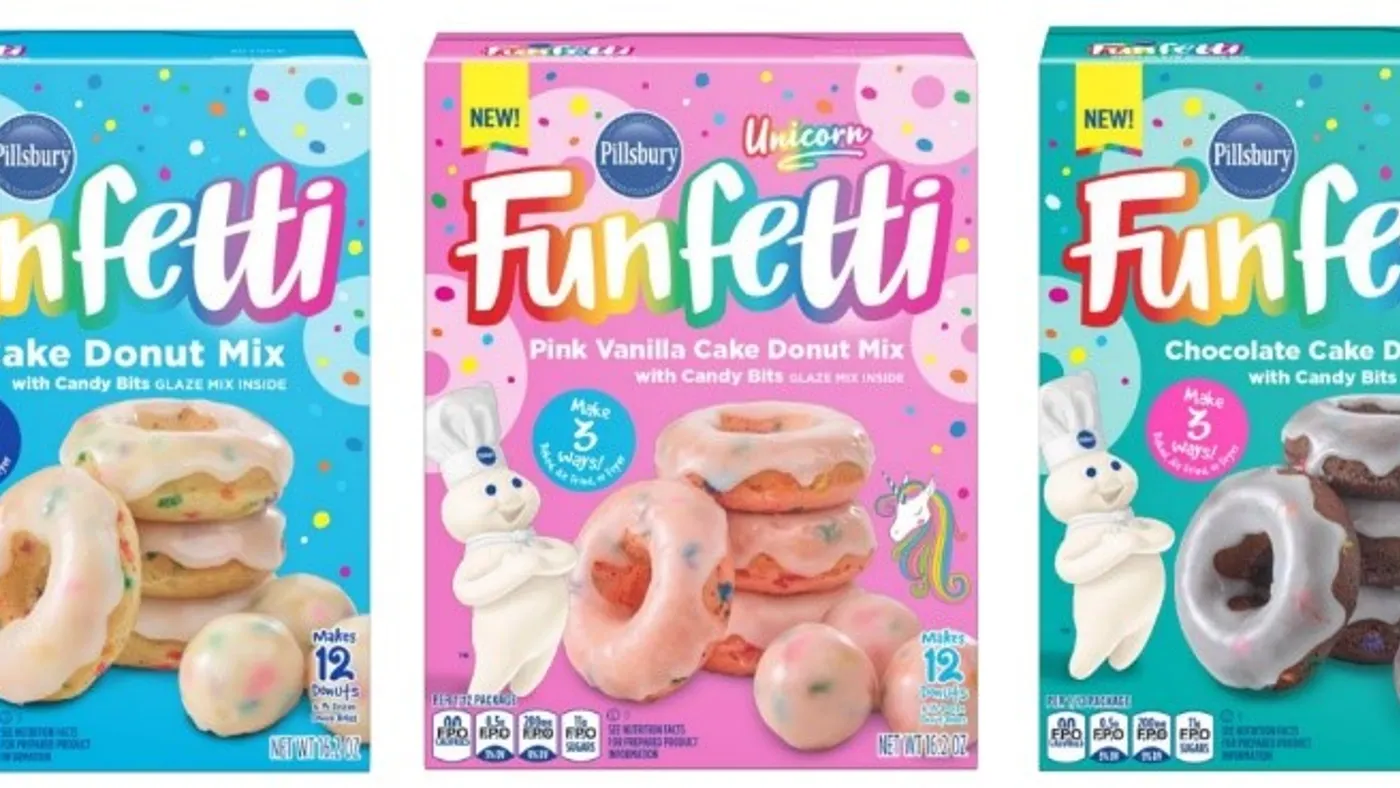
Throughout its 41-year history, the firm has carved out a prominent niche in food and beverages with a portfolio that prioritizes popular brands including Pillsbury, Hungry Jack, Martha White and Funfetti.
Brynwood’s strategy is to identify brands that are no longer priorities at large food manufacturers, then find ways to rejuvenate sales through new marketing and product innovations.
Sales of Sunny D, for example, doubled in the nine years Brynwood owned the brand as it expanded availability of small format sizes to capture on-the-go consumers. It also extended the drink into new categories, such as alcohol through the launch of an RTD cocktail.
Hartong recently sat down with Food Dive to discuss what Brynwood looks for in an acquisition target, its approach to reinvigorating purchased brands and the current market for dealmaking.
This interview has been edited for brevity and clarity.
FOOD DIVE: What attracted you to Chef Boyardee and how does that acquisition reflect Brynwood Partners’ broader strategy?
Henk Hartong: At the foundation of every new opportunity that we look at, we're trying to identify whether they're businesses or brands, and whether they're standalone or corporate carve-out opportunities that allow us to combine our operating skills with our investing skills to accelerate performance.
This strategy tends to lend itself well to non-strategic, non-core brands of large corporations. Large companies can't do everything, and so they have to pick and choose their places.
Oftentimes, brands with a tremendous amount of equity and potential are deeper in the larger organization for what can be very good strategic reasons. But that creates an opportunity for someone like us to apply those fixes to these unique situations and bring life, innovation and energy to a business that was otherwise waiting in line for those attentive details.
What do you look for when it comes to a brand that you might be interested in acquiring?
We sell to the masses, not to the classes. And one of the benefits of buying some of these mainstream products is that many people in the investment community look at these brands or businesses as things that wouldn't fit their personal lifestyle, but for most Americans, they're critically important. And I think that gives us an advantage.
In the case of Sunny D, people said, ‘Henk, what are you doing?’ That was 12 years ago. I obviously didn't believe in what those people thought. I thought we could take a brand with incredible equity, a mainstream American product, and reinvigorate it with all the things that it wasn't getting.
At the time we acquired it, if you ask somebody in 2015, “Hey, I just bought Sunny D,” your general answer was, “I used to drink Sunny D. I used to drink that when I was a kid, or I used to drink that so many years ago.” Our whole focus was, how do we get that response to not start with, “I used to.” Now, today, if you ask someone, they’re like “Oh, that brand is so cool. All that new product is amazing.” We got rid of “I used to.”
If you talk to someone about Chef Boyardee right now, your first response is, typically, “I used to eat that as a kid. I used to eat that when I was in college.” Whatever specific correlation somebody has with the brand is a reflection on a past experience. So you have all that equity nostalgia that's kind of boxed up in a non-core operating strategy applied by the previous owners. It lends itself well to what we think we can do with the business.
Then part of the process of doing that is that we have been focusing on how do we create different opportunities for lapsed consumers to experience [Chef Boyardee] in different parts of the store with logical adjacencies to the traditional canned pasta and microwavable cups, which is the lion's share of the business as it exists today.
Embracing and strengthening those performances are critically important to our success. A big path for our growth will be taking the equity of Chef Boyardee and creating it in different formats that allows us to reintroduce the brand to lapsed consumers, so that the next time we ask them, in X number of years, they talk about, “Oh, I love your new product,” and the “I used to eat it” is no longer the way they reflect on their experience with the brand.
Even before Brynwood closes an acquisition, you are already outlining what you will do with the brand once it’s acquired. What was the approach with Chef Boyardee?
One thing you'll universally hear from our customers is how important Chef Boyardee is to them because it provides a mainstay meal at a very affordable price with a quality product that's hearty and nutritious and filling. That plays a critical role at a time when a lot of families are having a hard time finding ways to make ends meet.
So we knew it was important to our customers. What we're now working on is how do we provide them with innovation.
We tend to look at the areas where the market has been going, whether it's shelf stable trays or dry box meals or other areas that are massive categories where the equity of Chef could play, but it hasn't gone because [Conagra] wasn't going to give the resources to the marketing team to go explore those opportunities. It was going to focus on its core offerings and leave it at that.
We developed some strategies around where we think we can take the brand, have done some prototypes and started doing some R&D work well before we close.
What opportunities are you seeing in the marketplace? Are there more potential acquisitions on the table as consumers cut back on spending and businesses look to improve their operations?
There are two things that drive corporate divestitures. First and most, regardless of the economic cycle that you're in, is a change in the strategy, or a change in the corner office. It's possible somebody new comes in and says, “We need to take a look at this. We want to refine the strategy and the following businesses aren't as important today as they used to be a few years ago.”’ And that oftentimes leads to portfolio reshaping.
The other circumstance is when you get into a tough market for sales and for market share, and we're in the middle of that right now. So if you just look at the public companies' last couple of quarterly earnings reports, you're having a lot of people putting up either negative comps or lower-than-expected growth numbers. And when you're in the public markets and you're not achieving growth, you tend to look to find a way to get it back.
One of the ways to get it back is to accelerate growth on your core businesses, and another way is to divest things that are not growing or declining faster than other things in your portfolio. That tends to create opportunities as well. In this market where growth is hard, you're going to see a lot of folks looking to shed non-growth assets.
Article top image credit: Permission granted by Hometown Food Company
Unilever to combine food business with McCormick in $45B deal
The transaction creates a global spice and condiments giant with a portfolio that includes Hellmann’s mayonnaise and Frank’s Red Hot.
By: Christopher Doering• Published March 31, 2026
Unilever said it reached an agreement to combine the majority of its food business with spice maker McCormick in a $44.8 billion deal creating a global condiments giant.
McCormick will pay $15.7 billion in cash and the equivalent of $29.1 billion in shares for Unilever's food portfolio, which includes Hellman's mayonnaise and Knorr sauces and seasonings. The deal excludes Lipton's ready-to-drink line and Buavita juices, as well as Unilever's lifestyle nutrition assets and food operations in India, Portugal and Nepal.
The transaction will create a combined company under the McCormick name with estimated $20 billion in revenue. The deal is expected to be completed in mid-2027, the companies said.
Unilever's food segment is valued at roughly double the size of McCormick's entire business, and the combination is an ambitious play to create a global condiments and seasonings company with a stable of well-known brand names, from Cholula to Marmite.
“Our ability to serve consumers with what they want will be even greater when combined with global icons like Hellmann's and more,” McCormick CEO Brendan Foley said on a media call following the announcement.
Unilever shareholders will receive 55.1% of combined company equity and the CPG giant will retain a 9.9% stake, which will be sold down over time. The combination is expected to generate $600 million in annual savings by the third year.
McCormick will maintain its global headquarters in Hunt Valley, Maryland, and create a secondary listing in Europe. It will also establish an international headquarters in the Netherlands, where Unilever has a long-standing presence.
Foley will remain CEO of McCormick and executives from both companies are expected to serve in key leadership roles. Unilever will also appoint one-third of the board.
The transaction also marks Unilever's retreat from the food business, allowing the company to focus on the more profitable personal goods sector. Last year, Unilever spun off its ice cream business into the Magnum Ice Cream Company, which owns Talenti, Klondike and Ben & Jerry’s.
“The combination with McCormick allows both companies to be the best that they can be, to focus and scale businesses, paving the way for higher growth, stronger returns and more value creation,” Unilever CEO Fernando Fernández said on the media call.
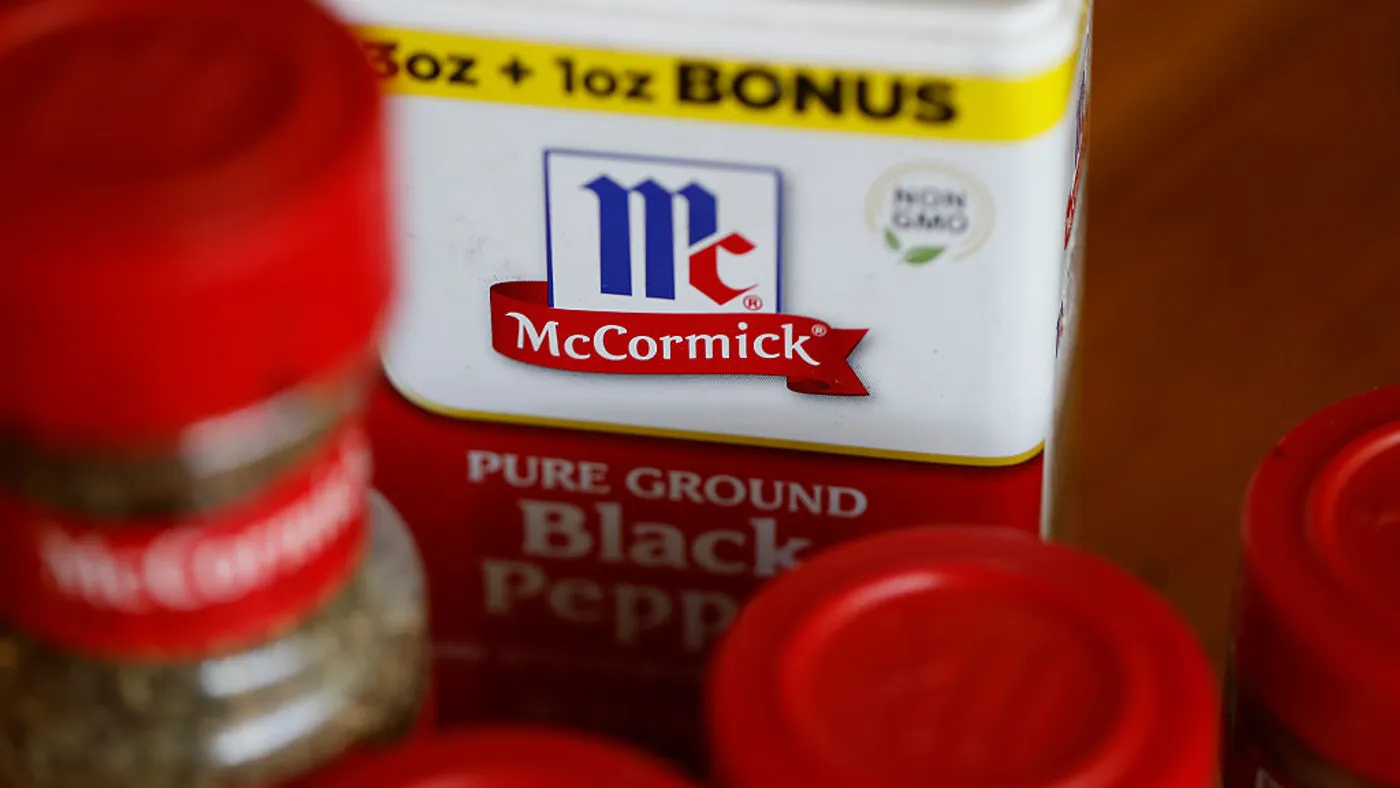
McCormick has identified M&A as a key opportunity to grow beyond its iconic red-and-white spice jars and enter into fast-growing flavor and seasoning categories, such as hot sauce, mustard and more. The company purchased Frank's RedHot sauce and French's mustard as part of a $4.2 billion deal for Reckitt Benckiser’s food business in 2017.
Foley said McCormick was able to reinvest in French's and other acquired brands to create “meaningful growth,” a strategy it intends to follow with Unilever's food business. The transaction with Unilever is the largest deal in McCormick's history.
“We see a tremendous opportunity across our combined portfolio to take high growth potential brands like Cholula hot sauces and Maille mustard and accelerate growth and innovation,” Foley said.
Article top image credit: Justin Sullivan via Getty Images
Nutella maker Ferrero may take ‘a breather’ in large-scale M&A in the US
After spending more than $8 billion for brands such as Keebler, Butterfinger and Rice Krispies, the sweets giant is turning its attention to innovation and boosting efficiencies.
By: Christopher Doering• Published May 27, 2026
LAS VEGAS — Ferrero may pause large-scale M&A in the U.S. as the Nutella and Butterfinger maker focuses on innovation and extracting value from the past decade of dealmaking, a top executive said in an interview.
Since entering the U.S. in 1969, Luxembourg-based Ferrero's presence had been largely centered around its iconic Nutella chocolate and hazelnut spread, golden-wrapped Ferrero Rochers and minty Tic Tacs.
In the last decade, however, the U.S. has become Ferrero's largest market after the sweets giant spent more than $8 billion on acquisitions to broaden its portfolio in the region and better position itself to compete with companies such as Hershey and Mars.
Today, Ferrero’s U.S. business includes everything from Keebler cookies andHalo Top ice cream to Rice Krispies cereal andPower Crunch protein bars. Sales have surged from $300 million in 2017 to more than $3 billion last year, with plans to top $10 billion in the next decade.
The company now appears ready to pull back from larger M&A transactions as it digests its most recent purchases.
“I would suspect we're at a point where we're going to take a little bit of a breather, at least from the really big-scaled [acquisitions],” Michael Lindsey, president and chief business officer for Ferrero North America, said in an interview. “But obviously, it's [our Chairman Giovanni Ferrero] who sets the M&A strategy.”
Ferrero’s aggressive expansion comes despite a challenging environment for sweets manufacturers, with consumers looking to eat healthier and inflation prompting many cash-strapped shoppers to cut back on spending. The company has spent considerable effort nursing many of its purchased brands back to health, with many now seeing growth despite larger economic headwinds.
Optional Caption
Courtesy of Ferrero
Keebler was posting a decline in sales when it wasacquired from Kellogg in 2019, for example, and now is growing 6% in a flat cookie category, Lindsey said.Nestlé’s U.S. confectionery business, which included Butterfinger,Baby Ruth and 100 Grand, was seeing a drop in sales when it was purchased for $2.8 billion eight years ago. The segment rose 9% in 2025, tripling the 3% growth in the broader candy space.
One blemish, however, is Power Crunch, whichFerrero purchased in early 2025. It has seen sales slip by double digits during the last six months.
“We're telling [retailers], be patient. Look at some of the other acquisitions we've done. We’ll do it again on Power Crunch,” Lindsey noted. “We have a whole plan on how to get there, and it buys us a lot of credibility.”
Building from within
Should Ferrero decide to hold off on multi-billion-dollar deals, it would provide the company with more time to further incorporate the technology and brand equity it has added to boost production and innovation.
“There’s a lot of synergies we can go after” within the U.S. portfolio, Lindsey said.
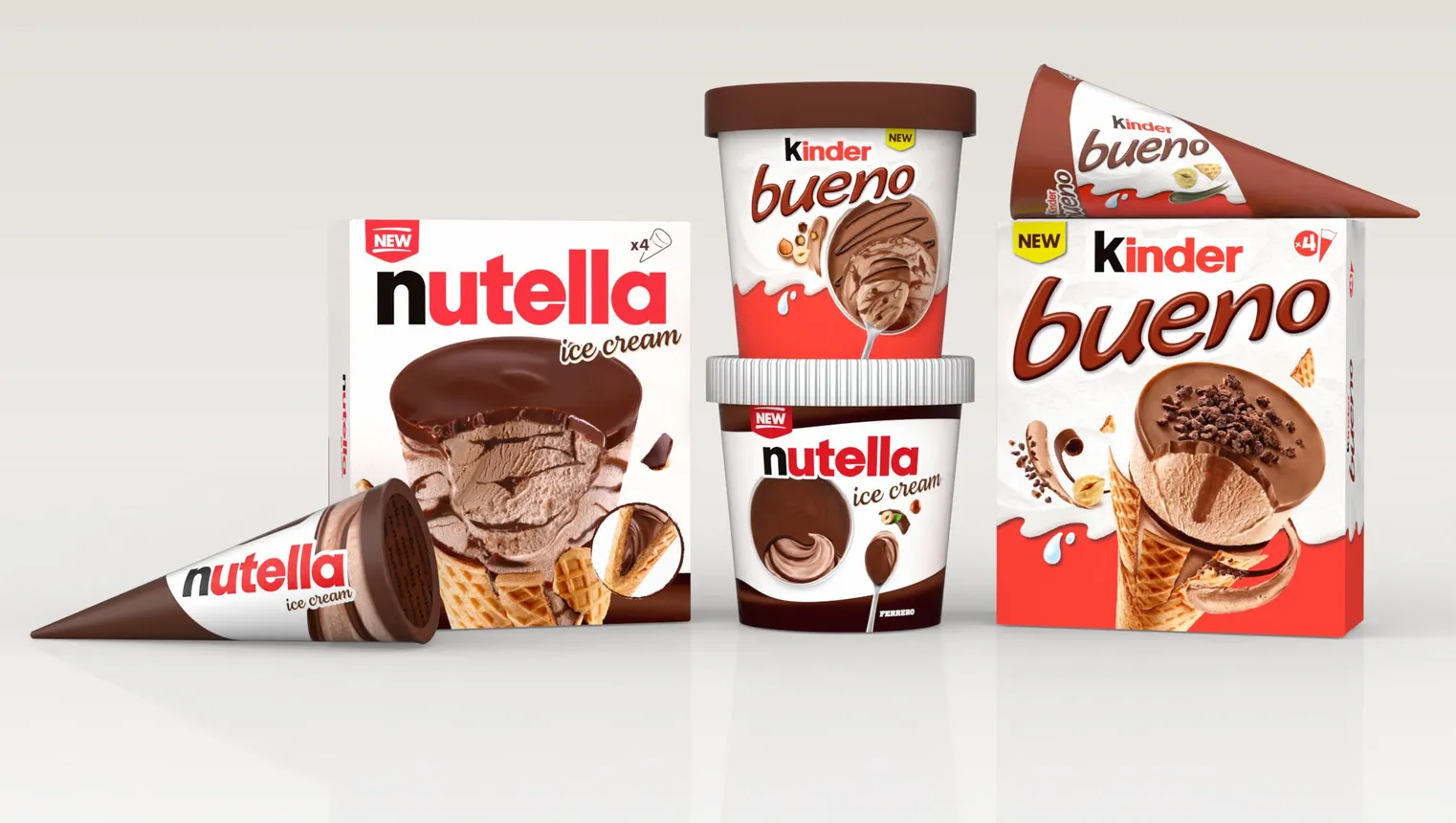
Thepurchase of Halo Top maker Wells Enterprises in 2023 provided the R&D, manufacturing and distribution capabilities to help Ferrero launch a Nutella ice cream earlier this year. The company is expected to soon debut a line of Keebler cookies that contain bits of crispy rice chocolate bar Crunch. Other innovations are in the works, including in cereal.
Ferrero has also pushed updates for brands that haven't seen innovation for years.
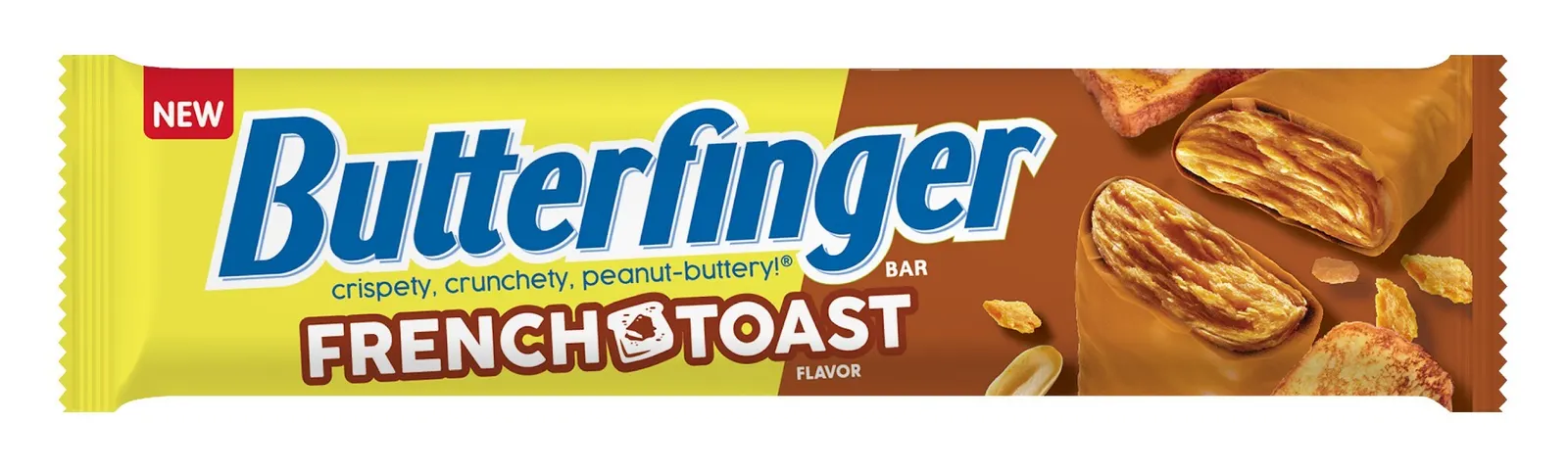
Butterfinger, for example, extended into ice cream for the first time and introduced marshmallow and salted caramel versions of the signature candy bar, a rare move for the previously conservative brand.
The company also changed the packaging to a more yellow color from orange to help Butterfinger stand out on shelves and reformulated the candy to add a higher percentage of cocoa and milk in the chocolate coating. It also changed the type of peanut used following consumer complaints that the candy was too sticky when chewed.
Butterfinger sales, which topped $200 million annually before the acquisition, grew 10.6% in the past year, according to the company.
Even as Ferrero has built its portfolio in other nonchocolate categories, it hasn’t lost sight of its legacy brands.
Courtesy of Ferrero
In addition to Nutella ice cream, Ferrero started sellingNutella Peanut, a peanut-flavored version of the spread, this year as part of an effort to extend the brand beyond its core breakfast time slot. Similar innovations have occurred in Ferrero Rocher, with the launch of chocolate squares.
With a presence in “almost every vertical within sweet packaged foods,” Lindsey said Ferrero doesn’t see a lot of gaps in the U.S. market it still needs to fill.
An exception, the former PepsiCo executive said, is the fast-growing bakery space where Ferrero lacks a presence even though it has offerings in the category in Europe. The company is likely to eventually fill that void, either through an acquisition or innovation of an existing brand, Lindsey said.
One area that’s likely off the table is a move outside of sweets.
“I don't foresee us going out of sweets,” Lindsey said. “We're a sweet packaged food company, so I don't think you'll see us getting into health care, chips, some of the other things that a few of our competitors have gotten into.”
Article top image credit: Chris Casey/Food Dive
Mondelēz CEO says M&A is harder as acquisition targets become ‘too expensive’
The Oreo maker’s top executive said high valuations mean “it’s not really worth” making deals unless a brand can offer a “unique competitive advantage.”
By: Christopher Doering• Published March 3, 2026
The asking price for acquisition targets is rising as food companies use M&A to address their “desperate” appetite for growth, making it harder for Mondelēz International to complete a deal, the Oreo maker's CEO said.
Food companies have been turning to dealmaking in recent years as a way to add higher-growth, trendier brands to the mix to rejuvenate slowing sales. That's creating a more competitive market for companies that are actually recording growth, pushing up overall valuations.
Dirk Van de Put, Mondelēz's CEO, said during the Consumer Analyst Group of New York Conference conference in February that companies during the past two years have been “so desperate to get growth that what we would consider reasonable pricing to buy a company has gone out the door.”
Few companies have been as active in M&A as Mondelēz since Van de Put took over the food maker in 2017. The company has made roughly a dozen acquisitions during the past decade to further build its dominant position in snacking and premium offerings, buying brands including Tate’s Bake Shop, Perfect Snacks, Clif Bar and premium chocolate maker Hu.
Despite the high valuations, Van de Put said Mondelēz remains on the lookout for potential acquisition targets. The company is prioritizing deals that expand its cakes and pastries business, as well as its premium chocolate category.
Each year, Mondelēz puts together a “wish list” of about 40 potential M&A targets and, if necessary, starts establishing a relationship to build trust and familiarity with the smaller businesses. The snacks maker “rarely ventures outside” of that initial list, Van de Put said.
“Acquisitions really have to offer us a unique competitive advantage or really lift our growth rate in whatever the geography is we're looking at,” Van de Put said. “Otherwise, it's really not worth [it] for us to do it.”
Permission granted by Hostess Brands
Acquisitions by food and beverage companies slowed considerably to a more normal level in 2025 following record activity the prior year, according to PitchBook data. Despite the volume decline, aggregate deal value rose for the second consecutive year to $61.5 billion, a 16.3% increase over the prior year.
The higher costs are leading firms to focus on more strategic investments. Several other food and beverage companies attending the CAGNY conference in mid-February told analysts that acquisitions will be one of the tools they turn to generate growth.
General Mills CFO Kofi Bruce said the Cheerios maker aims “to deploy cash for strategic acquisitions that enhance our growth profile.” His counterpart at Molson Coors, Tracey Joubert, said the beer giant is looking to “invest in M&A to drive meaningful portfolio transformation.”
However, not all companies are relying on M&A for future growth. J.M. Smucker was one of the few to rule out deal-making in the near future.
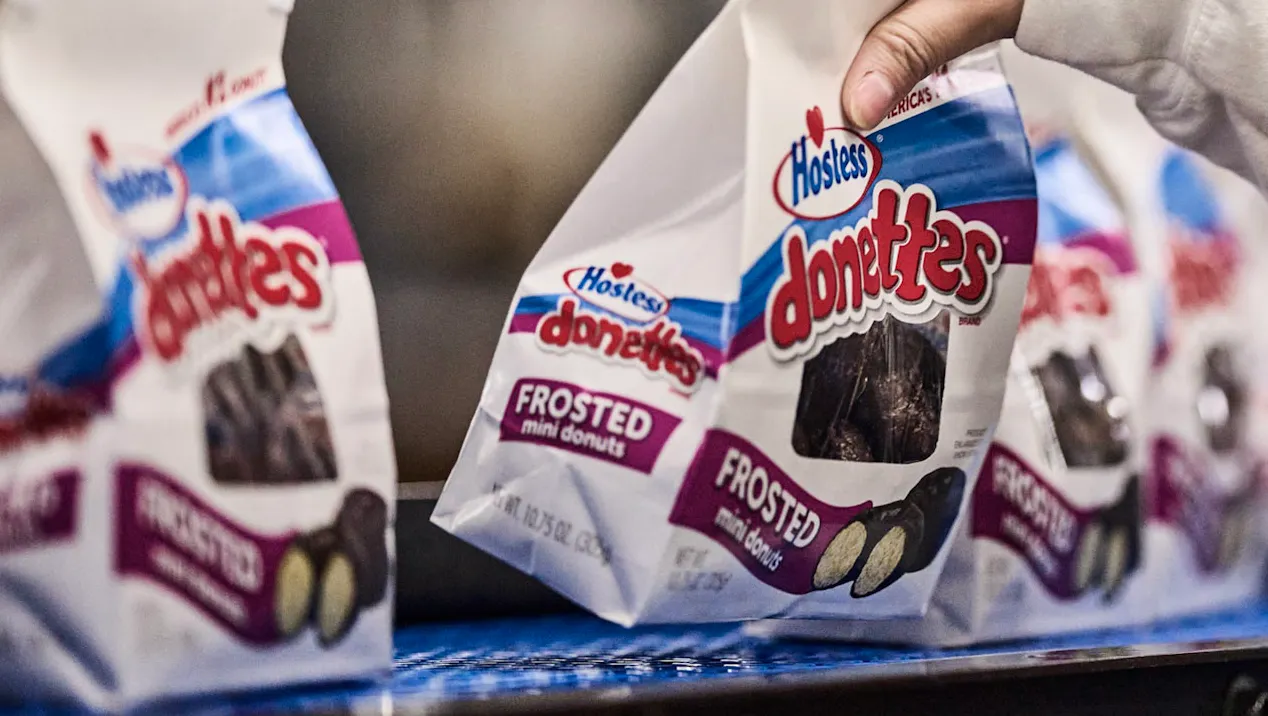
CEO Mark Smucker told analysts that “while we have historically evaluated growth opportunities through acquisitions, this is not an active strategic focus today.” The jam and jelly maker is still working to turn around existing brands and pay down debt from its$5.6 billion purchase of Twinkies maker Hostess Brands in 2023.
Article top image credit: Christopher Doering/Food Dive
Anheuser-Busch acquires majority stake in BeatBox for $490M
The deal for the party punch maker, which is popular among young drinkers for its high alcohol content, gives the beer giant a path to complete ownership after five years.
By: Christopher Doering• Published Dec. 5, 2025
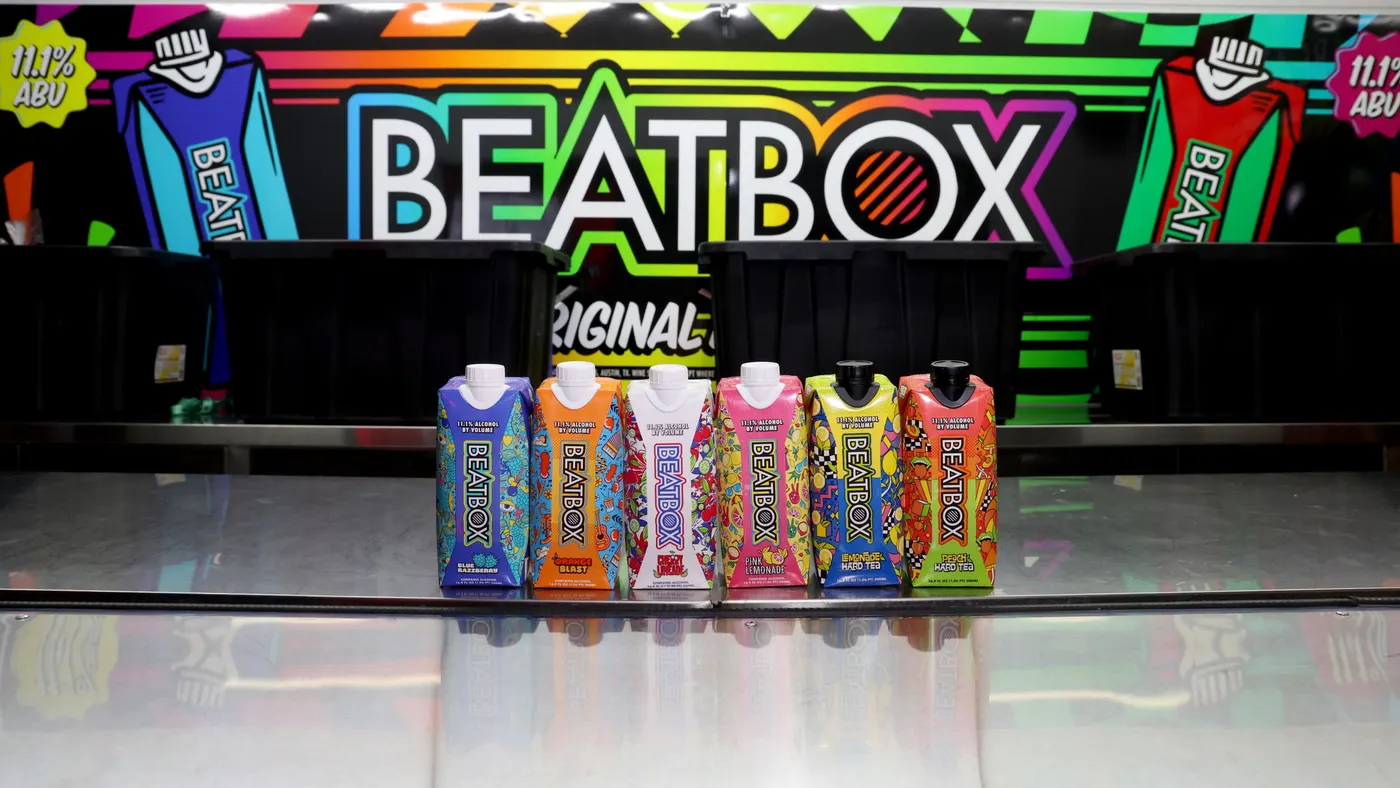
Anheuser-Busch InBev is paying up to $490 million for a majority stake in BeatBox Beverages in a deal that puts the Bud Light brewer on path to full ownership of the party punch maker popular with Generation Z.
The alcohol giant is acquiring 85% of BeatBox with the transaction set to close in the first quarter of 2026, according to the release. AB InBev said the deal includes a path to 100% ownership after five years based on a predetermined pricing formula.
BeatBox adds to Anheuser-Busch's fast-growing portfolio of beverages beyond beer, which also includes Cutwater Spirits, Nütrl Vodka Seltzer and Phorm Energy.
BeatBox has rapidly grown during the past two years due to its high alcohol content, bright packaging and bold, fruit-forward flavors.
Revenue is projected at $225 million in 2025, according to its LinkedIn page. In the next few years, it plans to reach 10 million new households and launch "an entirely new brand."
“We could not be more excited to welcome BeatBox, one of the fastest-growing RTD brands in the industry, to our portfolio," Brendan Whitworth, CEO of Anheuser-Busch, said in a statement. "We have a proven playbook for building winning brands, and I look forward to partnering with BeatBox and embarking on their next chapter of dynamic growth together.”
BeatBox is sold in a variety of flavors, including blueberry lemonade, orange blast, cherry limeade and cranberry dreams. They are available as wine-based and malt-based versions, with alcohol by volume rates of either 11.1% or 8%.
The brand first came into the spotlight in 2014 when it was featured on reality TV series “Shark Tank.” It counts Mark Cuban and Shaquille O’Neal as investors.
The party punch has over $340 million in U.S. retail sales for the year ending Nov. 23, according to Circana data cited by Anheuser-Busch, representing a growth rate of more than 50% year-over-year.
Although more consumers are cutting back on alcohol consumption, there remains a pocket of strong demand for drinks with higher ABVs. In the U.S., the proportion of new launches above 5% ABV rose from 48% to 55% between 2021 and 2024, according to IWSR.
Anheuser-Busch has seen success from Michelob Ultra, which recently reclaimed its post as the top-selling beer in the U.S. However, it hasn’t been immune to the broader trend of consumers cutting back on alcohol, with beer in particular on decline.
Similar to other beer giants, Anheuser-Busch has diversified its portfolio with RTDs and nonalcoholic drinks that speak to moderation-minded consumers. It owns ready-to-drink vodka tea brand Skimmers, Nütrl Vodka Seltzer and it recently co-launched Phorm Energy drink.
Article top image credit: Gabe Ginsberg/Getty Images for The Global Gaming League via Getty Images
Hershey closes LesserEvil acquisition as it looks to ‘lead the future of snacking’
The purchase of the better-for-you puffs and popcorn maker comes as the confectionery giant aims to grow its salty snacks division to 20% of revenue during the next decade.
By: Christopher Doering• Published Nov. 19, 2025
Hershey has completed its acquisition of organic snacks brand LesserEvil, a milestone for the food giant as it builds a bigger presence in salty treats and aims to “lead the future of snacking,” a top executive told Food Dive.
“It is a very strategic acquisition that we have been waiting with anticipation because it really complements our portfolio of brands,” Veronica Villasenor, president of Hershey’s salty snacks division, said in an interview. “Having [LesserEvil] coming into our portfolio really helps us continue to expand into new consumers and new occasions, so that we give consumers more choice.”
Hershey did not disclose the price paid for LesserEvil, but The Wall Street Journal reported earlier this year that it was roughly $750 million.
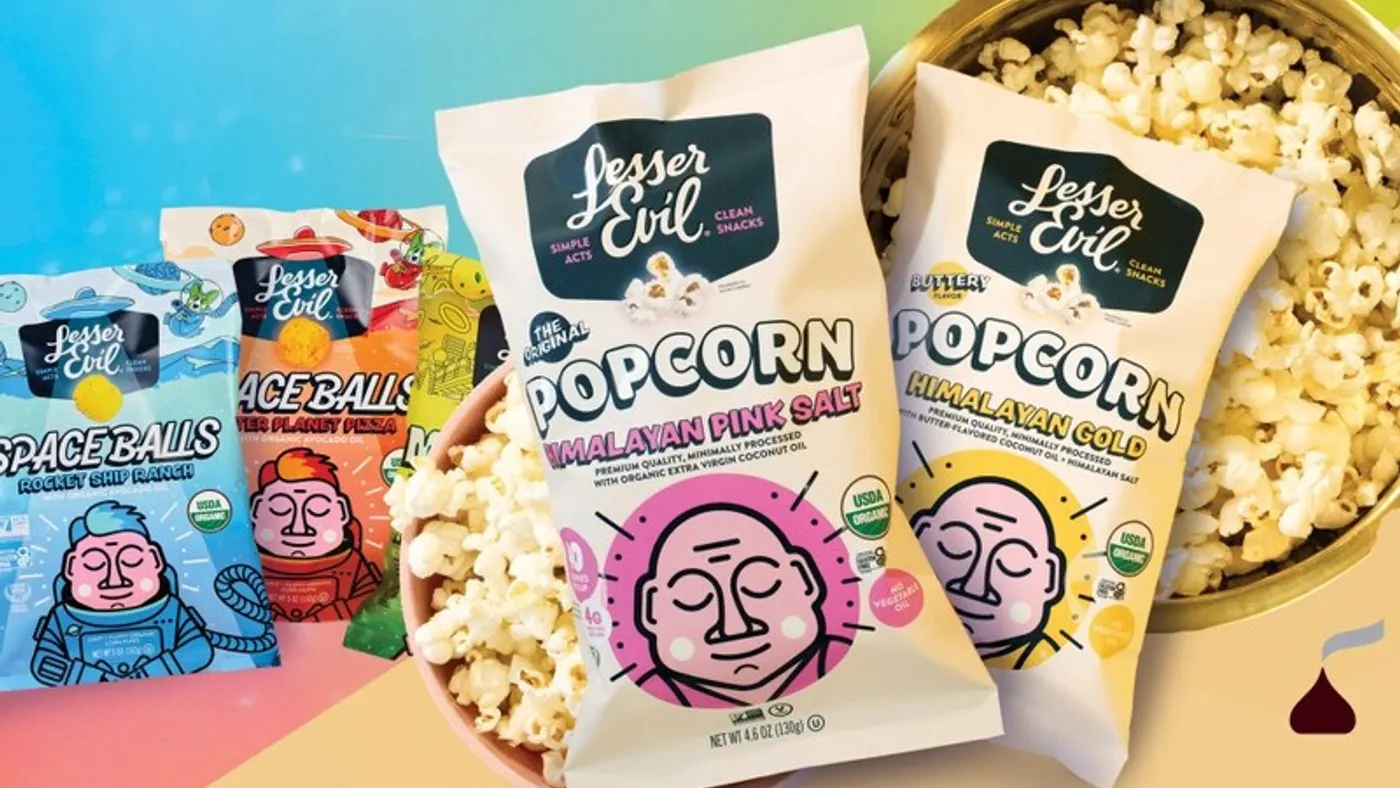
Hershey was attracted to LesserEvil for its use of better-for-you ingredients, such as coconut oil and avocado oil. LesserEvil’s popcorn, puffs and rings also are viewed as a healthier snack that’s tasty and fun for kids — providing Hershey further inroads with a younger demographic and their parents.
The 14-year-old company fits squarely into Hershey’s strategy of acquiring brands with interesting and bold flavors. LesserEvil’s offerings include Himalayan Pink Salt Paleo Puffs, Oh My Ghee! Popcorn, Sugar Cookie Popcorn and Moonions onion-flavored corn rings.
Hershey said LesserEvil will benefit from the confectionery maker’s ability to innovate and scale. LesserEvil already has 8% household penetration compared to 5% at the beginning of this year.
Building up a brand is nothing new for Hershey. Dot’s is now the top-selling pretzel brand by market share at 15%, nearly double from when Hershey bought in 2021.
Hershey has identified new snacking categories that LesserEvil could expand into, Villasenor said, but the company first wants to integrate the brand and discuss its future with the organic food maker’s executive team. She and other Hershey executives are expected to meet as early as today with LesserEvil CEO Charles Coristine and members of his team.
“We need a little more time, similar to what we did [when we purchased Dot’s] where we listen and learn from the experts before we have a firm point of view,” Villasenor said. “The intent, obviously, is to partner with them, not to come in and change their plans for what they’re thinking.”
Salty snacks remain a small but fast-growing business at Hershey. The category commanded roughly 10% of its $11.2 billion in revenue in 2024. Hershey wants to double that total to 20% during the next decade.
During its most recent quarter, which ended Sept. 28, Hershey said its salty portfolio generated $321 million in sales, up 10% from the same period a year ago. Meanwhile, its legacy confections division, which includes Hershey's Kisses, Almond Joy and Jolly Rancher, was a major beneficiary of price increases, with sales surging 5.6% to $2.6 billion.
Article top image credit: Courtesy of Hershey
B&G Foods buys Del Monte Foods’ broth brands for $110M
The purchase of College Inn and Kitchen Basics gives the Crisco owner a bigger presence in home meals as consumers spend less at restaurants.
B&G said it was the winner for the broth and stock business following a “competitive auction process” that was conducted in connection with Del Monte Foods’ bankruptcy.
The acquisition is expected to close in the first quarter following court approval and the sales of other assets by Del Monte unrelated to B&G.
The purchase of the broth and stock offerings marks a departure for B&G, which has been selling off brands to sharpen its focus and reduce debt.
With College Inn and Kitchen Basics, B&G is adding brands that the company said complement its existing portfolio and provide valuable pantry staples for consumers making food at home.
Inflation has forced many people to cut back on spending, prompting them to eat out less in favor of making more of their own meals at home. That shift provides a favorable tailwind for brands such as College Inn and Kitchen Basics, as well as other products B&G owns, including Crisco, Ortega and Victoria sauces.
“This acquisition is consistent with our longstanding acquisition strategy of targeting well-established brands with defensible market positions and strong cash flow at reasonable purchase price multiples,” Casey Keller, B&G’s CEO, said in a statement.
B&G Foods expects the acquisition to be immediately accretive to its earnings per share, adjusted EBITDA and free cash flow. The New Jersey company, which postedsales of nearly $2 billion during its 2024 fiscal year, estimated that College Inn and Kitchen Basics brands will generate annual net sales in the range of approximately $110 million to $120 million.
While the days of transformational megadeals in the food and beverage sector have subsided, the value of M&A hasn’t lost its importance for many executives. M&A has emerged as a primary avenue to enter the buzzy health and wellness space, which has remained dominated by upstarts.
included in this trendline
Nutella maker Ferrero may take ‘a breather’ in large-scale M&A in the US
Mondelēz CEO says M&A is harder as acquisition targets become ‘too expensive’
Unilever to combine food business with McCormick in $45B deal
Our Trendlines go deep on the biggest trends. These special reports, produced by our team of award-winning journalists, help business leaders understand how their industries are changing.